The Ambiguous Ticker and the Million-Dollar Question
You’re navigating a crypto trade platform, ready to lock in profits or initiate a stable transaction. You see a trade pair listed as BTC/USD or ETH/USD. You assume the “USD” refers to Tether (USDT), the stable digital dollar. But wait—could it actually be the official fiat US Dollar, or perhaps another stablecoin entirely, like USDC or BUSD?
This ambiguity—the interchangeable use of “USD” and “USDT” on platforms—is one of the most confusing and high-stakes questions in the digital asset world. Making the wrong assumption about the ticker can lead to unexpected tax consequences, missed trade opportunities, or dealing with an asset you didn’t intend to hold.
The answer requires Expert clarification of how platforms handle stablecoin representation. Understanding the specific ticker used by your platform is the first critical step toward financial Authority and ensuring the Trustworthiness of your transactions.
Deciphering the Ticker Tangle
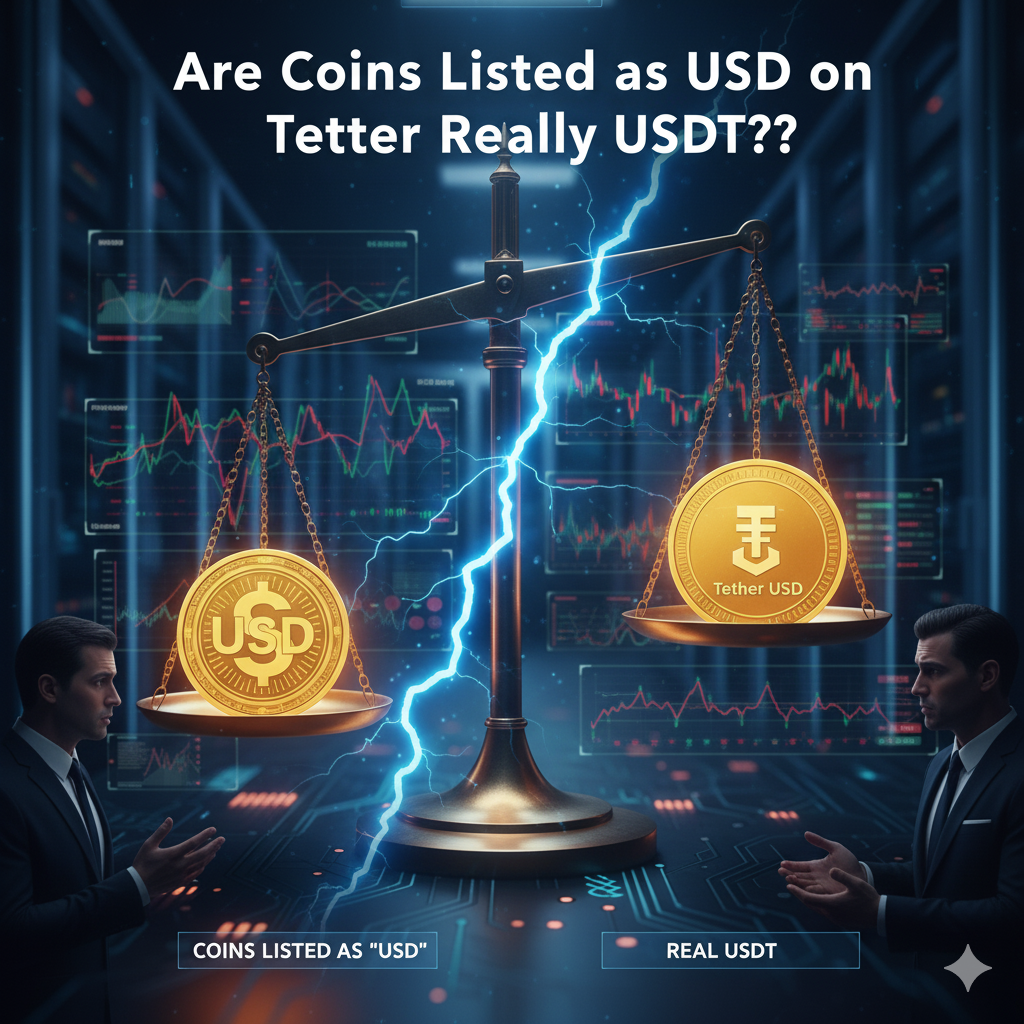
The reason for the ticker confusion lies in the history and marketing of stablecoins and trade platforms.
A. USDT vs. Fiat USD (The Primary Distinction)
- USDT (Tether): This is the crypto asset. It lives on a blockchain (TRC-20, ERC-20, etc.). It can be sent anywhere in the world in minutes. It is backed (mostly) 1:1 by the US Dollar.
- USD (Fiat): This is the traditional, sovereign currency issued by the U.S. government. On a crypto platform, a balance listed as “USD” usually represents fiat cash held in a regulated bank account by the platform itself, making it available for direct bank wire withdrawal.
The Platform’s Ticker Choice (The Authority)
Major platforms adhere to specific rules, but small or older platforms may blur the lines:
- Global Leaders (High Authority): The largest, most Trusted global platforms (e.g., Binance, Coinbase, Kraken) almost always use USDT to represent Tether and USD to represent fiat cash. They generally list BTC/USDT and BTC/USD as two distinct pairs, each with separate liquidity pools.
- Legacy or Small Platforms: Some platforms, particularly older ones, originally listed the most liquid stablecoin (which was always USDT) as USD simply because it was easier for users to understand that they were trading against the dollar’s value. In these cases, BTC/USD almost always means BTC/USDT. Expert Warning: If a platform uses BTC/USD, check the asset’s withdrawal networks. If it supports TRC-20 and ERC-20, it’s Tether. If it only supports bank wire, it’s fiat USD.
B. The Stablecoin Wars (The Secondary Distinction)
The confusion is compounded by the existence of other stablecoins, which also aim for a 1:1 peg with the USD:
- USDC (USD Coin): The main competitor to Tether.
- DAI (Dai): A decentralized, collateral-backed stablecoin.
- FDUSD/Other: Newer, regulated stablecoins.
Platforms maintain distinct pairs for these. You will see BTC/USDC or ETH/DAI. If the ticker explicitly says USD, and it’s not Tether, it will almost certainly be fiat USD cash held on the platform.
C. The Practical Impact on Trading
- Liquidity and Trade Volume: USDT (and thus the BTC/USDT pair) usually has the deepest liquidity. Expert traders prioritize this pair because massive buy or sell orders are less likely to cause slippage (unfavorable price changes). Trust the volume.
- Withdrawal Fees: Fiat USD withdrawals involve banking fees and slower processing times. USDT withdrawals involve minimal blockchain network fees (especially on TRC-20) and are instant. This is a crucial distinction for anyone needing fast access to their funds.
Securing Your Stablecoin Liquidity (USDT Guarantee)
The key takeaway is that while the ticker might be ambiguous, the asset you hold must be clear. If your goal is to leverage the speed and low-fee transfer ability of Tether, you must ensure you acquire actual USDT crypto and not fiat USD.
Our specialized service eliminates the confusion and risk by dealing exclusively with the blockchain asset, guaranteeing the most efficient and secure off-ramp for your USDT holdings.
- USDT Payout Guarantee: We specialize in the conversion of USDT (TRC-20 and ERC-20) to local fiat (IDR). We confirm the asset type before any transaction, ensuring the funds you hold are indeed Tether—the asset with the instant transfer capability.
- Expert Network Verification: We immediately verify your USDT arrival on the correct low-fee network (TRC-20), confirming the transaction is valid and ready for instant conversion to cash.
- Trusted and Secure Liquidity: Avoid platform withdrawal processes and banking delays. We provide an Expert, single-counterparty service for high-volume USDT sell transactions, giving you guaranteed, competitive rates and rapid settlement.
Don’t let confusing tickers compromise your financial transactions. Deal directly with the experts who guarantee your asset is Tether and your liquidity is instant.
For immediate, secure, and expert service to sell your USDT (Tether) for local fiat currency, bypassing the confusion of crypto trade platform tickers, contact our verified service now: +6285167055236
Would you like a simplified checklist of three things to verify on any crypto platform to determine if the “USD” ticker represents fiat or Tether?