The Tale of Two Digital Dollars
In the world of cryptocurrencies, one truth reigns supreme: stability is power. That stability is delivered by stablecoins, digital assets pegged 1:1 to a fiat currency, most commonly the US Dollar. The two dominant forces in this domain are USDT (Tether) and USDC (USD Coin).
From a user’s perspective, both tokens are worth one dollar, both are used for trade, and both transfer over similar networks. So, are USDC and USDT the same?
Absolutely not.
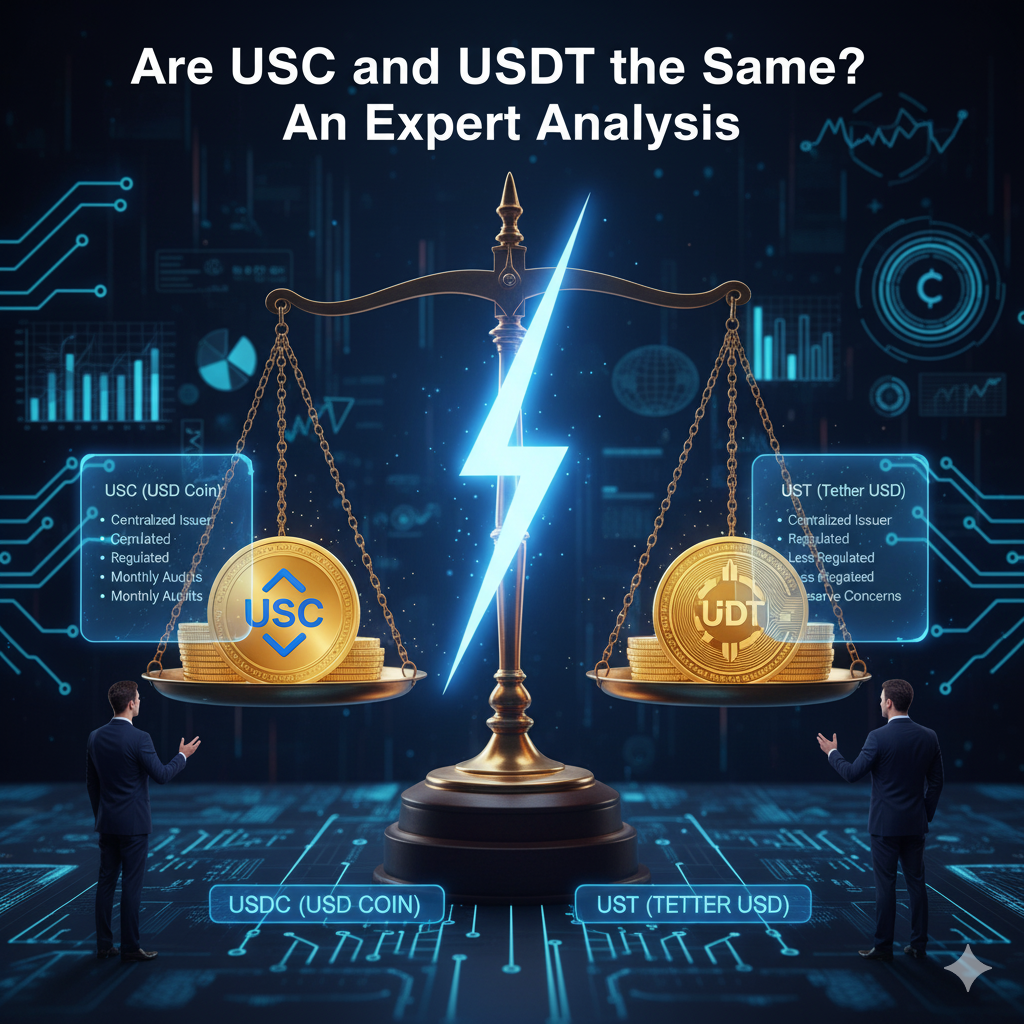
While their market function is identical, their governance, regulatory compliance, and reserve transparency are fundamentally different. These differences are critical, impacting everything from the Trustworthiness of your holdings to where regulatory Authority may be focused next. An Expert understands that choosing between them is a choice between two distinct regulatory philosophies.
The Core Differences in Governance and Trust
Both USDT and USDC operate as fiat-backed stablecoins—meaning their value relies on the promise that for every digital coin issued, a dollar (or dollar equivalent) is held in reserve. However, their approaches to maintaining that promise diverge significantly.
A. Regulatory Compliance and Transparency
| Feature | USDT (Tether) | USDC (USD Coin) |
| Issuer Authority | Tether Holdings Limited (Private, offshore entity). | Centre Consortium (Regulated entity founded by Circle and Coinbase). |
| Regulatory Standing | Historically opaque; subject to numerous investigations/settlements regarding reserve disclosure. | Highly Regulated; US-based financial services firm (Circle) with strong regulatory relationships. |
| Reserve Composition | Historically included commercial paper and corporate debt (less liquid assets). | Primarily held in Cash and Short-Duration U.S. Treasury Bills (highly liquid and secure assets). |
| Audits/Attestations | Monthly attestations (unaudited) provided by an independent accounting firm. | Monthly, Audited Reports by top accounting firms, with a focus on high transparency. |
The Expert Takeaway: USDC is the clear winner on regulatory compliance and transparency. Its structure offers greater Authority and Trustworthiness because its reserves are frequently audited and held in highly liquid, regulated assets. USDT carries higher risk due to its historically less transparent reserve composition and offshore governance structure.
B. Decentralization and Network Preference (The Expertise Factor)
While both stablecoins are multi-chain, their primary influence and preferred networks differ:
- USDT (The Volume King): USDT dominates in pure trade volume and is the backbone of most large trade platforms. It gained early adoption on the Tron (TRC-20) network, making it the preferred choice for low-cost, high-speed transfers utilized globally by large liquidity services.
- USDC (The DeFi Favorite): USDC is often the preferred stablecoin in decentralized finance (DeFi) due to its stronger regulatory backing. It maintains its largest supply on the Ethereum (ERC-20) network and is widely supported by regulated institutions.
The Experience Factor: If you prioritize the lowest possible transaction fees and the highest trade liquidity for a rapid sell, USDT TRC-20 often provides a practical advantage. If you prioritize absolute regulatory certainty and integration with Western financial institutions, USDC is the more Trusted asset.
C. De-Pegging Risk and Resilience
Both coins have faced de-pegging events (where the price temporarily moves away from $1.00):
- USDT De-Pegs: Typically occur during extreme market panic (high volatility) or when negative news about Tether’s reserves breaks. The market’s immense liquidity usually corrects the peg quickly, but the drops can be deeper.
- USDC De-Pegs: A notable de-peg occurred in March 2023 when a portion of its reserves was held in Silicon Valley Bank (SVB) during its failure. The event proved that even highly regulated stablecoins carry risk, but the quick, decisive intervention by Circle and US regulators restored Trust swiftly.
In summary, both coins serve the same purpose—stability. Their differences lie in the quality of the collateral and the level of regulatory scrutiny they are subjected to.
Your Expert Solution for Stablecoin Liquidity (USDT Focus)
While USDC offers high regulatory assurance, USDT remains the undisputed king of liquidity and the preferred stablecoin for most global trade and fast, low-cost transfers (especially on TRC-20). The high volume and network efficiency of USDT make it the most practical stablecoin for immediate conversion to local fiat.
Our service is built to handle the highest volumes of USDT TRC-20 precisely because it is the most liquid and cost-effective stablecoin for our clients to move.
- USDT Expertise Guaranteed: We specialize in the USDT TRC-20 network, ensuring instant verification and the fastest possible IDR payout. We understand the risk profiles of stablecoins and offer a guaranteed, competitive rate, honoring the $1 peg regardless of minor fluctuations.
- Speed Over Compliance Costs: Our clients choose us for USDT because they prioritize speed and efficiency—something TRC-20 delivers. We provide the final secure off-ramp for this efficient asset.
- Trusted and Secure Liquidity: Eliminate the risk of dealing with unverified parties. We are a single, Trusted counterparty with the Authority to convert your high-volume USDT sell into local fiat instantly and securely.
Choose the stablecoin that best fits your risk profile, and trust our expertise to handle the liquidity, instantly and securely.
For immediate, secure, and expert service to sell your highly liquid USDT for local fiat currency, leveraging the speed of the TRC-20 network, contact our verified service now: +6285167055236
Would you like a brief guide on how to check the current market capitalization and daily trade volume for both USDT and USDC?