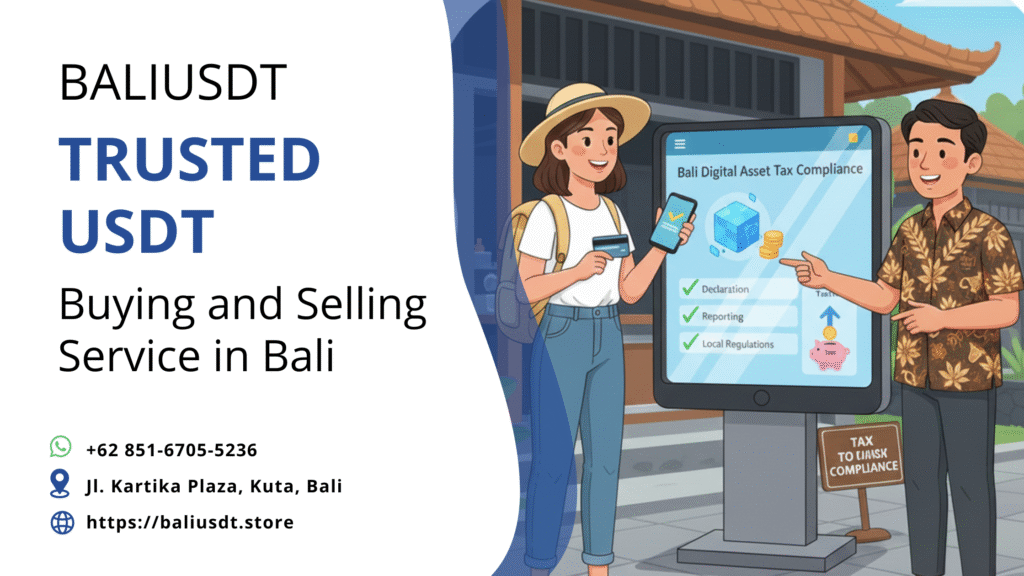
For the growing community of digital nomads, expatriates, and long-term travelers enjoying the unique lifestyle in Bali, managing finances efficiently is key. A frequently asked question, and one that carries legal weight, is: do you pay taxes on USDT transactions in Indonesia? The definitive answer is yes, you do. Since the Indonesian government considers cryptocurrencies like Tether (USDT) to be taxable digital financial assets (similar to securities), specific tax obligations are triggered when you conduct transactions—particularly when you sell or convert your USDT into Indonesian Rupiah (IDR). Understanding the nuances of the Indonesian tax regulations is essential for remaining compliant and avoiding future issues during your stay.
The Legal Status of USDT in Indonesia
Before diving into the tax rates, it’s crucial to understand how Indonesia classifies USDT. This classification dictates the entire framework of tax collection and legal compliance for foreigners.
USDT as a Digital Financial Asset (Commodity Sale)
Indonesia has a highly structured approach to digital assets, especially following the recent regulatory updates (such as Minister of Finance Regulation No. 50/2025).
- Not Legal Tender: USDT is strictly not recognized as a currency or means of payment in Indonesia. The only legal tender is the Rupiah (IDR). Foreigners must not attempt to use USDT directly for purchasing goods or services.
- Taxable Event: Instead, USDT is classified as a digital financial asset—a tradable commodity. Therefore, when you sell your USDT for IDR (or swap it for another crypto), that sale constitutes a taxable event. The income derived from this transaction, even if it is just converting your assets to cover local expenses, is subject to a final income tax.
The question of do you pay taxes on USDT hinges entirely on this reclassification: the tax is paid upon the sale of the asset, not on the mere holding of it. This framework provides clarity, but also places a compliance burden on both local exchanges and the individual seller.
Decoding the Indonesian Crypto Tax Rates (Post-August 2025)
The tax landscape for crypto in Indonesia has recently been clarified and adjusted to streamline collection and encourage the use of local, regulated platforms. These rules directly impact foreign travelers and expats.
Final Income Tax (PPh Pasal 22) on the Seller
The core tax on crypto transactions falls under the Final Income Tax (Article 22), which is applied to the gross transaction value, not just your profit (capital gains).
| Transaction Platform | Tax Rate on Gross Transaction Value | Who Collects the Tax? |
| Domestic Registered Exchanges | 0.21% Final Income Tax | The Domestic Exchange (PPMSE) |
| Foreign/Overseas Platforms | 1.0% Final Income Tax | The Foreign Platform (if appointed), or the Seller (Self-Assessed) |
- Tax Differential: Notice the significant difference: selling USDT on a domestically registered exchange attracts a much lower tax rate (0.21%) compared to using a foreign or overseas platform (1.0%). This difference is a clear government incentive to steer trading activity toward regulated local entities, improving compliance and state revenue.
- VAT Elimination: Previously, crypto transfers were also subject to VAT. However, the recent regulations have eliminated the VAT on the transfer of crypto assets, a welcome simplification for sellers.
Therefore, the most cost-effective and compliant answer to do you pay taxes on USDT when selling is to use a method that falls under the lower 0.21% bracket, if possible. For travelers who often rely on foreign platforms, accepting the 1.0% rate is the cost of convenience and the obligation of local compliance.
The Role of Withholding Agents
In most common scenarios, you do not have to manually calculate and report this tax yourself.
- Exchanges as Collectors: The official, regulated exchanges (PPMSEs) are designated as withholding agents. When you execute a sale on their platform, they automatically deduct the Final Income Tax (0.21%) before transferring the remaining IDR to you. This significantly simplifies the tax process for the seller.
- Self-Assessment for Foreign Platforms: If you sell your USDT on a foreign exchange that has not been appointed as a tax collector, the full 1.0% tax responsibility falls on you, the seller, on a self-assessment basis. You are legally required to file this tax in your periodic income tax return in Indonesia. For short-term visitors, this level of tax compliance can be complex and is often a reason to choose reliable local services instead.
Tax Considerations for Travelers and Digital Nomads
The tax rules are applied based on where the transaction occurs and the legal status of the platform, but your personal tax residency status also plays a critical role.
The International Tax Treaty Exemption
Indonesia maintains Tax Treaties (Double Taxation Avoidance Agreements) with many countries. These treaties can offer a pathway to exemption, particularly for short-term visitors.
- Exemption Criteria: If you are a tax resident of a treaty country and Indonesia does not have the taxing right on that income (often determined by the length of your stay or the nature of your activities), you might be exempt from the Indonesian Final Income Tax.
- The Certificate of Domicile (CoD): To claim this exemption, you must provide a valid Certificate of Domicile (CoD) from your home country to the electronic platform (PPMSE) before the transaction takes place. This proves your foreign tax residency. Without this document submitted correctly, the platform must withhold the tax.
For many travelers and digital nomads on tourist or short-stay visas, the hassle of obtaining and submitting a CoD often outweighs the minimal tax saved. Consequently, most visitors simply accept the final withholding tax as a cost of doing business locally.
Your Home Country Obligations
While focusing on the question, do you pay taxes on USDT in Indonesia, never forget your home country’s tax obligations.
- Worldwide Income: Citizens or residents of countries like the USA, Canada, or Australia generally pay tax on their worldwide income. Selling USDT in Bali triggers a taxable event both in Indonesia (Final Income Tax) and potentially in your home country (Capital Gains Tax).
- Foreign Tax Credit: You may be able to claim a Foreign Tax Credit in your home country for the tax paid in Indonesia, preventing double taxation. Always consult with a tax professional specializing in international expatriate taxation to manage this correctly.
The Convenient Local Solution for Compliance
Navigating international exchanges and potential self-assessment obligations can be daunting. For this reason, many expatriates and travelers in Bali turn to professional, local crypto facilitators.
Using Local Facilitators for Sale and Tax Guidance
When you sell USDT to a reputable local service provider, such as those that operate a physical office (like BaliUSDT.store), the transaction is handled as a commodity sale for IDR.
- Simplified Process: These professional facilitators operate a clear, transparent process for converting your digital assets into local Rupiah. They are well-versed in the current regulations and ensure the transaction is compliant with Indonesian law.
- Peace of Mind: Instead of worrying about whether do you pay taxes on USDT correctly on a foreign exchange, using a local, regulated facilitator ensures the transaction is executed securely and professionally. They can often provide the necessary documentation for the sale, which is critical for your own record-keeping, especially if you need to report the transaction back home.
Furthermore, a professional service is often the safest choice, eliminating the risks associated with P2P cash handovers and providing a trusted point of contact for financial advice related to your stay in Bali.
Practical Tips for Managing Your USDT Finances
Staying compliant and secure in Bali involves a few simple, proactive steps.
- Keep Records: Maintain meticulous records of all your USDT sale transactions, including dates, amounts, the exchange rate used, and any tax withheld. These records are vital for both Indonesian and your home country’s tax reporting.
- Understand the Rate: Before initiating a sale, whether on an exchange or with a local facilitator, confirm the conversion rate and any explicit fees or taxes being deducted. Transparency is key.
- Safety First: Prioritize security. Use reputable platforms or established physical offices. The tropical atmosphere is relaxing, but financial vigilance should remain high.
Answering the question, do you pay taxes on USDT, is not a single “yes” or “no,” but rather a matter of choosing the most compliant path that fits your status as a foreigner in Indonesia.
Conclusion
In short, yes, when you sell your USDT in Indonesia to obtain Rupiah, you are subject to a Final Income Tax on the transaction value. The most efficient rate is 0.21% when using a domestic, regulated platform, or a higher 1.0% if using a foreign exchange or self-assessing the tax. For travelers and expats, compliance is paramount. By choosing transparent and reliable methods, such as utilizing professional local facilitators like BaliUSDT.store for your conversion needs, you ensure your transactions are legally sound and your focus remains on enjoying your time in Bali. Getting guidance for selling USDT legally in Indonesia ensures you have confidence in your financial operations while abroad.
WhatsApp us to sell your USDT safely: +62 851-6705-5236
Check today’s USDT selling rate via Whatsapp
Get guidance for selling USDT legally in Indonesia
Visit our office in Bali for secure USDT selling
Pemogan, Denpasar.
USDT is processed as a commodity sale in Indonesia, not as a direct payment method.
Read also: How to Convert USDT to Rupiah Safely: Bali Expats’ Guide