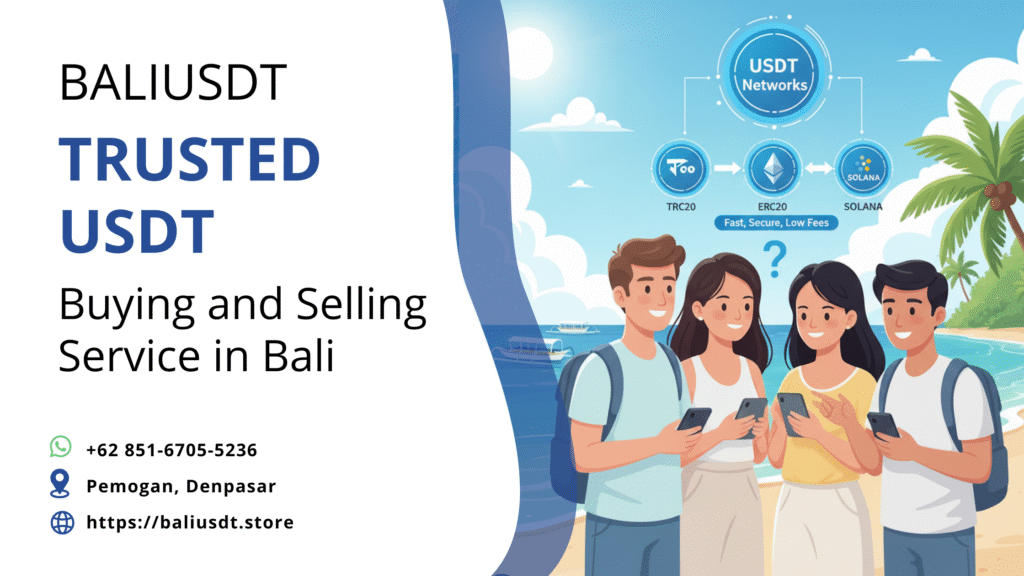
For the international traveler relying on stablecoins for a frictionless financial experience, the question of which is the best USDT network is far from academic—it’s a crucial consideration that directly impacts cost, speed, and overall convenience. Tether (USDT), being a stablecoin pegged to the US Dollar, operates across multiple blockchain platforms, and the choice between them, such as TRC-20 (Tron) or ERC-20 (Ethereum), dramatically affects the transaction fee you pay and the time it takes for the funds to clear. Therefore, a clear understanding of these networks is essential for making smart financial decisions on the road.
The Essential Comparison: TRC-20 vs ERC-20
When discussing USDT networks, the conversation invariably centers on the two dominant protocols: TRC-20 (Tron) and ERC-20 (Ethereum). Both allow you to hold and transfer the same asset, USDT, but they leverage entirely different underlying blockchain technologies, resulting in significant practical distinctions for tourists. Consequently, the features of each network must be weighed carefully against your travel needs.
TRC-20: Prioritizing Speed and Low Cost
The Tron network is widely celebrated for its efficiency and affordability, making TRC-20 USDT the preferred choice for frequent, smaller transactions. Indeed, this is a compelling answer to which is the best USDT network if your primary concerns are cost and speed.
- Transaction Fees: TRC-20 fees are consistently low, often costing less than $1 USD per transaction, and in some cases, are nearly free. For travelers needing to convert a small amount of cash frequently, this savings adds up quickly.
- Transaction Speed: The Tron blockchain is designed for high throughput, meaning transactions confirm rapidly, usually within a few minutes. This is critical when you need quick access to local cash or need to settle a payment without delay.
- Ease of Use: Many mobile wallets and popular crypto services, especially in high-volume tourist hubs like Southeast Asia, have adopted TRC-20 as a standard due to its speed and cost-effectiveness. Therefore, finding a compatible service for quick conversion, like selling USDT for local currency, is extremely easy.
ERC-20: Security and Universal Compatibility
The Ethereum network, which hosts ERC-20 USDT, is the original and most established smart contract platform in the crypto space. While it offers a distinct set of advantages, it also comes with notable drawbacks.
- Higher Security and Decentralization: Ethereum is known for its robust security and decentralized architecture. For travelers holding a large portion of their funds in USDT for long-term storage, the battle-tested nature of the Ethereum network offers a higher sense of security and reliability.
- Universal Platform Compatibility: Due to its status as the industry standard, ERC-20 is supported by virtually every major crypto exchange, wallet, and decentralised application (dApp). This compatibility makes it highly versatile.
- The Cost Factor: The main downside for tourists is the expense. ERC-20 transaction fees, or ‘gas fees,’ are highly volatile and can soar to $10, $20, or even more during periods of network congestion. This makes it unsuitable for small or frequent transfers.
Emerging Contenders: Speed and Low-Fee Alternatives
Beyond the big two, several other USDT networks have emerged, offering a highly competitive mix of speed and extremely low fees. These are becoming increasingly relevant for tourists who prioritize rapid access to funds with minimal overhead.
BEP-20 (Binance Smart Chain)
The Binance Smart Chain (BSC) offers the BEP-20 standard for USDT. Since Binance is a dominant global exchange, this network is widely supported, particularly among users of the Binance ecosystem.
- Ultra-Low Fees: Transactions on BEP-20 are typically cheaper than TRC-20, often costing mere cents. This makes it an incredibly cost-effective option.
- Fast Transactions: Its efficiency allows for fast confirmation times, rivaling the speed of the Tron network.
Solana (SPL) and Polygon
These newer, high-performance blockchains also support USDT and are gaining traction, especially in the DeFi (Decentralized Finance) space. They offer lightning-fast transfers and negligible fees, making them highly attractive for tourists who may be interacting with advanced crypto platforms. Nevertheless, the question of which is the best USDT network depends on the recipient’s ability to support these newer chains. Always confirm that the local vendor, money changer, or service you are using supports Solana or Polygon USDT before sending.
The Tourist’s Dilemma: Choosing the Right Network
A tourist’s financial strategy must revolve around safety, low fees, and the ability to instantly liquidate funds into local cash. When you consider this context, the answer to which is the best USDT network becomes clearer.
Prioritizing Low Fees for Day-to-Day Use
For a traveler managing a weekly budget and needing to convert USDT to local currency every few days, the low-cost model of TRC-20 is generally superior. Why pay $10-20 on the Ethereum network to exchange $500 when you can pay under $1 on Tron? The saved fees can be spent on local transportation, a nice meal, or a souvenir.
The Critical Need for Local Compatibility
This is arguably the most important factor for tourists. The best network is the one the local crypto-to-cash service accepts. In many major international travel destinations, TRC-20 has become the de facto standard for cash-outs due to its low fees. If you were to visit a service in Bali for instance, such as BaliUSDT.store, you would find that TRC-20 is the most commonly recommended network for its efficiency in facilitating quick cash withdrawals. Therefore, before initiating any transfer, always check the recipient’s required network. Sending USDT on the wrong network will, without exception, lead to the permanent loss of funds.
Safety and Precautionary Tips
While the low-fee networks are excellent for operational spending, a prudent traveler might consider holding their bulk funds on the more secure ERC-20 network and only transferring smaller amounts to a TRC-20 wallet when cash conversion is immediately needed.
- Always do a test transaction: Before sending a large sum, send a small amount (e.g., $5 USDT) to the recipient’s address to confirm that the network is correct and the funds arrive.
- Double-check the network: Pay close attention to the address format. ERC-20 addresses typically start with ‘0x’, whereas TRC-20 addresses often start with ‘T’. Always confirm the network name in your wallet before hitting ‘send.’
- Use Reputable Services: When selling USDT for local currency, use established, reliable services to minimise risk. Knowing which is the best USDT network is only half the battle; knowing the safest place to convert it is the other.
Practical Application: The Tourist’s Transfer Flow
To demonstrate the real-world advantages of knowing which is the best USDT network, consider a typical scenario. You are an international tourist spending three weeks in a foreign country.
- Initial Funding: You transfer your main travel fund from your home exchange to your travel wallet. You opt for a low-fee network like TRC-20 to minimize the deposit cost.
- Local Conversion: Halfway through your trip, you need local currency for market purchases and cash-only taxis. You find a local crypto money-changer service. You transfer $1,000 USDT via the TRC-20 network to their verified address. The transfer costs less than a dollar and is confirmed within minutes, allowing you to walk away with local cash quickly.
- Emergency Funds: If an unforeseen cost arises and you need a quick top-up from home, having family send you USDT via TRC-20 ensures the fastest, cheapest transfer possible, avoiding the days-long delay of traditional bank wires.
The key takeaway is that for the dynamic needs of a tourist—who values minimal costs and near-instantaneous transfers—the TRC-20 network is unequivocally the superior choice for managing travel funds.
Conclusion
The selection of a USDT network is a vital choice for any international traveler managing their finances digitally. While the ERC-20 network offers exceptional security and wide-ranging compatibility, its prohibitive and unpredictable fees make it impractical for the frequent, smaller transactions necessary for travel. Therefore, the answer to which is the best USDT network for an international tourist rests squarely on the shoulders of TRC-20. Its combination of ultra-low transaction fees, rapid confirmation times, and widespread adoption in key tourist destinations offers the most convenient and cost-effective financial solution for travel. By choosing TRC-20, you ensure your money moves efficiently, letting you focus on the cultural richness and experiences of your journey.
Check today’s USDT selling rate via Whatsapp
📲 WhatsApp us to sell your USDT safely: +62 851-6705-5236
Visit our office in Bali for secure USDT selling: Pemogan, Denpasar
USDT is processed as a commodity sale in Indonesia, not as a direct payment method.
Read also: How to Convert USDT to Cash in Bali: Secure Methods for Expats