For international travelers, especially those relying on stablecoins to manage funds abroad, the question of can USDT crash like UST is a highly serious one that demands a clear and detailed answer. The sudden, catastrophic de-pegging of the algorithmic stablecoin TerraUSD (UST) in 2022 sent shockwaves through the entire cryptocurrency market. As a result, many people naturally wonder whether the market-leading stablecoin, Tether (USDT), faces similar risks. Since USDT is vital for low-cost, secure currency exchange in tourist destinations, understanding its fundamental security is essential for financial peace of mind while traveling.
Understanding the Fundamental Difference in Backing
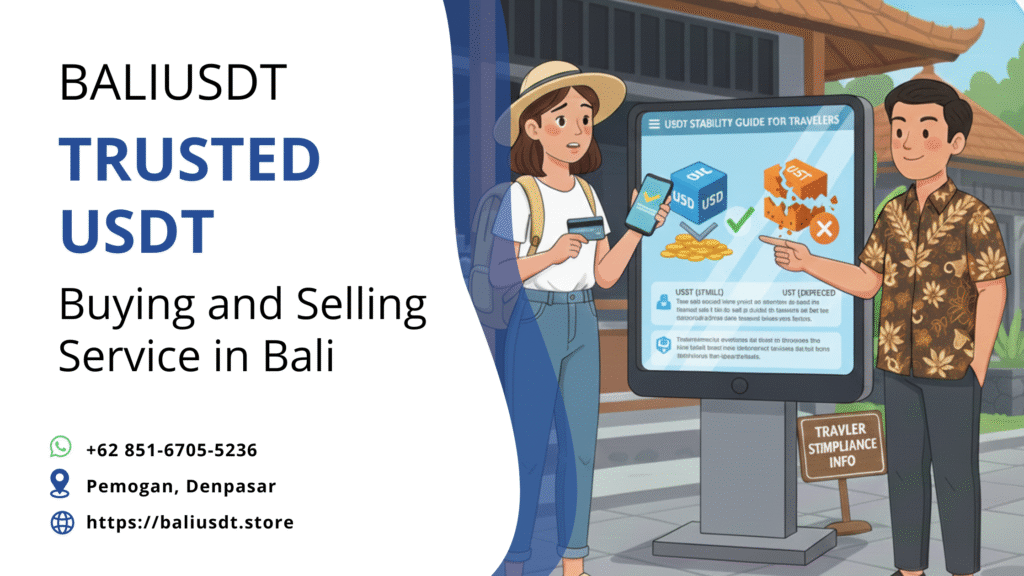
The key to answering can USDT crash like UST lies entirely in the underlying collateral and pegging mechanisms used by each coin. Although both are stablecoins aiming for a $1.00 USD value, their methods of achieving that stability are fundamentally different.
USDT: A Fiat-Collateralized Stablecoin
Tether (USDT) operates as a fiat-collateralized stablecoin. This means that every unit of USDT in circulation is theoretically backed by reserves held by the issuer, Tether Limited.
- Collateral: These reserves are primarily held in real-world, liquid assets, including cash and cash equivalents, short-term US Treasury bills, and other secured loans. The premise is straightforward: a user should be able to redeem their USDT for $1.00 USD directly from the issuer.
- Mechanism: The peg is maintained through direct redemption and issuance. If the price of USDT drops below $1.00, traders can buy it cheap and redeem it for a full dollar, profiting from the difference, which drives the price back up. This mechanism is tried and tested.
UST: An Algorithmic Stablecoin
TerraUSD (UST), by contrast, was an algorithmic stablecoin. This entirely different model used no direct fiat collateral.
- Collateral: UST’s value was maintained by a complex mechanism involving another cryptocurrency, LUNA. To mint UST, users had to burn LUNA, and vice versa. There were no direct dollar reserves.
- Mechanism: The stability depended entirely on the continued belief in the algorithm and the market’s willingness to arbitrage between UST and LUNA. When massive selling pressure hit UST, the algorithm failed to keep up, leading to a “death spiral” where both UST and LUNA collapsed.
Therefore, the architectural difference alone provides a strong argument that can USDT crash like UST is unlikely, as USDT has tangible assets securing its value.
USDT’s Stability: History and Resilience
Despite facing numerous public and private challenges over the years, USDT has demonstrated significant resilience in maintaining its peg. This historical performance provides confidence to international travelers.
Handling Stress Tests and De-pegging Events
Tether has experienced multiple high-stress market events, including brief periods where its price dipped slightly below $1.00 USD. Most recently, during the general market panic following the UST collapse, USDT briefly de-pegged. However, the mechanism worked: traders quickly bought USDT at a discount and redeemed it for a full dollar from Tether Limited, allowing the price to restore its peg within a matter of hours. The critical factor is that the underlying asset reserves allowed the issuer to honor redemptions effectively. This successful recovery shows that can USDT crash like UST is an overly pessimistic comparison, because Tether’s collateral model provides a financial backstop that the algorithmic model lacked.
Transparency and Regulatory Scrutiny
In response to market demands for greater clarity—a crucial element for stablecoin confidence—Tether Limited has significantly increased the transparency regarding its reserve holdings. Consequently, regular assurance reports are issued to detail the composition of its backing assets, particularly highlighting the heavy weighting toward ultra-safe assets like U.S. Treasury bills. Furthermore, while regulatory scrutiny is ongoing, the company’s increasing adherence to reporting standards improves consumer trust, which is vital for the millions of travelers who use USDT for daily liquidity.
Minimizing Traveler Risk Through Prudent Use
While the systemic risk of Tether mimicking the complete collapse of an algorithmic coin is low, smart travelers should still adopt best practices to protect their funds. Even a minor, temporary de-pegging event can cause headaches if a traveler needs immediate cash.
Do Not Hold 100% of Funds in One Asset
For an international traveler, financial prudence dictates diversification. Therefore, you should never hold 100% of your travel budget in any single asset, including USDT crypto. Keep some funds in traditional bank accounts, some in physical cash, and some in a variety of stable, accessible assets. This strategy ensures that even if Tether experiences temporary volatility, you have alternative sources of funding.
Use USDT for Liquidity, Not Long-Term Storage
The true value of USDT for tourists lies in its ability to facilitate instant, low-cost liquidity—converting fiat to crypto for travel, and crypto back to local fiat upon arrival. It is best used for the portion of your budget intended for short-term spending. While the question can USDT crash like UST is likely to remain in public discourse, focusing on its operational use as a transfer vehicle, rather than a long-term savings account, reduces exposure to any unlikely event.
The Superiority of USDT for Traveler Convenience
Despite the lingering question of can USDT crash like UST, the stablecoin remains the most practical and convenient financial tool for international travel when compared to traditional options.
Speed and Cost vs Traditional Banks
For travelers in destinations like Southeast Asia, relying solely on international wire transfers or frequent ATM withdrawals is slow and expensive. USDT allows a digital nomad, for example, to receive payments instantly and convert them to local currency with minimal fees. This operational efficiency is paramount for those living and working abroad. The cost savings alone often justify the use of USDT over banks.
Secure Local Exchange Services
When tourists need to convert their USDT into local currency (like Indonesian Rupiah in Bali), using a trusted, transparent service minimizes risk. Services that facilitate secure USDT selling, such as those that operate from a verified office in Pemogan, Denpasar, provide a safe, compliant environment for the final exchange. This local infrastructure is key to the seamless experience. By utilizing established platforms like BaliUSDT.store, travelers ensure that the local selling process is secure and transparent.
Conclusion
The short answer to can USDT crash like UST is: it is highly unlikely. The two stablecoins operate on fundamentally different models. UST collapsed because its value was maintained by a flawed algorithm without direct asset backing. USDT, conversely, is fiat-collateralized, meaning its value is supported by real, audited reserves, allowing it to successfully weather market stress and re-establish its peg. For the international traveler, USDT remains the most efficient, cost-effective, and robust means of transporting and accessing capital abroad. By understanding its security mechanisms and practicing smart asset diversification, you can confidently utilize USDT for secure financial management on your travels.
Visit our office in Bali for secure USDT selling
📲 Whatsapp us to sell your USDT safely: +62 851-6705-5236
Visit our office in Bali for secure USDT selling: Pemogan, Denpasar
USDT is processed as a commodity sale in Indonesia, not as a direct payment method.
Read also: When to Buy USDT: Smart Timing Tips for Bali Travelers