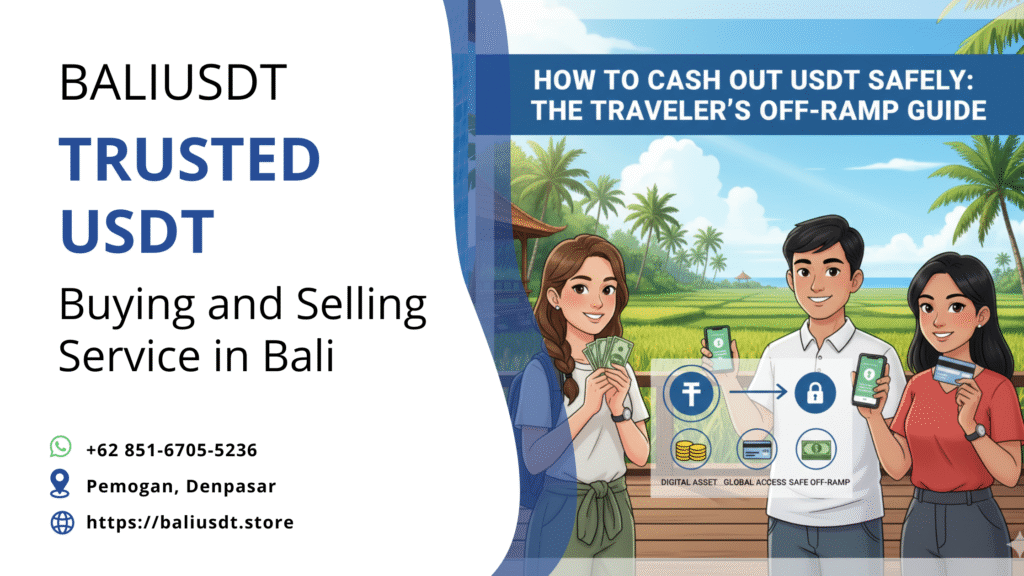
For digital nomads, expats, and long-term tourists, the ability to access funds quickly and cheaply is essential. Therefore, understanding how to cash out USDT is one of the most practical and crucial skills for managing finances abroad. While stablecoins like Tether (USDT) offer unparalleled speed and low fees for cross-border transfers, the final step—converting that digital value into usable local cash—requires planning and security awareness. The process of converting USDT to fiat currency is often called the “off-ramp.” This guide focuses on the safest, most efficient, and most compliant methods for travelers, particularly those in popular destinations like Bali, Indonesia.
The Traveler’s Primary Need: Converting USDT to Local Currency
The goal for any tourist holding USDT is straightforward: secure the best possible rate and ensure physical safety when converting their stable digital currency into local fiat, such as the Indonesian Rupiah (IDR).
The Role of USDT in Travel Finance
Travelers primarily use USDT as a secure, stable vehicle for carrying wealth. It protects funds from local currency devaluation and avoids high fees charged by international banks or airport money changers. However, since most foreign countries do not accept cryptocurrency as legal tender for direct payment, the final step of cashing out is inevitable. Knowing how to cash out USDT compliantly and safely is critical before booking that flight.
The Ideal Off-Ramp Requirements
When a traveler selects a method for converting their USDT, they must prioritize three key factors:
- Security: Transactions must occur in a safe, verified environment to protect both the digital assets and the physical cash.
- Speed: The process should be quick, with funds available for use almost immediately.
- Rate & Fees: The final amount of local fiat currency received should be competitive, minimizing network costs and exchange fees.
Method 1: Utilizing Local OTC Desks and Specialized Services
For travelers needing immediate access to physical cash or large amounts of local currency, specialized Over-The-Counter (OTC) desks and professional crypto exchange services offer the best balance of safety and speed. This method is particularly popular in tourist hubs where crypto adoption is high.
The OTC Desk Advantage
OTC services are professional platforms designed for direct, large-volume crypto-to-fiat transactions. Unlike P2P (Peer-to-Peer) platforms, which involve transacting with an unknown individual, an OTC desk is a regulated business.
- Verified Location: Reputable services operate from physical, secure offices. For example, in Bali, choosing an established, visible location like our office in Pemogan, Denpasar, adds a layer of security that an online-only transaction cannot match.
- Instant Cash Pickup: These services often facilitate immediate cash pickups. The traveler transfers the USDT crypto digitally, and the service hands over the corresponding local cash (IDR) almost instantly after the blockchain confirms the transaction.
- Compliance Check: Professional services handle necessary compliance and record-keeping, ensuring the transaction adheres to local regulations. They help answer the local specifics of how to cash out USDT.
The Conversion Process for Cash
- Initiate a Request: The traveler contacts the service (often via WhatsApp) and specifies the amount of USDT they want to sell.
- Lock in the Rate: The service provides a competitive, all-inclusive exchange rate for USDT to IDR.
- Transfer USDT: The traveler sends the USDT from their private wallet (ideally using the low-fee TRC-20 network) to the service’s designated wallet address.
- Receive Cash: The traveler visits the secure office and receives the IDR cash equivalent.
Method 2: Centralized Exchanges (CEXs) and Bank Transfers
A second common method for travelers involves using major international Centralized Exchanges (CEXs) for a direct bank withdrawal. This is often better for repatriating funds or settling bills in their home country’s currency.
Selling USDT on a CEX
First, the traveler must send their USDT crypto from their private wallet to their account on a large, regulated exchange (e.g., Kraken or Binance). Once the USDT arrives:
- Trade to Fiat: The traveler executes a trade on the exchange to sell their USDT for a recognized fiat currency, such as USD or EUR.
- Withdrawal Initiation: The fiat balance is then withdrawn directly to the traveler’s linked overseas bank account.
Drawbacks for Tourists Needing Local Cash
While secure, this method has limitations for the active traveler in a place like Bali:
- Speed: International bank transfers often take 1 to 5 business days to settle, making it too slow for immediate cash needs.
- Fees: Traditional bank withdrawal fees (wire transfer fees) can be substantial, and the traveler may also face receiving fees from their home bank.
- No Local Cash: This method does not provide physical local currency (IDR), forcing the traveler back to an ATM (and associated fees) once the funds arrive in their home bank.
Therefore, travelers who frequently need local IDR cash will find the OTC or specialized local exchange method more practical than trying to figure out how to cash out USDT through an international bank transfer.
Essential Safety Protocols for Cashing Out USDT
Regardless of the method chosen, security remains paramount. Travelers must always follow established protocols to protect their digital assets during the off-ramp process.
Prioritize the TRC-20 Network
When moving USDT, always verify the network. The Tron network (TRC-20) charges significantly lower fees and processes much faster than the Ethereum network (ERC-20). Lower fees mean more local currency in your pocket. Always use the TRC-20 network when asking how to cash out USDT for maximum efficiency.
Verification is Non-Negotiable
Before sending any USDT, verify the recipient wallet address. A single mistake means permanent loss of funds. When dealing with a local service, confirm the address through a secure channel (like an officially verified WhatsApp number) and check that the first few characters and the last few characters match the one provided. Furthermore, for large sums, always send a small test transaction first to confirm receipt.
Compliance and Documentation
The crypto industry is highly regulated. Always be prepared to provide a valid passport or ID for KYC compliance. Working with services that are transparent about their fees and compliant with local financial rules mitigates legal and financial risks. For reliable, compliant USDT selling, consult local expert resources like BaliUSDT.store.
Conclusion
Understanding how to cash out USDT is the final step in leveraging stablecoins for global travel finance. For tourists and digital nomads in popular destinations like Bali who require immediate local currency, using a secure, verified local OTC desk or specialized exchange for a cash pickup is often the most practical, safest, and fastest solution. This method bypasses the delays and costs of international banking, allowing travelers to smoothly convert their secure digital dollar holdings into usable Indonesian Rupiah. Always remember to use the low-fee TRC-20 network and conduct transactions in a secure, professional environment.
Get guidance for selling USDT legally in Indonesia
📲 Whatsapp us to sell your USDT safely: +62 851-6705-5236
Visit our office in Bali for secure USDT selling: Pemogan, Denpasar
USDT is processed as a commodity sale in Indonesia, not as a direct payment method.
Read also: Can USDT Crash Like UST? A Stability Guide for Travelers