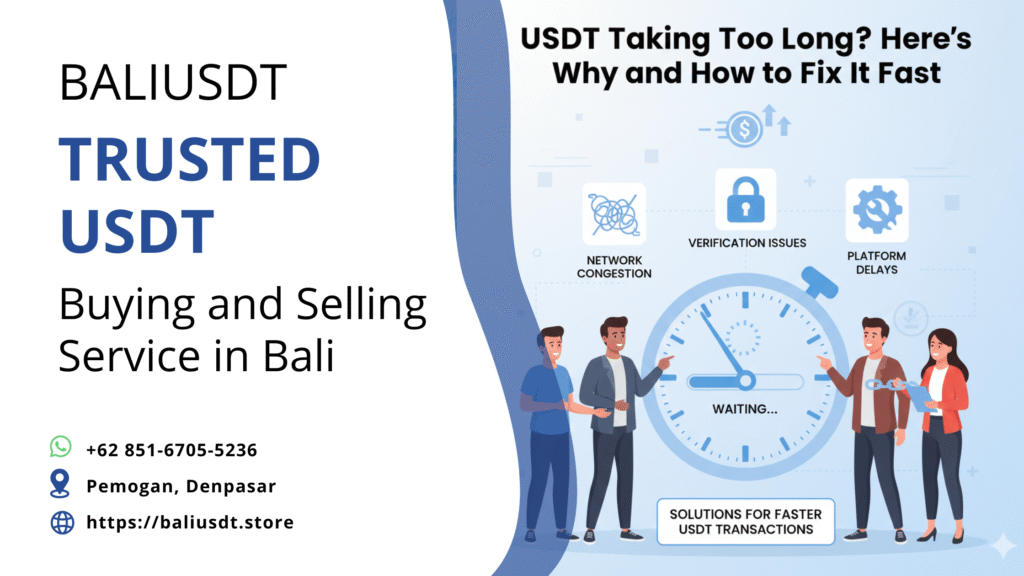
The question, why is USDT Tether taking so long, is one of the most common frustrations for international users, especially travelers, digital nomads, and expats depending on fast cross-border fund transfers. Although USDT (Tether) is a stablecoin designed for efficiency, the time it takes to move from one wallet to another is not determined by Tether itself. Instead, the transaction speed relies entirely on the underlying blockchain network you choose. Delays—ranging from minutes to hours—almost always stem from high network congestion on chains like Ethereum or, critically, the sender paying an insufficient transaction fee for the current traffic level. Understanding these factors helps you choose the fast track for your funds.
The Primary Culprit: Your Chosen Blockchain Network
The number one factor dictating why is USDT Tether taking so long is the specific blockchain network carrying the token. USDT exists on multiple chains, and their speeds vary dramatically.
ERC-20 vs. TRC-20: A Tale of Two Speeds
For practical purposes, most travelers encounter two main versions of USDT:
- Ethereum Network (ERC-20 USDT): Ethereum is a decentralized computer that processes smart contracts. When the network experiences high demand (congestion), the available block space becomes scarce. Consequently, transactions slow down, often taking anywhere from 10 minutes to over an hour during peak times. This is a common reason why is USDT Tether taking so long.
- Tron Network (TRC-20 USDT): Tron is built for high throughput and fast settlements. Transfers on the TRC-20 network are generally confirmed in seconds to a minute. Because its fees are minimal and its bandwidth is high, TRC-20 is the default, efficient choice across Southeast Asia, including Indonesia.
Always confirm that both your sending and receiving addresses support the same network—preferably TRC-20—to guarantee maximum speed and minimal cost.
Secondary Factor: Network Congestion and Fee Priority
Even on a generally fast network, high traffic can cause delays. This issue ties directly to the fee you pay to the network validators.
How Gas Fees Prioritize Your Transaction
Blockchain validators (miners or stakers) prioritize transactions based on the attached fee, which is called “Gas” on Ethereum.
- Low Fee Penalties: If you, or the exchange you are withdrawing from, set a transaction fee that is too low for the current network congestion, your transfer will be stuck in the “mempool” or “waiting room.” Validators process higher-paying transactions first, meaning your transfer waits longer. This explains why is USDT Tether taking so long when network traffic is high.
- Volatile Costs: During periods of market volatility or intense activity in decentralized finance (DeFi), the competition for block space increases sharply. The cost for a “priority” transaction on Ethereum can surge, making it very expensive to ensure a fast transfer.
Therefore, you must always select a high enough fee, or, better yet, choose an inherently low-fee network like TRC-20 to sidestep this problem entirely.
Exchange Processing Delays and Safety Checks
Sometimes, the delay in a USDT transfer has nothing to do with the blockchain itself. Instead, the centralized exchange (CEX) or wallet provider adds internal steps. This can also answer why is USDT Tether taking so long.
Internal Security and Review Times
Centralized platforms add delays for security and regulatory compliance.
- Internal Batching: Exchanges often batch multiple withdrawals together to save on overall transaction fees. If you submit a withdrawal request, you may have to wait until the exchange aggregates enough other withdrawals to process the block efficiently.
- Security Review: Large withdrawals, or withdrawals to a new, unfamiliar address, often trigger manual or automated security reviews. These checks are designed to protect your funds from phishing or hacking attempts but can add minutes, or even hours, to the total time.
Furthermore, regulated exchanges must adhere to “Travel Rule” regulations in some jurisdictions. This may require them to collect and transmit information about the transaction, causing a further pause before the funds leave their control.
Practical Solutions for Travelers: Ensuring Speedy USDT Transfers
For digital nomads and expats in places like Bali, fast access to funds is critical for seamless travel. You need to know how to prevent or troubleshoot why is USDT Tether taking so long.
The Traveler’s Speed Checklist
You can take proactive steps to ensure your USDT reaches its destination quickly and cheaply:
- Always Choose TRC-20: This is the single most effective action. The fast block times and minimal fees on the Tron network virtually eliminate the “taking so long” issue.
- Verify Network Compatibility: Double-check that both the sending and receiving wallets specify the TRC-20 network. A mismatch means a permanent loss of funds, which is far worse than a delay.
- Check Exchange Withdrawal Times: Before initiating a large transfer, check your exchange’s processing time status page, as they often update during periods of high congestion.
- Use Block Explorers: If your transaction seems stuck, use the transaction hash (TxID) on a block explorer (like TronScan for TRC-20) to see if it has been confirmed by the network yet. If it’s confirmed but not credited, the issue lies with the receiving platform.
By prioritizing TRC-20, you move your stablecoin with minimal friction and cost.
The Final Step: Fast Conversion to Indonesian Rupiah (IDR)
Once your USDT has successfully and quickly transferred—ideally via TRC-20—to a secure location in Indonesia, the final step is converting the commodity into usable local currency.
USDT as a Compliant Commodity
While the transfer speed is important, remember the local legal context:
- Legal Obligation: Indonesian law treats USDT as a tradable commodity, not as legal tender. Therefore, you must sell your USDT for the local currency, IDR. This ensures compliance and allows you to pay for accommodation, transportation, and local services legally.
- Security and Location: The final step requires a professional service. Avoid high-risk P2P deals. Our office in Pemogan, Denpasar, provides a secure and transparent venue for this compliant conversion. This eliminates any security concern associated with carrying large amounts of cash or dealing with unknown individuals.
You can check today’s USDT selling rate via WhatsApp to ensure a smooth transition from your digital assets to local currency.
Conclusion
The question, why is USDT Tether taking so long, usually points to two main issues: high network congestion on the costly Ethereum network (ERC-20) or insufficient transaction fees. For the international traveler, the simple, definitive solution is to consistently use the low-fee, high-speed TRC-20 network for all USDT transfers. This choice minimizes delays and preserves your capital, ensuring you have swift access to your funds. Once your USDT is quickly transferred, you can then compliantly sell the commodity for Indonesian Rupiah through a verified, secure local service in Bali.
Check today’s USDT selling rate via Whatsapp
📲 WhatsApp us to sell your USDT safely: +62 851-6705-5236
Visit our office in Bali for secure USDT selling: Pemogan, Denpasar
USDT is processed as a commodity sale in Indonesia, not as a direct payment method.
Read also: Where to Buy USDT in Malaysia? A Traveler’s Guide to Safety