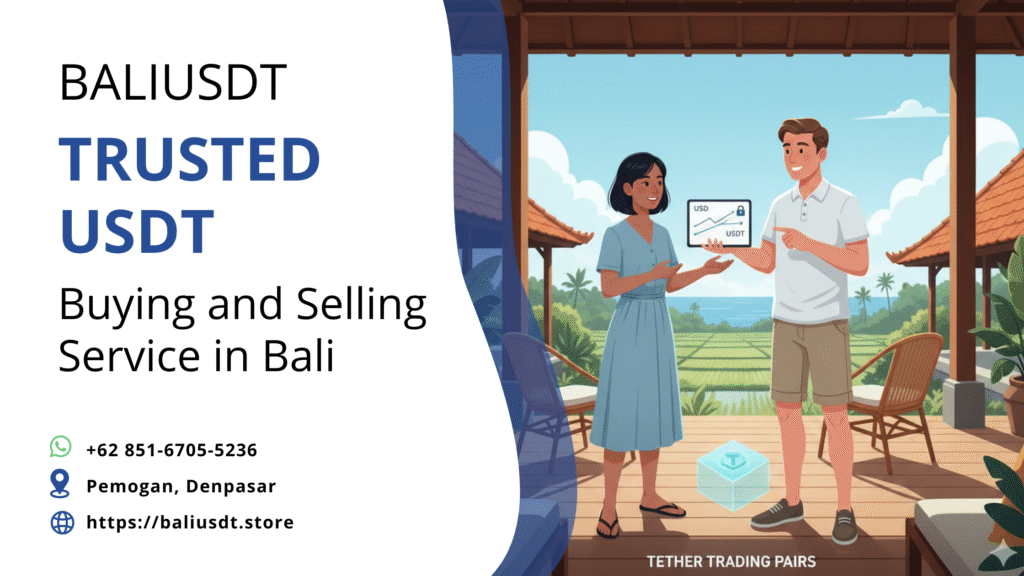
The question, are coins listed as USD on Tether really USDT, reflects a common point of confusion for international travelers and digital nomads navigating cryptocurrency exchanges. While Tether (USDT) is pegged 1:1 to the US Dollar (USD), the two terms are not interchangeable on trading platforms. USDT is a stablecoin—a decentralized digital asset living on a blockchain—issued by a private company, Tether Limited. Conversely, USD is the official fiat currency of the United States. The government and the Federal Reserve back it. Understanding this distinction is absolutely essential for safe trading, correct fund management, and successful conversion of digital wealth into local currency when traveling in places like Bali.
The Technical Distinction: USD vs. USDT
To definitively answer are coins listed as USD on Tether really USDT, we must establish the formal definitions used by exchanges and regulators.
Fiat vs. Stablecoin: The Core Difference
The difference lies in their underlying form, regulatory backing, and mechanism of transfer.
- USD (Fiat Currency): This is the physical and digital money a sovereign government issues. Traditional banking systems (SWIFT, ACH, etc.) process its transactions. On an exchange, a USD trading pair (e.g., BTC/USD) implies that a bank-integrated account holds or transfers the fiat currency.
- USDT (Tether Stablecoin): This is a digital token running on a blockchain (like Tron or Ethereum). Its value is pegged to the USD, but it remains a distinct asset. Transactions occur on a public ledger. This offers speed and low cost, particularly for cross-border transfers.
Therefore, when you see a coin listed against USD, the exchange prices it against the actual government currency. This typically requires a regulated gateway. When a coin is listed against USDT, however, the exchange prices it against the digital stablecoin.
The Exchange Listing Convention: BTC/USD vs. BTC/USDT
The ambiguity surrounding are coins listed as USD on Tether really USDT stems from exchanges attempting to simplify their tickers. However, most major international exchanges maintain a clear distinction.
The Quoted Currency Matters
In a trading pair like BTC/X, the quoted currency X is the asset you use to buy or sell the base asset, BTC.
- USDT Pairs (e.g., BTC/USDT): These pairs dominate the global crypto market. They let traders move into a stable, USD-equivalent asset without ever leaving the cryptocurrency ecosystem. They offer high liquidity. Users globally can access them, even those who cannot easily access bank transfers for fiat USD.
- USD Pairs (e.g., BTC/USD): These are less common globally. You find them mainly on highly regulated exchanges that have established banking relationships for fiat deposits and withdrawals. A trade in BTC/USD truly means you are buying Bitcoin with actual fiat US dollars. This is usually subject to stricter regulatory oversight and geographical restrictions.
In summary, the vast majority of trading activity and liquidity for international users uses USDT pairs. This makes the question of are coins listed as USD on Tether really USDT critically important for liquidity and tax purposes.
USDT’s Role in Cross-Border Transactions
For travelers, the most practical reason to understand the difference is convenience and cost efficiency when moving funds across borders.
Speed and Accessibility for Nomads
The accessibility of USDT solves a major headache for digital nomads and expats.
- Bypassing SWIFT: Traditional international bank transfers using fiat USD (SWIFT) are notoriously slow and expensive. They often take 3-5 business days and incur high fees. In contrast, transferring USDT (especially on the TRC-20 network) takes mere seconds or minutes and costs fractions of a dollar.
- Global Liquidity: Because it is a stable digital asset, travelers can easily move USDT between countries. For example, they can move it from a European exchange to a compliant local conversion service in Bali. They do this without dealing with banking hours, holidays, or complex compliance rules for fiat USD wires.
Consequently, while the values are nearly identical, the functional difference between USD and USDT makes the stablecoin a far superior tool for managing travel finances.
The Local Conversion Challenge in Indonesia
For travelers who have brought their digital wealth in USDT, the final step involves converting the asset into Indonesian Rupiah (IDR). This is where the legal classification supersedes the exchange ticker.
Legal Status: Commodity, Not Currency
In Indonesia, you must understand that regulators classify USDT—regardless of the initial question are coins listed as USD on Tether really USDT—as a tradable commodity, not legal tender.
- Mandatory Sale: You cannot legally use your USDT directly to pay for goods or services. You must legally sell the USDT commodity for IDR. Therefore, the traveler’s process is not a withdrawal of USD, but a sale of a digital asset for the local fiat currency.
- Security and Compliance: To ensure both personal safety and adherence to local law, selling your USDT commodity via a secure, verified local service is the recommended off-ramp. You can get guidance for selling USDT legally in Indonesia. We provide secure assistance at our office in Pemogan, Denpasar.
This final step highlights the practical difference: you are not dealing with US dollars; you are dealing with a local commodity transaction involving a USD-pegged asset.
Ensuring Transaction Safety and Avoiding Errors
When dealing with USDT, safety protocols are non-negotiable. Confusing USD with USDT can lead to permanent fund loss.
The Importance of Network Verification
When transferring USDT, confusing the network creates the biggest risk, not the asset name.
- Network Mismatch: Always remember that USDT exists on several blockchains. If you send USDT on the Ethereum network (ERC-20) to an address that only supports the Tron network (TRC-20), your funds are lost. You must always confirm the network selection (e.g., TRC-20) on both the sending and receiving platforms, irrespective of whether the exchange simplifies the listing to “USD” or correctly labels it “USDT.”
- Using Verified Channels: For conversion into IDR, trust is paramount. Always use a verified service. It offers transparency on fees and conversion rates. You can find secure, professional conversion services here: BaliUSDT.store.
This attention to detail ensures your stable digital dollars remain secure and available for conversion.
Conclusion
The definitive answer to are coins listed as USD on Tether really USDT is technically no: USD is government fiat, while USDT is a blockchain stablecoin. However, they are tightly pegged in value. For international travelers, understanding this difference proves key to efficient finance. You should prioritize trading and transferring USDT—specifically using the low-cost TRC-20 network—because of its speed and accessibility across borders. Finally, when arriving in Indonesia, remember you must sell your USDT as a commodity to access the local legal tender, the Indonesian Rupiah, through a secure and compliant service.
Get guidance for selling USDT legally in Indonesia
📲 Whatsapp us to sell your USDT safely: +62 851-6705-5236
Visit our office in Bali for secure USDT selling: Pemogan, Denpasar
USDT is processed as a commodity sale in Indonesia, not as a direct payment method.
Read also: Why Is Bitcoin USDT and USDC Different? A Traveler’s Guide