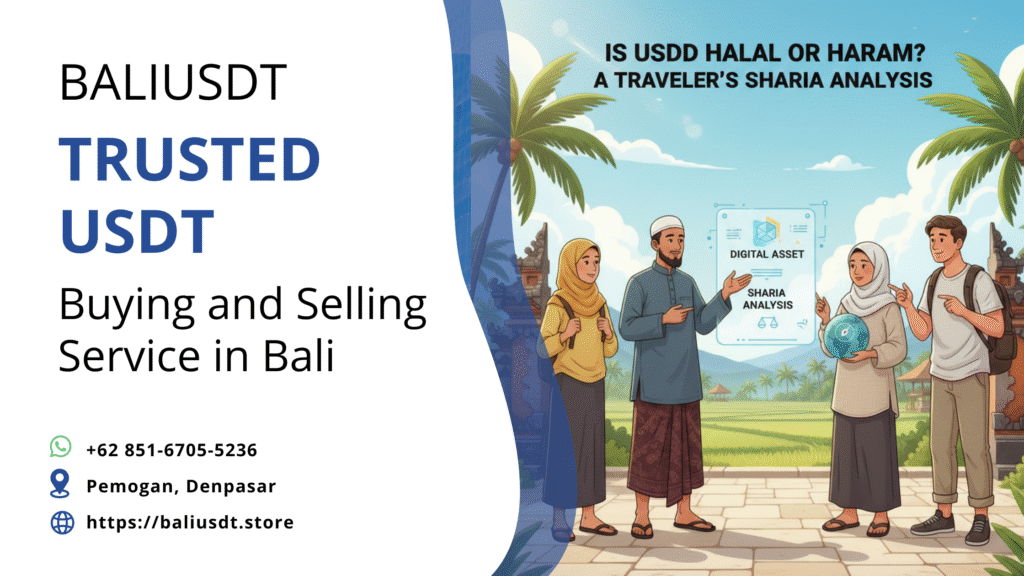
The question, is USDT halal or haram in Islam, is fundamental for the increasing number of Muslim travelers, expats, and digital nomads who seek to manage their finances according to Sharia principles. USDT (Tether) is a stablecoin pegged 1:1 to the US Dollar. Therefore, we judge its Sharia compliance on two primary factors: the underlying assets that back the stablecoin (reserve screening) and the specific way the user utilizes the stablecoin (usage compliance). While many classical scholars debate the permissibility of cryptocurrencies due to Gharar (excessive uncertainty) and Maysir (gambling), stablecoins receive generally favorable views, especially when used for practical purposes like cross-border transfers and value preservation.
Sharia Principles Governing Digital Assets
To assess is USDT halal or haram in Islam, we must first look at the core principles of Islamic finance that govern all Muamalat (financial transactions).
Prohibition of Riba (Interest/Usury)
The prohibition of Riba is the most definitive rule in Islamic finance. This refers to an unjustified, predetermined excess or interest charged on a loan or deferred payment.
- USDT Holding: Simply holding USDT in a private wallet is generally considered Halal. It represents a digital form of a permissible asset (USD) and does not inherently generate interest.
- Lending/Staking: Generating yield on USDT through lending or staking protocols requires careful screening. If the returns are guaranteed and structured like interest payments, this falls under Riba and makes the use of USDT Haram. Compliant earning must rely on genuine profit-and-loss sharing (Mudarabah or Musharakah).
Consequently, the individual’s actions with the stablecoin often determine the final answer to the question, is USDT halal or haram in Islam.
Analyzing USDT’s Reserve Backing for Compliance
A significant challenge in determining is USDT halal or haram in Islam lies in the nature of its backing reserves. USDT is primarily backed by cash equivalents, including U.S. Treasury Bills and commercial paper.
The Problem of Non-Sharia Compliant Instruments
While Tether’s reserves ensure stability, they often contain elements religious scholars deem problematic.
- Interest-Bearing Instruments: The reserves Tether holds include a high percentage of U.S. Treasury Bills and other short-term debt instruments. These instruments generate interest, which constitutes Riba.
- The Investor’s Relationship: However, a key distinction exists: when you buy USDT, you do not become a fractional owner of Tether’s reserve assets. You do not receive the interest income those reserves generate. You simply hold a claim on Tether for 1 USD.
- The Permissible View: Therefore, many contemporary Sharia advisory firms conclude that USDT is permissible (Halal) for use in Sharia-compliant transactions. Purchasing the token does not grant the holder the rights to the Riba generated from the underlying assets. The focus rightly shifts back to the usage.
This nuance is crucial for travelers. It suggests that holding and using USDT as a currency medium is generally acceptable, provided the user avoids activities that generate Riba directly.
Practical Usage: Halal Transfers for the Traveler in Bali
For the digital nomad and expat in Indonesia, the primary utility of USDT is safe, fast, and low-cost cross-border fund transfer. This application is often viewed as aligning with Sharia principles.
Avoiding Gharar (Excessive Uncertainty) and Maysir (Gambling)
Stablecoins like USDT significantly mitigate the two major risks scholars often cite in cryptocurrency: Gharar and Maysir.
- Mitigating Gharar: Unlike highly volatile coins that can plummet in value, USDT’s 1:1 peg to the US Dollar removes the excessive price uncertainty (Gharar) that many scholars find objectionable. This makes it a dependable medium of exchange.
- Avoiding Maysir: Using USDT for its intended purpose—transferring and storing value—avoids the risk of Maysir (gambling/speculation). However, using USDT in high-leverage futures trading or for funding Haram activities (like gambling websites) would make that specific transaction Haram.
- Permissible Utility: Using USDT on the efficient TRC-20 network to send funds to a local service for conversion to Indonesian Rupiah is a simple act of value transfer. This aligns with the Islamic principle of facilitating ethical and efficient commerce.
Therefore, for its core utility in securing travel funds, USDT’s stability supports a Halal classification.
The Legal and Cultural Context in Indonesia
Understanding the local legal and religious context is essential when asking is USDT halal or haram in Islam while staying in a Muslim-majority country like Indonesia.
The MUI Fatwa and Commodity Status
Indonesia’s regulatory bodies and religious authorities have provided guidance on cryptocurrencies.
- MUI Stance: The Indonesian Ulema Council (MUI), a highly influential Islamic scholarly body, has issued fatwas. These generally prohibit using volatile cryptocurrencies as a form of currency due to Gharar and other legal conflicts. However, the MUI has also provided conditions under which one may trade a crypto asset as a commodity.
- The Commodity Classification: Indonesian law classifies USDT as a commodity or digital asset that is permissible for trading, not as a legal currency for payments. This is a critical distinction. It avoids conflict with currency laws and some of the religious prohibitions on using assets with Gharar as currency.
- The Safe Off-Ramp: As a result, the Halal way to access your funds in Bali is to sell your USDT commodity for Indonesian Rupiah (IDR) through a legally recognized service. This compliant off-ramp converts your Halal-held asset into usable, local currency. You can find out how to complete this process securely and compliantly at BaliUSDT.store.
For the international traveler, adhering to this legal process ensures both Sharia compliance and local financial law compliance.
Conclusion
Is USDT halal or haram in Islam? The consensus among many contemporary Sharia advisors leans toward Halal, provided the user maintains Sharia compliance in its usage. While the interest-bearing nature of Tether’s reserve assets causes concern, holding USDT itself is generally permissible because the token holder does not receive that Riba. For the expat and digital nomad in Bali, using USDT for its primary function—a stable, highly liquid medium to transfer value and securely convert into Indonesian Rupiah through a compliant commodity sale—aligns with the principles of avoiding excessive uncertainty (Gharar) and Riba.
Get guidance for selling USDT legally in Indonesia
📲 Whatsapp us to sell your USDT safely: +62 851-6705-5236
Visit our office in Bali for secure USDT selling: Pemogan, Denpasar
USDT is processed as a commodity sale in Indonesia, not as a direct payment method.
Read also: How to Deposit USDT Safely: A Step-by-Step Guide for Travelers