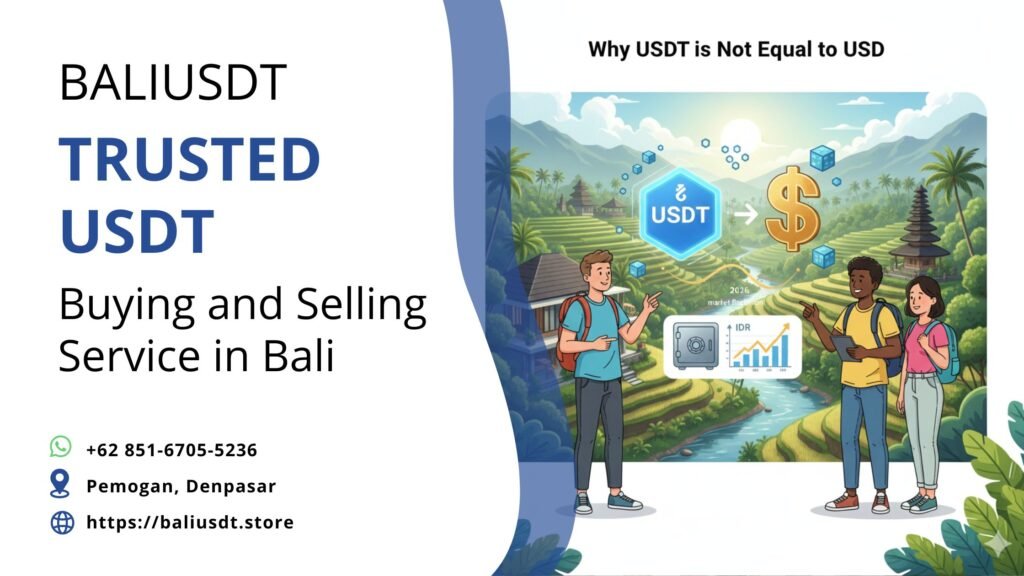
Many travelers arriving in Indonesia often wonder why usdt is not equal to usd when they look at live exchange rates on their trading apps. While Tether (USDT) is designed to mirror the value of the United States Dollar, slight variations occur due to market dynamics, liquidity, and local demand. For digital nomads and expats living in Bali, understanding these tiny fluctuations is crucial for managing daily expenses. Whether you are paying for a long-term villa rental in Pererenan or budgeting for a month of co-working in Ubud, knowing how stablecoins behave helps you maximize your funds. This guide explains the mechanics of the USDT peg and how you can navigate the financial landscape in Bali safely.
Understanding the Mechanics of the Stablecoin Peg
The primary reason why usdt is not equal to usd at all times involves the concept of supply and demand on open exchanges. Tether is a digital asset backed by reserves, but it trades on global platforms where buyers and sellers determine the price. If a sudden wave of volatility hits the crypto market, thousands of traders might rush to buy USDT to protect their capital. This surge in demand can push the price to $1.01 or $1.02 temporarily. Conversely, if large holders sell off their USDT, the price might dip slightly below the dollar mark.
Furthermore, the “peg” is maintained through an arbitrage mechanism. Professional traders buy USDT when it is cheap and redeem it for actual dollars from Tether Limited when the price is right. However, for the average traveler in Bali, these micro-fluctuations are usually negligible. You might see a 0.1% difference on your screen, which is simply the market’s way of breathing. Understanding this reality prevents unnecessary panic when you notice that why usdt is not equal to usd is a result of healthy market activity rather than a systemic failure.
Local Liquidity and the IDR Exchange Rate
When you are in Indonesia, you aren’t just looking at the USDT/USD pair; you are likely looking at the USDT/IDR pair. This adds another layer to why usdt is not equal to usd in a practical sense. Local demand in Indonesia for digital assets is incredibly high in 2026. Because many Indonesians use USDT as a hedge against the inflation of the Rupiah, the local price of USDT often carries a “premium.”
This means that if you sell your USDT in Bali, you might actually get a better rate than the official central bank rate for physical greenbacks. Since physical cash involves logistics, storage, and transport costs, digital commodities like USDT are often more efficient. If you are staying in the Pemogan, Denpasar area, you will find that local exchange services reflect these market-driven rates. Consequently, the answer to why usdt is not equal to usd in Bali often works in favor of the traveler, providing more Rupiah for your digital assets than you might expect.
Safety and Convenience for Digital Nomads
For the modern digital nomad, carrying stacks of physical US dollars is both risky and outdated. Bali is a tropical paradise, but like any major tourist destination, it is wise to avoid flashiness. Using digital assets allows you to keep your wealth secure in a hardware wallet or a protected exchange account. Understanding why usdt is not equal to usd helps you plan your conversions without stress. You can monitor the rates and choose to sell when the “digital dollar” is at its strongest.
Moreover, the convenience of digital transactions is unmatched. Instead of searching for a money changer that might use predatory “magic” counting techniques, you can rely on transparent blockchain records. When you understand the minor price gaps and why usdt is not equal to usd, you become a more sophisticated consumer. You can use platforms like BaliUSDT.store to stay updated on how to handle your assets within the local legal framework. This digital-first approach is the safest way to fund your lifestyle, from renting scooters to booking fast boats to the Gili Islands.
Cultural Nuances and Transaction Etiquette
While Indonesia is very tech-forward, there is a specific way to handle finances culturally. Balinese culture deeply values trust and “Tri Hita Karana” (harmony among people). When dealing with financial services, being polite and patient goes a long way. Even if you are frustrated by why usdt is not equal to usd during a market dip, remember that the local staff are navigating the same global market as you.
It is also vital to remember that in Bali, the Indonesian Rupiah is the only legal tender for direct payments. You cannot pay for a Balinese massage or a “Babi Guling” dinner directly with USDT. You must first convert your assets into IDR. Knowing why usdt is not equal to usd allows you to explain your budget better if you are negotiating long-term stays with local landlords. Most landlords are aware of crypto but prefer the stability of the national currency for their own accounting.
Navigating the 2026 Regulatory Landscape
In 2026, Indonesia has clarified its stance on digital assets significantly. The government views USDT as a commodity, which is a key reason why usdt is not equal to usd in a legal classification sense. One is a sovereign currency; the other is a tradable digital good. This distinction is important for your tax and compliance records as an expat.
To stay safe, always ensure you are using services that comply with local guidelines. Selling your USDT through verified channels ensures that the Rupiah you receive is “clean” and documented. If you ever feel confused about the current market rates or why usdt is not equal to usd on a specific day, reaching out to local experts is the best move. They can provide context on whether the gap is due to global news or simply a local holiday in Indonesia that has slowed down banking liquidity.
Conclusion
In summary, the fact that why usdt is not equal to usd is a natural byproduct of a decentralized, 24/7 global market. For the savvy traveler in Bali, these price differences are rarely a cause for concern and are often an opportunity to get a better deal on the local currency. By staying informed about the market, respecting local laws, and using secure exchange methods, you can enjoy everything the island has to offer with total financial peace of mind. From the surf breaks of Uluwatu to the cultural heart of Denpasar, your USDT is a powerful tool—as long as you know how to use it.
Get the Best Value for Your USDT
Navigating the world of stablecoins can be complex, but selling your assets in Bali doesn’t have to be. Whether you are funding your next adventure or paying for your monthly expenses, we provide a secure, professional service to help you convert your USDT to Rupiah at competitive rates.
- Check today’s USDT selling rate via WhatsApp to see how the current market affects your exchange.
- Visit our office in Bali for secure USDT selling and meet our team in person. We are located in the heart of Pemogan, Denpasar.
- Get guidance for selling USDT legally in Indonesia to ensure your stay remains trouble-free.
📲 WhatsApp us to sell your USDT safely: +62 851-6705-5236
USDT is processed as a commodity sale in Indonesia, not as a direct payment method.
Read also : Will USDT Coin Go Up? A 2026 Guide for Bali Expats and Nomads