If you are currently sipping a fresh coconut in Canggu, you might wonder how does usdt stay stable while the rest of the crypto market feels like a wild ride. For the growing community of digital nomads and international expats in Bali, Tether (USDT) has become the go-to digital asset for managing daily life. Whether you are budgeting for a luxury villa in Uluwatu or saving up for a surf trip to the Mentawai Islands, having a predictable financial tool is essential. In 2026, the Indonesian financial landscape has evolved significantly, making it more important than ever to understand the mechanics that keep your digital commodities pegged to the value of the US Dollar.
The Foundation of Stability: Fiat Reserves
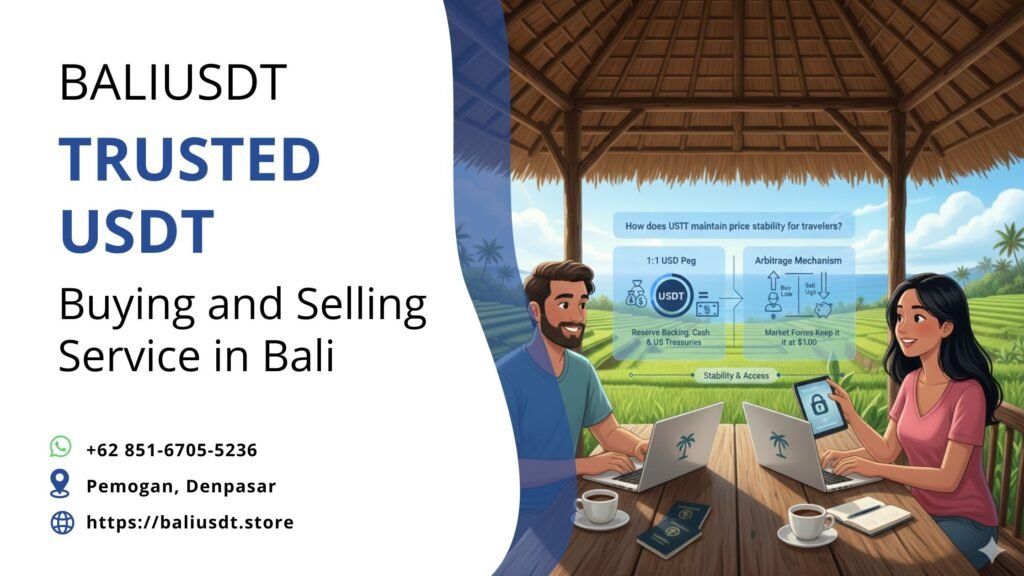
The most direct answer to how does usdt stay stable lies in its massive reserve system. Tether Limited, the company behind USDT, maintains a 1:1 ratio of reserves to tokens in circulation. This means for every single USDT token you hold in your digital wallet, there is an equivalent amount of value held in safe, liquid assets like U.S. Treasury bills and cash deposits.
By January 2026, Tether has significantly improved its transparency reports, providing real-time data to reassure the global market. For a traveler in Bali, this reserve backing acts as a safety net. It ensures that when you need to convert your assets to fund your stay, the value remains consistent with the global dollar. While other tokens might fluctuate based on hype, the physical assets sitting in bank vaults are what prevent USDT from losing its peg.
Market Arbitrage: The Invisible Balancing Act
Another key mechanism in how does usdt stay stable is the process of market arbitrage. In the world of finance, arbitrageurs are professional traders who look for tiny price differences across various exchanges. If the price of USDT on a platform like Indodax drops slightly to $0.99, these traders immediately buy the discounted tokens. They then redeem them directly with Tether for the full $1.00 value, pocketing the profit.
This constant buying and selling pressure creates an “invisible hand” that pushes the price back to its $1.00 target. As a nomad in Bali, you benefit from this efficiency every time you check your wallet balance. Even during periods of high market volatility, these arbitrageurs ensure that the digital commodity you rely on stays steady. This reliability is why so many foreigners choose to keep their “travel chest” in USDT rather than volatile coins.
Navigating Bali’s 2026 Financial Landscape
As of 2026, Indonesia has centralized the oversight of digital assets under the OJK (Financial Services Authority). This move has brought much-needed professional standards and legal certainty to the industry. When you research how does usdt stay stable, you are participating in a regulated commodity market. This transition has made it safer for expats living in areas like Pemogan or Denpasar to handle their financial affairs.
However, it is vital to remember that while USDT is a stable commodity, the Indonesian Rupiah (IDR) is the only legal currency for direct payments. You cannot pay for a scooter rental or a meal at a local “warung” directly with digital assets. Instead, you must convert your USDT into physical cash or a local bank transfer. Understanding this legal distinction is the hallmark of a savvy traveler who respects local laws while enjoying modern financial freedom.
Why Digital Nomads Prefer USDT Over Traditional Banks
Many travelers ask, “If the goal is stability, why not just use a traditional bank?” The answer often comes down to speed and cost. When you understand how does usdt stay stable, you realize it offers the reliability of a bank but with the speed of a blockchain. International wire transfers to Indonesian banks can take several days and involve hefty intermediary fees.
In contrast, moving USDT via the TRC20 (Tron) network is nearly instantaneous and costs a fraction of a dollar. This efficiency allows you to be nimble. If you suddenly decide to book a last-minute flight to the Gili Islands or need to extend your remote worker visa, you can liquefy your stable assets in minutes. For those who want the best experience, visiting a professional service like BaliUSDT.store ensures a smooth transition from digital stability to local spending power.
Practical Tips for Secure Transactions in Bali
Understanding how does usdt stay stable is only half the battle; the other half is maintaining personal security. Bali is generally safe, but digital hygiene is non-negotiable for nomads. Never access your exchange account on public Wi-Fi in crowded cafes without a secure VPN. Because USDT transactions are irreversible, a single mistake could be permanent.
- Network Check: Always ensure you are using the TRC20 network for the lowest fees in Bali.
- Physical Safety: Carry only the amount of IDR cash you need for the day. For larger expenses, rely on local bank transfers.
- Reputable Partners: Avoid “street-side” crypto traders. Stick to established offices in Denpasar or Pemogan for your conversion needs.
- Cultural Respect: When visiting local offices to sell your assets, a polite “Om Swastiastu” goes a long way in building rapport with the Balinese staff.
Converting Your Stable Assets to Local Cash
Once you are confident in how does usdt stay stable, you need a reliable way to get physical Rupiah. The 15,500 to 16,000 IDR per dollar exchange rate means you will be handling large stacks of notes. Using an “Over-the-Counter” (OTC) desk is the most professional way to handle this. You can verify the transaction in a secure environment and leave with your funds ready for immediate use.
This “hybrid” financial approach—holding stable digital commodities and spending local currency—is the secret to a high-quality life in Bali. It allows you to protect your savings from global inflation while enjoying the affordable and vibrant lifestyle that the Island of the Gods provides. Whether you are a long-term expat or a short-term tourist, mastering this system is key to a stress-free journey.
Conclusion
In summary, the question of how does usdt stay stable is answered by a combination of physical reserves, market arbitrage, and a mature regulatory environment. In 2026, Tether remains the backbone of the digital nomad economy in Bali, offering a haven of predictability in a fast-moving world. By leveraging this stability and using trusted local partners for your currency needs, you can focus on what really matters: exploring the magic of Indonesia.
From the lush jungles of Ubud to the crashing waves of the Bukit Peninsula, your financial security is the foundation of your adventure. With a solid understanding of your digital assets and a respect for local currency laws, you are perfectly positioned to live your best island life.
Ready to Sell Your USDT Safely in Bali?
If you are currently in Bali and need to convert your stable assets into Indonesian Rupiah for your villa, transportation, or daily expenses, our team is here to help you with a secure and fast process.
Visit our office in Bali for secure USDT selling
Office Location:
Pemogan, Denpasar
📲 WhatsApp us to sell your USDT safely: +62 851-6705-5236
USDT is processed as a commodity sale in Indonesia, not as a direct payment method.
Read also : How does USDT make money for its issuers and users?