If you are a traveler or digital nomad exploring the stunning beaches of Uluwatu or the creative hubs of Canggu, you have likely asked yourself: do i need to register to use usdt in Indonesia? As of 2026, the regulatory landscape for digital assets in the “Island of the Gods” has become more sophisticated, yet user-friendly for international visitors. Whether you are holding Tether (USDT) to manage your travel budget or as a digital commodity for long-term investment, understanding the local registration requirements is crucial for a stress-free stay. While you can technically hold assets in a private wallet without a government ID, the way you interact with the local economy often dictates the level of registration you will encounter.
The Legal Framework: Do I Need to Register to Use USDT?
In Indonesia, the answer to do i need to register to use usdt depends entirely on how you define “use.” From a strictly technical standpoint, if you are simply holding USDT in a decentralized “self-custody” wallet like MetaMask or Trust Wallet, there is no central authority in Indonesia that requires you to register your private keys. You can receive, store, and transfer digital assets freely between wallets without providing your passport or local residence permit. This provides a high level of privacy and convenience for travelers who prioritize digital autonomy while moving between different international destinations.
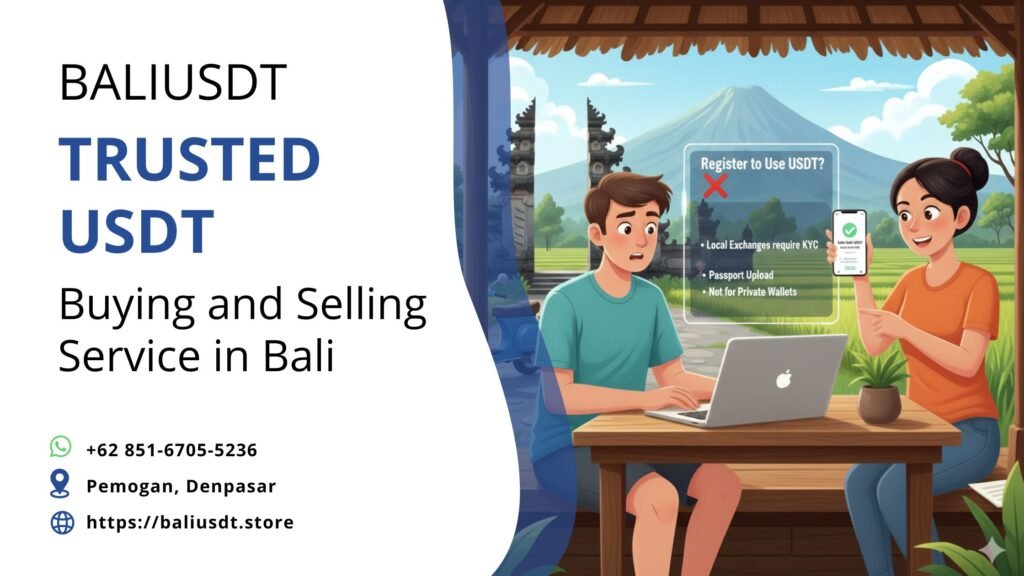
However, the situation changes the moment you want to interact with the regulated financial ecosystem. If you choose to use a local Indonesian exchange—such as Indodax, Pintu, or Tokocrypto—to manage your assets, you will definitely need to register. These platforms are governed by Bappebti and OJK, which mandate strict Know Your Customer (KYC) procedures. For most foreign tourists, this means uploading a copy of your passport and potentially providing a local tax ID if you are a long-term resident. Therefore, if your goal is to trade professionally on local platforms, the answer to do i need to register to use usdt becomes a firm yes.
USDT as a Digital Commodity in 2026 Bali
It is important to understand that in Bali, and all of Indonesia, USDT is legally classified as a commodity rather than a payment method. Since the 2011 Currency Law remains the gold standard, all transactions for goods and services on the island—from your morning latte to your scooter rental—must be settled in Indonesian Rupiah (IDR). Consequently, merchants are legally prohibited from accepting USDT as direct payment. While this might seem like a hurdle, it actually simplifies the question of do i need to register to use usdt for daily spending.
Because you cannot pay with it directly, your primary “use” of USDT in Bali will be as a digital asset that you eventually convert into IDR. Many expats find that keeping their main wealth in USDT allows them to avoid the volatility of local currencies until the moment they need cash. Since you are not using it as “money” but rather as a “digital gold,” you can navigate the island with peace of mind, knowing that your assets are protected under the commodity trading framework established by the Indonesian government.
Safety and Security for International Travelers
Bali is generally a very safe destination, but digital security requires your constant attention. If you are asking do i need to register to use usdt because you are worried about the safety of your funds, you should focus on your own cybersecurity practices. Public Wi-Fi in popular tourist cafes can be a vulnerability. Always use a reputable VPN when accessing your wallet. Furthermore, never share your seed phrase with anyone, even if they claim to be a representative from a local financial service.
When you decide to liquidate your assets, the security of the transaction is paramount. If you choose to avoid the registration hurdles of large exchanges, you must ensure you are dealing with a trustworthy partner. Many nomads prefer to sell USDT for cash in Bali through professional services that specialize in safe, face-to-face transactions. This allows you to bypass the technical glitches and high fees of international bank transfers while maintaining your privacy and financial security.
Navigating Bali: Transportation and Local Tips
Once you have converted your USDT into IDR—perhaps because you realized you didn’t want to deal with the registration requirements of a major exchange—you are ready to explore. Transportation in Bali is a unique experience. While apps like Gojek and Grab are incredibly convenient, they require IDR for payment. Similarly, if you are renting a scooter in areas like Seminyak or Sanur, the local vendor will expect physical Rupiah or a QRIS (local QR code) payment linked to an Indonesian bank account.
Keep these local tips in mind for a smooth experience:
- Carry Small Change: Many parking attendants and small warungs only take cash.
- Respect Local Culture: Always carry a sarong when visiting temples like Besakih or Tanah Lot.
- Money Changers: Only use authorized money changers that display the Bank Indonesia “PVA Berizin” logo.
- Digital Convenience: Having a local e-wallet like OVO or GoPay can make your life much easier for small daily purchases.
By handling your USDT professionally, you ensure that you always have the local currency needed to respect and enjoy these cultural nuances.
Choosing the Right Path for Your Asset Management
Ultimately, the question do i need to register to use usdt comes down to your personal preference for convenience versus privacy. If you are a long-term expat with an Indonesian bank account, registering with a local exchange might provide some long-term benefits for frequent trading. However, for most travelers and digital nomads who are only visiting for a few months, the registration process can be an unnecessary administrative burden.
Instead, many find that using a combination of a private wallet for storage and a trusted local service for liquidation is the most efficient path. This hybrid approach allows you to stay compliant with Indonesian commodity laws while avoiding the time-consuming KYC processes of centralized platforms. Whether you are living in the quiet hills of Sidemen or the bustling streets of Denpasar, having a clear strategy for your digital commodities is the key to a successful Bali lifestyle.
Conclusion: Balancing Freedom and Regulation
In conclusion, while you do not need to register with the Indonesian government to simply “own” or “transfer” USDT between private wallets, the moment you move into the regulated trading space, registration becomes mandatory. For the average traveler in Bali, the goal is usually to maintain liquidity and safety without getting bogged down in paperwork. By understanding that USDT is a commodity and not a currency, you can manage your assets legally and effectively.
Bali offers a unique environment where modern technology meets ancient tradition. By mastering the technicalities of your digital assets, you can focus on what truly matters: the culture, the nature, and the community of this incredible island. Stay safe, stay informed, and always have a plan for converting your digital wealth into the local Rupiah that makes Bali run.
📲 WhatsApp us to sell your USDT safely: +62 851-6705-5236
Contact our team for USDT selling assistance
Our Office Location:
Pemogan, Denpasar
USDT is processed as a commodity sale in Indonesia, not as a direct payment method.
Read also : Do I Need Ethereum to Transfer USDT? A 2026 Bali Guide