What is the difference between USDT and USDC? This is a question many travelers and digital nomads ask as they prepare to navigate the tropical lifestyle of Bali while managing their digital finances. As of 2026, the “Island of the Gods” has become a global epicenter for remote workers who rely on stablecoins to hedge against currency fluctuations and avoid high international banking fees. While you are busy booking your surfboard in Uluwatu or finding the perfect sunset spot in Canggu, understanding which stablecoin best suits your needs is crucial. Both Tether (USDT) and USD Coin (USDC) offer stability pegged to the US Dollar, yet they differ in terms of liquidity, transparency, and local adoption within the Indonesian crypto market.
Understanding the Basics: What is the difference between USDT and USDC?
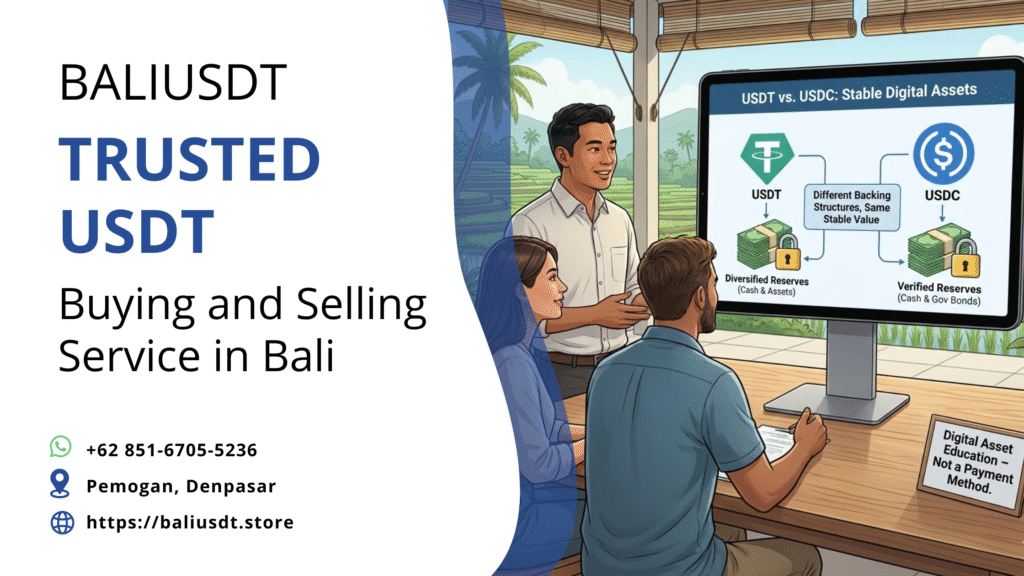
To truly grasp What is the difference between USDT and USDC?, we must look at the companies and philosophies behind them. Tether (USDT), launched in 2014, is the pioneer of the stablecoin world. It is issued by Tether Limited and is currently the most widely traded cryptocurrency after Bitcoin. Its massive liquidity makes it the “de facto” digital dollar for most traders in Southeast Asia. If you walk into a crypto-friendly space in Bali, you will find that USDT is the primary medium for exchange due to its sheer volume and history in the market.
On the other hand, USD Coin (USDC) was launched in 2018 by the Centre consortium, which includes major players like Circle and Coinbase. When people ask What is the difference between USDT and USDC?, the answer often boils down to transparency. USDC is known for its “regulation-first” approach. It undergoes monthly audits by major accounting firms to prove that every digital token is backed by a physical dollar or high-quality US government treasuries. While USDT is the “liquidity king,” USDC is often viewed as the “transparency king,” favored by institutional investors and those who prioritize regulatory compliance above all else.
Local Adoption and Liquidity in the Bali Market
For a tourist or expat, the practical answer to What is the difference between USDT and USDC? lies in how easily you can convert these tokens into Indonesian Rupiah (IDR). In Bali, USDT reigns supreme. Almost every local exchange and professional over-the-counter (OTC) desk prioritizes USDT pairs. This is because the TRON (TRC-20) network, which hosts a significant portion of USDT, offers incredibly low fees—often just $1 per transaction—compared to the higher gas fees sometimes associated with the Ethereum network where USDC is prevalent.
When you are living the nomad life, every dollar saved on transaction fees means more money for weekend trips to Nusa Penida or higher-quality coffee in Ubud. If you hold USDC and want to sell it locally, you might find slightly wider spreads or fewer buyers compared to USDT. Therefore, while both are safe and stable, USDT offers a level of convenience and “spendability” (via conversion to IDR) that USDC currently struggles to match in the Indonesian archipelago. If you are looking for a place that understands these nuances, you can BaliUSDT.store to see how professional local services handle these assets for the international community.
Security and Regulation: Is One Safer in Indonesia?
Safety is a top priority for anyone traveling with digital wealth. When investigating What is the difference between USDT and USDC?, you must consider the Indonesian legal landscape. As of 2026, the Indonesian government classifies crypto assets as commodities. This means you can legally trade both USDT and USDC, provided you use licensed platforms. However, because USDC is so closely tied to US-regulated entities, it may be subject to stricter “freeze” protocols if the US government flags a wallet. USDT has similar capabilities but has historically been more widely distributed across various global jurisdictions.
For a traveler in Bali, the “safety” of a coin often refers to the stability of its peg. Both coins have survived major market stresses, maintaining their $1.00 value through various “crypto winters.” However, if you are an expat who needs to keep your funds in a digital format for months at a time, you might prefer the audited transparency of USDC. Conversely, if you need to move money quickly to pay for a long-term villa rental or a local tour package, the liquidity of USDT is your best friend. Understanding What is the difference between USDT and USDC? helps you decide which “digital wallet” to carry on your Balinese adventure.
Cultural and Practical Tips for Crypto Users in Bali
Living in Bali requires a blend of digital savvy and cultural respect. While you are navigating the technicalities of What is the difference between USDT and USDC?, remember that the local economy is still heavily cash-based for small transactions. You cannot pay a local “Ojek” (motorcycle taxi) driver or a beach vendor directly with stablecoins. In Indonesia, using crypto as a direct payment method is illegal; it must first be converted into Rupiah.
Here are some local tips for crypto-using travelers:
- Short-term vs. Long-term: Use USDT for your “spending money” that you plan to convert to IDR frequently. Use USDC for “rainy day” savings that you want to keep in a highly regulated format.
- Network Matters: When someone asks What is the difference between USDT and USDC?, always mention the blockchain. USDT on the TRON network is the standard in Bali for speed and low cost.
- Avoid Public Wi-Fi: When transferring either coin, always use a VPN. Bali’s cafes are beautiful, but their Wi-Fi networks can be targets for hackers.
- Respect the Laws: Always use professional services to sell your crypto. Dealing with unverified individuals on the street is a quick way to lose your funds.
Why USDT is the Nomad’s Choice in the Kuta Region
If you are staying in the bustling areas of Kuta, Legian, or Seminyak, you will notice that the infrastructure for USDT is much more developed. This is the heart of the answer to What is the difference between USDT and USDC? for the average traveler. Most reputable physical offices in this region specialize in USDT because that is what the international market demands. If you find yourself needing to liquidate assets for a large purchase—perhaps a high-end surf trip or a month-long luxury stay—having USDT will ensure you get the best possible rate and the fastest service.
Our office is located in this prime area, making it convenient for you to visit and discuss your needs in person. You can find us at:
JL. KARTIKA PLAZA, KUTA, KEC. KUTA, KAB. BADUNG, BALI 80361
By visiting a professional location, you can see firsthand What is the difference between USDT and USDC? in terms of real-world application. Our staff can explain the current market trends and help you navigate the process of selling your USDT legally and safely, ensuring you have the Rupiah you need to enjoy the best of Bali’s hospitality and culture.
Conclusion
In the end, the choice between USDT and USDC depends on your personal priorities. When you ask What is the difference between USDT and USDC?, you are choosing between the sheer market dominance of Tether and the audited transparency of Circle. For the traveler in Bali, USDT offers unmatched liquidity and lower transaction costs on the TRON network, making it the practical winner for daily life. However, USDC provides a peace of mind for those concerned with the regulatory oversight of their long-term holdings. Whichever you choose, ensure you stay informed about local Indonesian laws and only use trusted partners for your transactions. With your digital finances in order, you can focus on the beauty of Bali—from the lush terraces of Tegallalang to the crystal waters of Sanur.
If you are looking for a secure and professional way to sell your USDT for local currency, our team is standing by to assist you.
Visit our office in Bali for secure USDT selling
📲 WhatsApp us to sell your USDT safely: +62 851-6705-5236
Legal Note: USDT is processed as a commodity sale in Indonesia, not as a direct payment method.
Read More: What is USDT Coin? A Traveler’s Essential Guide to Bali