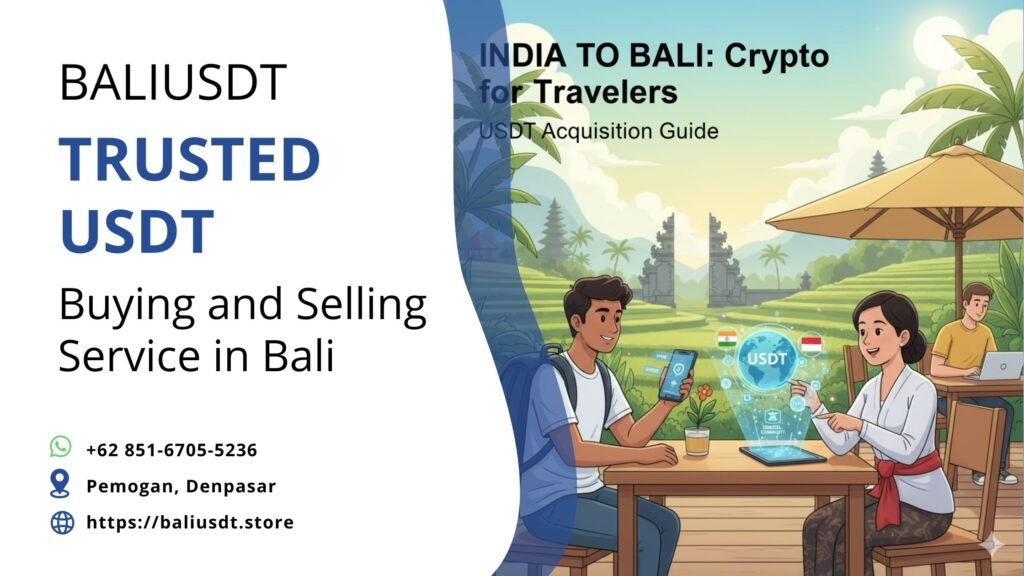
The question, can I buy USDT in India, is increasingly common among the global community of travelers, expats, and digital nomads planning a trip to the Island of the Gods, Bali. As a Virtual Digital Asset (VDA) or stablecoin, Tether (USDT) offers a distinct advantage for international movement of funds, particularly when traversing multiple financial jurisdictions. For those based in India and looking for a convenient way to manage their finances while exploring the vibrant culture and stunning beaches of Bali, understanding the logistics of acquiring and utilizing this digital asset is crucial.
However, the legal landscape surrounding cryptocurrencies in both India and Indonesia requires careful consideration. In India, buying and trading crypto assets is legal, but they are subject to a specific tax framework and are not recognized as legal tender. Conversely, in Indonesia, crypto is considered a commodity, not a currency, and is regulated by the Commodity Futures Trading Regulatory Agency (Bappebti). Therefore, a strategic approach is essential to ensure compliance and convenience during your time in Bali. This comprehensive guide will walk you through the necessary steps and considerations for a smooth financial journey.
Legal Status: Can I Buy USDT in India?
The first and most important point for any traveler is clarity on the legal standing of digital assets. Can I buy USDT in India legally? The clear answer is yes, you can. The Supreme Court of India overturned the Reserve Bank of India’s (RBI) ban on crypto trading in 2020. Consequently, individuals and exchanges can legally buy, sell, and hold cryptocurrencies.
Nevertheless, this legality comes with a specific regulatory structure that must be observed:
- Taxation on Virtual Digital Assets (VDA): The Indian government classifies cryptocurrencies as Virtual Digital Assets (VDA). Profits from the transfer of VDAs are subject to a flat 30% income tax, regardless of the investor’s income slab.
- Tax Deducted at Source (TDS): Furthermore, a 1% Tax Deducted at Source (TDS) is applied to all crypto transactions exceeding a specified threshold. This means that a portion of the transaction value is deducted at the source of the transfer.
- Not Legal Tender: Crucially, cryptocurrencies, including USDT, are not considered legal tender or currency in India. You cannot use them to pay for everyday goods and services directly within the country.
Therefore, you can confidently proceed with acquiring USDT in India through registered and compliant exchanges. Understanding this framework is the foundational first step to safely managing your digital wealth as you prepare for your Bali adventure.
Choosing the Right Exchange for Indian Users
When you decide, “I will buy USDT in India,” your choice of platform is paramount. You should primarily use domestic, regulated exchanges that are compliant with the Financial Intelligence Unit – India (FIU-IND). These exchanges require full Know-Your-Customer (KYC) compliance, which typically involves submitting government-issued documents like a PAN card and Aadhaar card.
Using a compliant platform ensures that your transactions are within the legal boundaries of the Indian financial system. Moreover, these exchanges offer seamless integration with Indian banking systems, allowing for easy deposits and withdrawals of Indian Rupees (INR) using methods like UPI, NEFT, or IMPS. While international exchanges may also be accessible, using a domestically compliant one simplifies adherence to the strict tax and reporting requirements set by the Indian government.
The Bali Connection: Why USDT is a Digital Nomad’s Choice
Once you successfully acquire your digital assets—the USDT you bought in India—the next consideration is its utility in Bali. For digital nomads and long-term travelers, stablecoins like USDT offer key advantages over traditional banks or physical cash.
Avoiding Forex Fees and Fluctuations
One of the biggest financial drains for travelers is the endless cycle of converting one fiat currency to another. Every time you change INR to IDR (Indonesian Rupiah) or USD to IDR, you incur transaction fees, service charges, and often unfavorable exchange rates from banks or traditional money changers.
USDT, being a stablecoin pegged to the US Dollar, offers stability and an easy reference point. By holding USDT, you effectively bypass multiple fiat conversions. When you need local currency in Bali, you only perform one conversion: USDT to IDR, often at a very competitive rate, saving you time and money.
Ease of Transfer and Accessibility
The speed and global accessibility of digital asset transfers are incomparable to traditional wire transfers. Banks can take days, charge exorbitant fees, and require complex paperwork for international transfers. Comparatively, sending USDT from your wallet—regardless of where you bought it, such as when you buy USDT in India—to a verified exchange or service provider in Bali can be completed in minutes, provided you choose the correct blockchain network (like Tron/TRC-20, which has low fees). This efficiency is critical for unexpected expenses or urgent payments when traveling.
The Conversion Process: Selling USDT for Indonesian Rupiah (IDR)
A foreign traveler in Bali needs Indonesian Rupiah (IDR) for everything from renting a scooter to paying for street food and massages. USDT is not used as a direct payment method here; therefore, you must convert it into local cash. This is where a reliable, local exchange partner becomes indispensable.
Security and Trust in Local Exchanges
When dealing with the USDT you acquired when you buy USDT in India, safety must be your top priority. You must only engage with established, reputable local exchanges in Bali that have a physical presence and a track record of transparent, secure operations. These companies operate under Indonesian commodity laws, providing a layer of legal certainty. A professional service will conduct the exchange in a secure, private office environment, minimizing the risks associated with public Peer-to-Peer (P2P) meetings or unauthorized vendors.
A common and trusted method involves a simple, in-person transaction at a secure location:
- The client (traveler) and the exchange representative meet.
- The exchange rate is locked in based on the real-time market price.
- The client transfers the agreed-upon USDT amount from their crypto wallet to the company’s verified wallet address.
- Once the transaction is confirmed on the blockchain, the company’s representative pays the equivalent amount of IDR in physical cash to the client.
For a secure and transparent process in Bali, consider contacting services like BaliUSDT.store, which specialize in converting USDT to IDR for foreigners. This can give you peace of mind that your financial needs are handled professionally.
Critical Considerations for a Smooth Transaction
- Blockchain Network: Always confirm the network (e.g., TRC-20, ERC-20) with your exchange partner beforehand. Mismatched networks lead to lost funds.
- Fees: Be aware of the network fee (gas fee) for the transfer, which is paid by you, the sender. Professional exchanges in Bali will not charge a separate commission but will offer a buy-back rate that is slightly below the market price, which is their profit margin.
- Large Amounts: For security, especially if you have a significant amount of USDT that you bought in India, it is wise to make appointments for conversions and use the services of an established office, like the one in Pemogan, Denpasar. This minimizes public exposure and maximizes safety.
Safety and Compliance for Foreigners in Bali
The Balinese government welcomes digital nomads and foreign investment, but it maintains strict regulations concerning financial activities. Your safety and adherence to local laws are paramount.
Understanding the Commodity Classification
In Indonesia, and thus in Bali, cryptocurrency like USDT is legally classified as a commodity that can be traded, not a currency that can be used for direct payment. This is a subtle but critical distinction. Therefore, the transaction of selling your USDT for IDR is processed as a commodity sale, fully compliant with Bappebti rules. This regulation is designed to protect both consumers and the local financial market.
Transportation and Local Tips
When you travel to or from the exchange location after converting the USDT you bought in India into cash, take precautions:
- Discretion is Key: Avoid discussing the amount of money you are carrying in public.
- Use Reputable Transport: Opt for registered taxis or ride-hailing apps like Gojek or Grab for door-to-door service, especially when carrying large sums of IDR.
- Cultural Note: Balinese culture is known for its warmth and respect. Maintain polite, formal interactions with all service providers, and always confirm rates and procedures clearly before proceeding with any transaction.
Long-Term Financial Planning: USDT Beyond the Vacation
For those planning to stay in Bali for an extended period—perhaps as a digital nomad—understanding how to replenish your funds is just as important as knowing how to initially buy USDT in India.
As a digital nomad, your primary income is often earned in USD, EUR, or another international currency, deposited into foreign bank accounts or earned directly into a crypto wallet. USDT serves as an excellent intermediate asset for wealth preservation while you are abroad.
Think of USDT as your secure, liquid travel fund. Whenever your remote work earnings arrive, you can convert a portion into USDT, benefiting from its stability relative to the US Dollar. Then, as needed, you simply convert this commodity to IDR locally in Bali for your day-to-day expenses, ensuring you always have access to a favorable rate without relying on unpredictable bank transfers. This continuous cycle minimizes exposure to Indian or Indonesian market volatility for your core savings. Furthermore, because the local exchange service is conducted in an office in Bali, you manage the cash-out process safely and in person.
Conclusion: Seamless Financial Travel with Forward Planning
For the traveler or digital nomad asking, can I buy USDT in India, the answer is a resounding yes, provided you navigate the Indian tax and regulatory landscape correctly. Acquiring USDT in India offers a financially intelligent way to carry wealth safely and efficiently for your travels, minimizing conversion fees and maximizing convenience upon your arrival in Bali.
The key to a successful financial journey lies in forward-planning and choosing trustworthy, compliant partners for your local IDR cash-out. By understanding the distinction between cryptocurrency as a VDA/commodity in both countries—taxed in India and traded in Indonesia—you secure a seamless and worry-free financial experience, allowing you to focus on the magic of Bali.
📲 WhatsApp us to sell your USDT safely: +62 851-6705-5236
Get guidance for selling USDT legally in Indonesia
Our office is located in Pemogan, Denpasar for secure, in-person transactions.
USDT is processed as a commodity sale in Indonesia, not as a direct payment method.
Read also : Can I Swap USDT to BNB? A Traveler’s Guide to Crypto Exchange in Bali