For digital nomads and travelers navigating the crypto landscape from the beaches of Bali to the bustling hubs of Southeast Asia, managing digital assets across different blockchain ecosystems is a daily reality. One question that frequently arises is, can I send USDT from Phantom to MetaMask directly? The answer is generally no, not directly in a single, simple transfer. This is because Phantom Wallet is primarily associated with the Solana network, while MetaMask is the leading wallet for Ethereum and other Ethereum Virtual Machine (EVM) compatible chains like Polygon and Binance Smart Chain. These two networks—Solana and EVM chains—are fundamentally different blockchains that do not communicate seamlessly without a specialised tool.
Understanding this technical incompatibility is crucial for keeping your funds safe and accessible, especially when you need to convert your USDT to local currency, such as the Indonesian Rupiah (IDR), to cover your expenses in Bali. This guide will walk you through the essential process of safely moving your USDT between these wallets, focusing on the tool required for this critical cross-chain transfer: the blockchain bridge.
The Core Challenge: Solana vs. EVM Networks
The fundamental reason you cannot directly send assets like USDT between Phantom and MetaMask lies in the architecture of the blockchains they represent. These wallets are simply keys to different vaults built on different foundations.
Phantom Wallet and the Solana Ecosystem
Phantom Wallet was built specifically for the Solana blockchain. USDT on Solana exists as an SPL token (Solana Program Library). Solana is known for its speed, high throughput, and extremely low transaction costs—features that are highly valued by travelers and digital workers needing fast, cheap transfers. Your Phantom wallet address uses a specific format designed for the Solana network.
MetaMask and the EVM Ecosystem
MetaMask is the dominant interface for interacting with the Ethereum Virtual Machine (EVM). USDT on the Ethereum network exists as an ERC-20 token. The EVM standard is the foundation for Ethereum, Polygon, Arbitrum, and many other popular chains. MetaMask wallet addresses are EVM-compatible, meaning they look and work the same across all these networks.
Consequently, trying to send a Solana SPL token (from Phantom) directly to an Ethereum EVM address (in MetaMask) would result in the funds being permanently lost, as the receiving network would not recognise the token standard. This incompatibility makes the direct transfer—the simple answer to can I send USDT from Phantom to MetaMask—impossible.
The Solution: Using a Blockchain Bridge
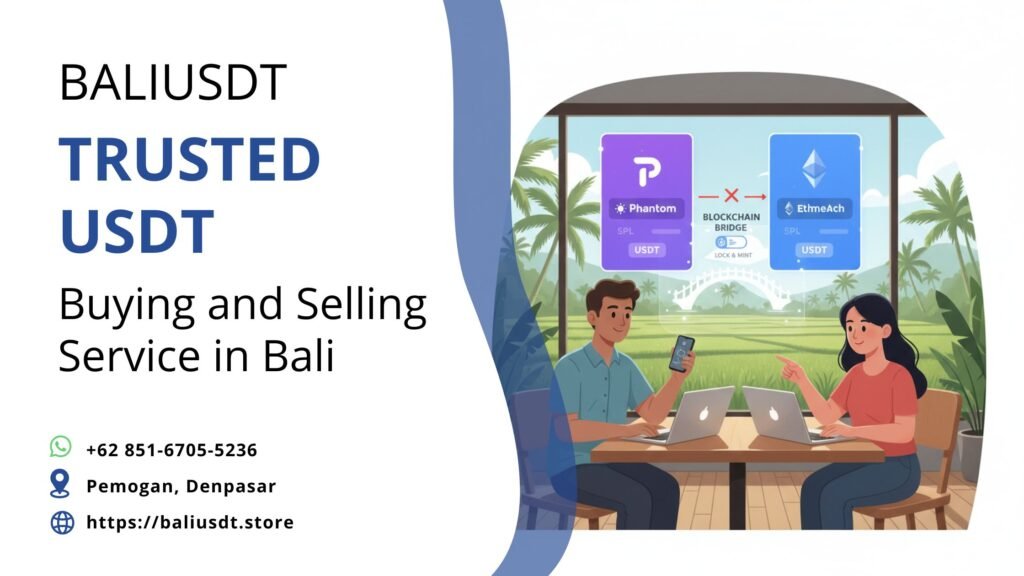
To successfully move USDT between Phantom and MetaMask, you must use a cross-chain bridge. A blockchain bridge is essentially a protocol—a secure tunnel—that facilitates the transfer of tokens from one independent blockchain to another.
How a Cross-Chain Bridge Works
The bridging process works through a mechanism often described as Lock-and-Mint or Burn-and-Mint:
- Locking: When you want to send USDT from Solana (Phantom) to Ethereum (MetaMask), you send your SPL USDT to the bridge’s smart contract on the Solana side. The contract locks the SPL USDT, taking it out of circulation on the Solana network.
- Minting: Once the locking is confirmed, the bridge protocol mints an equivalent, wrapped version of USDT (often W-USDT or a native USDT on the destination chain) on the Ethereum (EVM) side, which is then sent to your MetaMask address.
- Redemption: The wrapped asset is redeemable for the original asset back on the Solana chain by reversing the process (burning the wrapped token and unlocking the original).
Popular, audited bridges like Portal (Wormhole) or certain CEX services offer this functionality. It is crucial to choose a reliable and well-vetted bridge, as they represent one of the most significant security targets in the crypto world.
Step-by-Step Bridging Process
- Select a Bridge: Choose a reputable cross-chain bridge that supports both the Solana and Ethereum networks for USDT.
- Connect Wallets: Connect your Phantom Wallet as the Source Wallet (Solana) and your MetaMask Wallet as the Destination Wallet (e.g., Ethereum Mainnet).
- Initiate Transfer: Specify the amount of USDT you wish to send. The bridge interface will confirm the source token (SPL USDT) and the destination token (ERC-20 USDT).
- Pay Fees: You must have a small amount of the native token on the source chain (SOL in Phantom) to cover the transaction fees on the Solana network.
- Confirm and Wait: You will approve the locking transaction in your Phantom Wallet. After confirmation, the bridge will perform the cross-chain transaction. This process can take anywhere from a few minutes to an hour, depending on the bridge and network congestion.
- Receive in MetaMask: The new ERC-20 USDT will appear in your MetaMask wallet on the designated EVM network. You may need to manually “Add Token” using the correct USDT contract address on the specific EVM chain if it doesn’t appear automatically.
This detailed sequence clearly illustrates why a direct answer to can i send usdt from phantom to metamask is misleading; a multi-step bridging process is always required.
Navigating Cross-Chain Security Risks
While bridging is the only technical solution for this specific transfer, it introduces a layer of complexity and risk that travelers, expats, and digital nomads must consider. The security of cross-chain bridges has historically been a weak point in the crypto ecosystem.
Potential Security Vulnerabilities
Blockchain bridges often involve complex smart contracts and are heavily targeted by hackers due to the vast amounts of locked assets they secure.
- Smart Contract Bugs: Flaws in the bridge’s code can be exploited to drain locked funds. Always verify that the bridge you use has undergone multiple, public security audits.
- Centralisation Risk: Some bridges rely on a small set of validators or multisig keys. If these keys are compromised, the locked assets can be stolen. Prefer bridges with a higher degree of decentralisation.
- Liquidity Risk: Although less common with stablecoins, if a bridge’s liquidity pool on the destination chain is depleted, your transaction may stall or fail, leaving your funds locked up for an indefinite period.
Given the high stakes of cross-chain movement, exercising caution is essential. Never bridge an amount you are not prepared to lose, especially if you are new to the process. For those moving between systems to cash out, it is often safer to use a Centralised Exchange (CEX) as an intermediary, as they handle the bridging risk internally and offer a regulated environment for the conversion.
The Final Destination: Converting USDT in Bali
For many international users, the reason for asking can I send USDT from Phantom to MetaMask is often the eventual need to convert stablecoins into local fiat currency, especially Indonesian Rupiah (IDR) in Bali. Regardless of which wallet—Phantom (Solana) or MetaMask (EVM)—holds your USDT, the final steps in Indonesia are what matter most for convenience and compliance.
The Indonesian Regulatory Requirement
In Indonesia, cryptocurrencies, including USDT, are classified as tradable commodities, not a legal medium of payment. This means you cannot simply transfer USDT to a merchant’s MetaMask wallet to pay for a scooter rental or visa extension. You must legally sell your USDT for IDR before spending it.
- Convenience and Safety: Using a local, reliable service is crucial. For foreigners, dealing with random, unregulated Peer-to-Peer (P2P) transfers carries substantial security risks and regulatory uncertainty.
- Best Practice: Look for established, transparent local off-ramp services that provide competitive rates and operate in a secure setting, like a physical office in Denpasar.
If your goal is to efficiently convert your digital assets for local life, whether you hold the tokens in Phantom or MetaMask, the fastest and safest route bypasses the complexity of bridging and focuses on a secure off-ramp solution. Before tackling the technical headache of cross-chain transfers, consider your ultimate goal: getting secure IDR. For secure, compliant assistance with converting your USDT into Rupiah upon arrival, you can find trusted local support here: BaliUSDT.store.
Conclusion: Bridging Complexity for Financial Flexibility
In summary, directly sending USDT from Phantom to MetaMask is not possible due to the fundamental incompatibility between the Solana (SPL) and EVM (ERC-20, etc.) network standards. The only way to move your stablecoins across this divide is by using a blockchain bridge, a process that requires careful execution, native tokens for gas fees, and a keen awareness of security risks. While the technical challenge of can i send usdt from phantom to metamask is solvable through bridging, the prudent traveler should prioritize the safety and compliance of their eventual conversion to local fiat. For expats and digital nomads living in Bali, focusing on a secure, reliable off-ramp service remains the most important step for efficient financial management in Indonesia.
📲 WhatsApp us to sell your USDT safely: +62 851-6705-5236
Check today’s USDT selling rate via WhatsApp
Visit our office in Bali for secure USDT selling in Pemogan, Denpasar.
USDT is processed as a commodity sale in Indonesia, not as a direct payment method.
Read also : Is USDT Legal in Australia? A Guide for International Travelers