Introduction
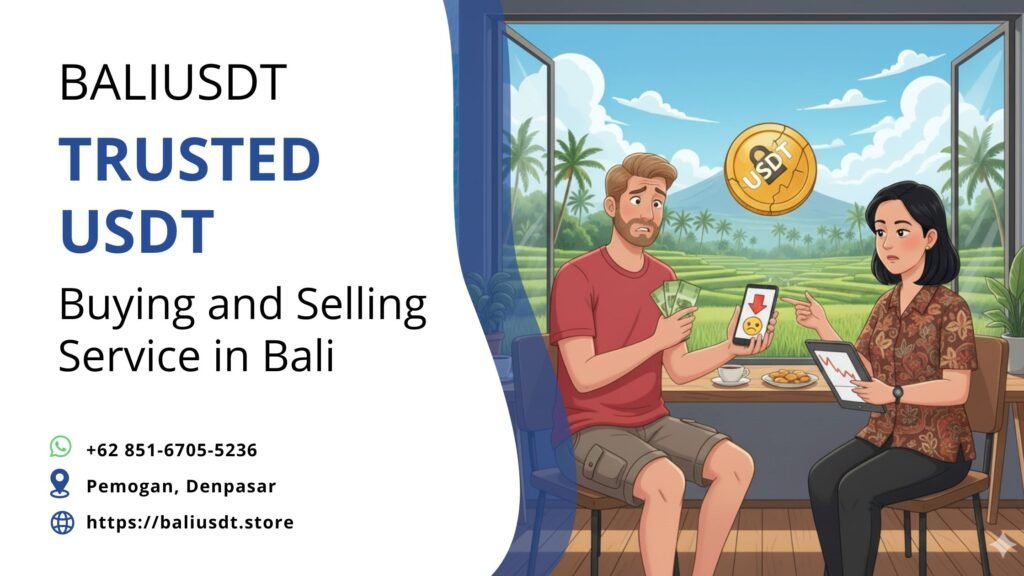
For the savvy traveler, digital nomad, or expat relying on stablecoins to bridge international finance, the stability of Tether (USDT) is the bedrock of their financial planning. This leads many to ask the critical question: Can USDT depeg? The simple and factual answer is yes, Tether has depegged in the past, and it remains a theoretical risk. However, understanding the difference between a temporary market fluctuation (a minor depeg) and a catastrophic failure (a permanent depeg or collapse) is essential for anyone using USDT to manage their daily life and commodity conversions in destinations like Bali. This guide delves into the causes, history, and mitigation strategies to ensure your digital assets remain stable and easily convertible into Indonesian Rupiah (IDR).
1. The Mechanisms Behind a Temporary USDT Depeg
Tether’s stability is maintained through a combination of fiat currency reserves and an arbitrage mechanism. When these mechanisms face stress, the peg can temporarily deviate from the $1 target.
Market Imbalances and Liquidity Shocks
Temporary depegs are typically driven by sudden, intense market activity rather than a fundamental reserve crisis. Therefore, the common events that cause a short-term answer to can USDT depeg include:
- Liquidity Pool Imbalance: Major decentralized exchanges (DEXs) use large liquidity pools (like Curve’s 3pool) to facilitate stablecoin swaps (e.g., USDT to USDC). If a major “whale” trader suddenly sells a huge amount of USDT for another stablecoin, it drastically skews the pool’s ratio, causing USDT’s price within that pool to drop slightly below $1. This happened in June 2023 when large market actions caused USDT’s weight in the 3pool to surge over 70%, briefly pushing its price down.
- Arbitrage Delays: Arbitrageurs are traders who exploit price discrepancies. If USDT drops to $0.99, they quickly buy it up, redeem it with Tether Limited for the full $1, and pocket the difference, which quickly pushes the market price back up. However, network congestion or large redemption queues can slow this process, allowing the depeg to last longer.
- Contagion Events: High-profile crises involving other major crypto entities (like the collapse of FTX) or even traditional finance (like the US bank failures in 2023, which impacted USDC) trigger widespread panic selling. During these moments of extreme fear, massive sell pressure on USDT can temporarily push its market price down until arbitrageurs restore the balance.
In these instances, while can USDT depeg is a reality, the peg quickly recovers because Tether’s core promise—the ability to redeem one USDT for $1—remains functionally intact.
2. Differentiating Depeg Risk: USDT vs. Algorithmic Stablecoins
A key part of evaluating the risk of USDT for travelers in Bali is recognizing that not all stablecoins are created equal. The failure mechanisms differ significantly between fiat-backed and algorithmic tokens.
The Algorithmic Failure Model (Terra/LUNA)
Algorithmic stablecoins (like the defunct TerraUSD or UST) relied on complex software logic and a linked governance token (LUNA) to maintain their peg, not actual dollar reserves. This design proved to be fundamentally flawed:
- Death Spiral: When market confidence was lost, the mechanisms failed to restore the peg, instead creating a self-reinforcing death spiral that led to permanent collapse and a complete loss of value.
The Fiat-Backed Failure Model (USDT/USDC)
USDT, being fiat-backed, faces risks related to its reserves. A permanent depeg would only occur if:
- Reserve Impairment: A massive, unforeseen loss in the value of Tether’s reserve assets (e.g., if a significant chunk of their investments went bad) made them unable to honor $1 redemptions.
- Regulatory Seizure: A major global regulator or court order legally barred Tether from accessing a substantial portion of its backing assets, leading to insolvency.
Consequently, while the answer to can USDT depeg is yes, a temporary depeg is a market event, while a permanent collapse is a systemic, solvency event—a crucial distinction for expats managing funds.
3. Reserves and Transparency: The Core of Stability
The true defense against a severe depeg lies in the quality and liquidity of Tether’s reserves. Travelers should focus on the issuer’s capacity to withstand a run on the bank.
Tether’s Commitment to Liquidity
In recent years, Tether has dramatically increased its transparency, regularly publishing quarterly attestations from independent accounting firms confirming that their total assets exceed their liabilities.
- T-Bill Dominance: A significant majority of Tether’s backing is held in highly liquid U.S. Treasury Bills. These short-term government debt instruments are considered one of the safest and most liquid assets globally. This composition provides a strong safeguard against liquidity shocks that might cause a depeg.
- Equity Buffer: Tether has also reported maintaining a substantial equity buffer (surplus assets), which provides an extra layer of protection against minor devaluation of other reserve components.
Therefore, the likelihood that can USDT depeg catastrophically is significantly reduced by this adherence to high-quality, liquid backing. Any temporary depeg represents a market pricing failure, not a reserve failure.
4. Mitigation Strategies for Digital Nomads in Bali
For digital nomads based in Canggu, Ubud, or Seminyak, a depeg—even a temporary one—can disrupt local financial transactions, as every transaction involves converting the USDT commodity into IDR.
Hedge Your Exposure to Volatility
Given that the answer to can USDT depeg is yes, risk management is key:
- Diversification: Do not hold 100% of your stablecoin portfolio in one asset. Hold a mix of USDT and other major, regulated stablecoins (like USDC). If one briefly depegs, the other will likely remain stable or even move in the opposite direction, protecting your overall purchasing power.
- Maintain an IDR Buffer: Always ensure you have enough Indonesian Rupiah (IDR) converted and available in cash or a local bank account to cover at least one month of living expenses (rent, visas, transportation). If USDT depegs temporarily, this IDR buffer allows you to wait for the price to recover without being forced to sell your USDT at a discount.
- Use Reputable Liquidity Providers: When you convert your USDT to IDR, use a trusted, compliant local Over-The-Counter (OTC) service. These professional vendors have established liquidity channels and can usually offer rates closer to the true $1 peg, even during slight market dips, compared to peer-to-peer (P2P) platforms.
For fast, secure conversion of your digital commodity into Indonesian Rupiah, mitigating your exposure to potential depeg events, reliable services can be found via BaliUSDT.store.
5. Local Regulations and Depeg Impact in Indonesia
In Indonesia, the risk of a depeg primarily affects the financial value of the asset you trade, but not the legality of your commodity sale.
Rupiah is King
Indonesia’s stringent laws mandate the use of IDR for all domestic transactions. This means that whether USDT is trading at $1.01 or $0.98, you still must sell it to receive IDR before purchasing anything.
- Commodity Price Fluctuation: The depeg simply changes the price of the commodity you are selling. If USDT depegs to $0.98, you will receive less IDR for the same amount of USDT, representing a temporary loss in value.
- Focus on Local Needs: The primary goal for expats is obtaining IDR. Therefore, the strategic response to the knowledge that can USDT depeg is to only convert the amount you need when the peg is stable, minimizing the risk of selling at a discount.
Consequently, while the depeg risk is a global factor, its local impact in Bali is mitigated by the necessity of converting into the stable, regulated Indonesian Rupiah.
Conclusion
The question, can USDT depeg, is answered with a historical yes, but the risk of a temporary depeg is an accepted cost of using any major stablecoin in the volatile crypto markets. The key comfort for digital nomads in Bali is that Tether’s fiat-backed model, high-quality liquid reserves, and established redemption mechanisms have consistently restored the peg after every market shock. By applying prudent financial strategies, such as diversifying assets and maintaining an IDR cash buffer, you can confidently navigate the tropical paradise, knowing your digital commodity assets are protected from the temporary turbulence of the global crypto market.
Get a fast quote for your USDT today
Pemogan, Denpasar
📲 WhatsApp us to sell your USDT safely: +62 851-6705-5236
USDT is processed as a commodity sale in Indonesia, not as a direct payment method.
Read also : Can USDT Collapse? Assessing Stability for Bali’s Digital Nomads