Introduction
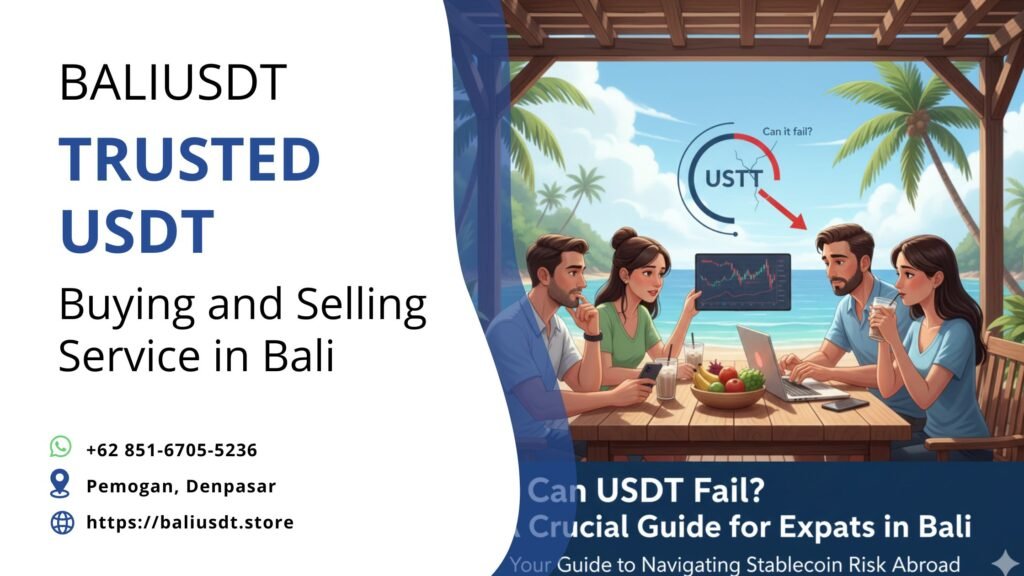
For the thousands of international visitors, digital nomads, and long-term expats who call Bali home, utilizing digital assets for global liquidity is a daily necessity. When considering stablecoins for holding funds, a significant and often troubling question is: Can USDT fail? Tether (USDT) is the largest and most widely used stablecoin, pegged to the US dollar at a 1:1 ratio. While it acts as a digital bridge between traditional fiat and the volatile world of cryptocurrencies, its vast size and the occasional market jitters make its ultimate stability a critical concern, especially for those relying on it for financial security while living in Indonesia.
The Mechanism of Stability: How Tether is Backed
To properly evaluate the risk of whether can USDT fail, one must first understand the foundation of its stability: its reserves. Unlike traditional money backed by governments, Tether is a privately issued token whose value depends entirely on the issuer’s promise and ability to redeem each USDT for one US dollar.
Reserve Composition and Transparency
Tether Limited claims that every USDT in circulation is fully backed by reserves. However, the exact composition of these reserves has been a source of debate and scrutiny for years. The backing includes not only actual cash and cash equivalents but also commercial paper, corporate bonds, precious metals, and secured loans.
- Liquidity Risk: The quality of the reserves is paramount. Assets like commercial paper and corporate bonds are not as liquid as cold, hard cash or short-term U.S. Treasury Bills. In a crisis scenario where everyone rushes to sell their USDT—a “stablecoin run”—Tether must be able to liquidate its assets quickly to meet the redemption demands. Therefore, if the non-cash portions of the reserves cannot be sold fast enough, it creates a liquidity crunch that could temporarily break the peg.
- Audit Scrutiny: Tether has historically provided quarterly attestation reports rather than a full, traditional audit from a major accounting firm. While these reports offer snapshots of the reserve value, critics argue they lack the rigor needed to definitively prove full backing and solvency at all times. This lack of complete transparency is a systemic risk that keeps the question of can USDT fail alive in financial circles.
Catastrophic Failure Scenarios: When Trust Collapses
A failure for USDT does not necessarily mean its value drops to zero overnight, but it certainly means a catastrophic loss of the peg and a severe redemption crisis. As a foreigner relying on these assets in Bali, understanding these scenarios is vital for hedging your personal financial risk.
1. The Systemic Insolvency Event
The most extreme scenario is that Tether’s liabilities (the total outstanding USDT) permanently exceed its assets (the reserves) and the company becomes insolvent. This could happen if a significant portion of its reserves were invested in high-risk assets that suddenly default or lose value. For instance, a major global economic shock could render commercial paper worthless, leaving a huge hole in the balance sheet. If Tether cannot cover redemptions, the exchange price would plummet dramatically and permanently. This is the ultimate answer to the question, can USDT fail completely.
2. Regulatory Intervention and Asset Freeze
Global regulators, especially in the US and Europe, are increasingly tightening rules around stablecoins. If a major regulatory body issues an order to freeze Tether’s reserve accounts or declares its operations illegal, the consequence could be immediate de-pegging and a halt on all redemptions. Consequently, even if the reserves exist, they become inaccessible, causing a loss of confidence that mirrors a bank run. This risk is particularly relevant as international regulations, such as the EU’s MiCA framework, demand stricter compliance that Tether has yet to fully meet.
3. Black Swan Liquidity Crisis
As witnessed during the 2022 collapse of the algorithmic stablecoin UST, market-wide panic can create extreme stress on even fiat-backed stablecoins. If a massive, unexpected crisis hits the crypto market, holders will rush to sell any digital asset for cash. The sheer, overwhelming volume of selling pressure might not be fully absorbed by the $1 redemption mechanism, forcing the market price of USDT far below $1. While historical instances saw recovery, a more severe “Black Swan” event could push the price down long enough to create a permanent crisis of confidence, fueling the idea that can USDT fail.
Implications for Foreigners and Digital Nomads in Indonesia
For the expat community and travelers enjoying the convenience of digital finance in Indonesia, the stability of USDT is not an abstract financial concern; it is a very real matter of access to funds and cost of living.
Financial Safety and Local Regulations
Indonesia’s regulatory environment is clear: the Indonesian Rupiah (IDR) is the only legal tender for transactions. While cryptocurrencies like USDT are recognized as tradable commodities for investment, they are explicitly not legal payment methods. Therefore, your use of USDT in Bali must be restricted to converting it safely and legally into IDR via established local services.
A failure in USDT would impact you in two key ways:
- Direct Loss of Funds: If the peg breaks or can USDT fail, your holdings instantly lose significant value, impacting your budget for accommodation, food, and travel around places like Seminyak or Ubud.
- Conversion Scarcity: In a market crisis, the local services you rely on for conversion to IDR may also face illiquidity or halt operations temporarily, leaving you unable to access your money when you need it most.
Using Local Services Securely
Given these risks, mitigating exposure is paramount. Digital nomads should prioritize reliable, trustworthy services when converting USDT to IDR. This involves finding providers who offer competitive, transparent rates and a secure, established process. For those looking for a safe way to handle their digital assets and ensure liquidity, resources like BaliUSDT.store provide a necessary bridge for the international community. Converting funds via a reputable office, such as one located in Pemogan, Denpasar, adds an extra layer of personal security compared to informal P2P transactions. Consequently, selecting the right service is as crucial as managing the asset risk itself.
Managing Risk: A Practical Strategy for Stablecoin Holders
A sound financial strategy for life in Bali must account for the possibility of stablecoin instability. Since the market risk—including the possibility that can USDT fail—cannot be eliminated, it must be managed.
Diversification and Liquidity Management
- Split Your Holdings: Do not put all your stablecoin funds into USDT. Diversify by holding a mix of stablecoins like USDC, DAI, or other established fiat-backed alternatives. This hedges against an issuer-specific failure.
- Maintain Local Fiat Buffer: Always keep a substantial emergency reserve of Indonesian Rupiah (IDR) in a local bank account or physically available cash. This ensures you can cover essential expenses (like rent or travel) for a few weeks, even if the crypto market faces a temporary crisis.
- Use IDR for Transactions: As required by Indonesian law, all consumer transactions must be in IDR. Hence, convert your digital assets into IDR before you need to spend them, minimizing the possibility of transaction failure or illegal use of foreign currency.
Due Diligence and Vigilance
Monitoring the financial news related to Tether’s reserve attestations and global regulatory actions is a necessary part of managing your funds in the crypto sphere. By being proactive, you can react to market sentiment shifts before they lead to a significant de-pegging event. In essence, informed vigilance is your best defense against unexpected market failures.
Conclusion
While the catastrophic failure of USDT—a permanent collapse where can USDT fail completely—is considered a low-probability event due to its dominant market position and redemption mechanics, the underlying risks associated with its reserves and regulatory status are undeniable. For international visitors in Bali, temporary de-pegging or a liquidity crunch represents a real and immediate financial threat. By embracing a strategy of stablecoin diversification, maintaining local fiat liquidity, and using only secure, regulated services for conversion into IDR, you can significantly mitigate these risks and ensure that your financial foundation remains stable while you enjoy the unique culture and environment of Indonesia.
📲 WhatsApp us to sell your USDT safely: +62 851-6705-5236
Get guidance for selling USDT legally in Indonesia
USDT is processed as a commodity sale in Indonesia, not as a direct payment method.
Read also : Can USDT Drop? Understanding Stablecoin Risk in Bali