The $1 Paradox in Crypto
In the wildly volatile world of crypto, where prices can shift 20% in a day, there are two giants whose primary goal is to stay perfectly still, anchored to the U.S. Dollar. Tether (USDT) and USD Coin (USDC) are the world’s leading stablecoins, both aiming for the sacred $1 peg. On the surface, they look identical: they both facilitate fast, borderless transactions and serve as the crypto ecosystem’s primary trading pair.
But beneath the surface of that steadfast $1 value lies a fierce competition fueled by vastly different philosophies, governance structures, and regulatory postures. Understanding what is the difference between USDT and USDC is no longer a matter of preference—it is a critical decision that dictates your exposure to risk, regulatory scrutiny, and corporate transparency.
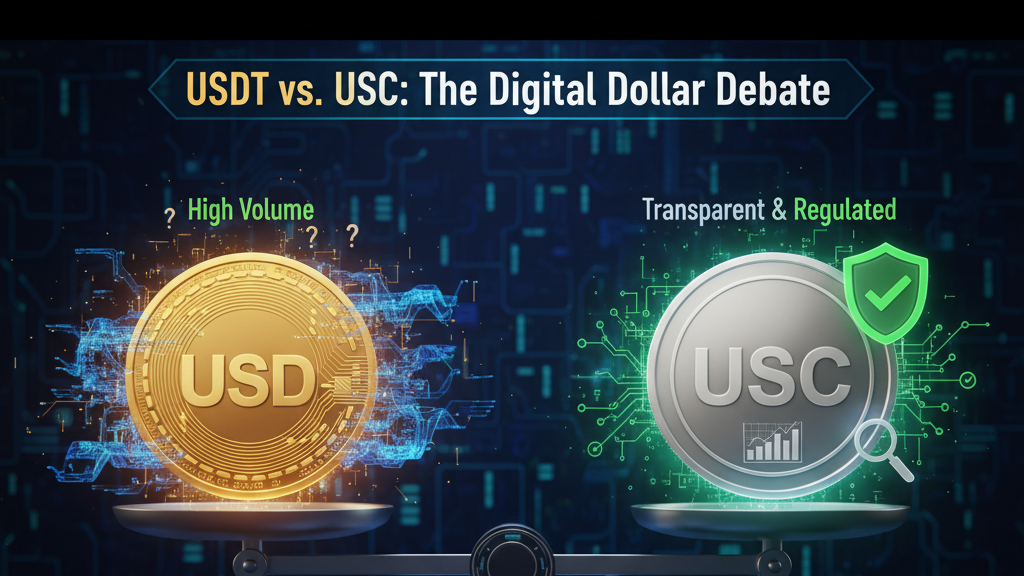
Contrasting Philosophies—The Pioneer vs. The Compliance Champion
While USDT and USDC are both classified as fiat-collateralized stablecoins, their distinct approaches to regulation, transparency, and reserve management create clear boundaries between them. This is the core of the debate: the pioneer’s dominance versus the compliance champion’s institutional backing.
Issuer and Foundation: The Who Behind the Coin
| Feature | USDT (Tether) | USDC (USD Coin) |
| Issuer | Tether Limited (Part of iFinex, which also owns Bitfinex) | Centre Consortium (Founded by Circle and Coinbase) |
| Launch Date | 2014 (The market pioneer) | 2018 (The institutional entrant) |
| Regulatory Stance | Operates globally from less restrictive jurisdictions; has a history of legal fines and settlements regarding its reserve claims. | U.S.-based and heavily focused on compliance; adheres to U.S. financial regulations (KYC/AML) and is favored by traditional financial institutions. |
The Key Takeaway: USDT has a significant first-mover advantage, giving it unparalleled market liquidity and adoption, especially in non-U.S. markets. USDC, backed by entities like Circle (a registered money transmitter) and Coinbase (a publicly traded U.S. trade), deliberately chose the path of strict regulatory adherence to appeal to institutional investors.
Transparency and Reserve Backing: The Trust Factor
The most contentious difference between USDT and USDC lies in how they prove their 1:1 backing. This directly impacts the user’s trust in the coin’s stability.
- USDT’s Reserves: Historically, Tether has been criticized for opacity. While the company now releases quarterly “attestations” (snapshots of assets verified by an accounting firm, currently BDO Italia), these are not full, independent audits of the quality of the assets. Furthermore, Tether’s reserves are diversified, including cash, U.S. Treasury bills, commercial paper, corporate bonds, and even volatile assets like gold and Bitcoin. This complex composition introduces credit risk.
- USDC’s Reserves: USDC is widely considered the gold standard for transparency. Its issuer, Centre, provides monthly attestations performed by a major accounting firm. Crucially, USDC’s reserves are kept simpler, traditionally composed entirely of cash held in regulated U.S. financial institutions and short-term U.S. Treasury bills. This highly liquid, simplified structure makes its 1:1 peg easier to trust and verify.
Liquidity, Adoption, and Network Support: The Practical Difference
While regulatory issues are critical for long-term holding, daily usage often comes down to liquidity and availability.
- Market Cap & Liquidity: USDT retains a significantly larger market capitalization and daily trading volume than USDC. This higher liquidity means it is nearly always the dominant trading pair on major trades globally, making it essential for high-frequency traders and immediate market entry/exit.
- Blockchain Support: Both are multi-chain, but USDT has broader support across more networks (Ethereum, TRON, Solana, etc.), including several low-fee chains like TRON. USDC is also widely supported (Ethereum, Solana, Polygon, etc.) but often focuses on chains popular in the institutional or DeFi space.
- Redemption: USDC generally offers a simpler and more transparent redemption path directly through Circle for fiat. USDT’s redemption process can involve higher minimums and fees, often routing through partner exchanges.
| Feature | USDT (Tether) | USDC (USD Coin) |
| Reserve Quality | Complex mix (Treasuries, Commercial Paper, Bitcoin, etc.); introduces more credit risk. | Simple mix (Cash and U.S. Treasuries); highly liquid and less risky. |
| Transparency | Attestations (Not full audits); history of controversies. | Regular, detailed monthly attestations; recognized as highly transparent. |
| Liquidity & Volume | Higher trading volume and market cap; dominant in global crypto exchanges. | Lower market cap, but often favored in decentralized finance (DeFi) and institutional sectors. |
Making the Right Digital Dollar Choice for Your Strategy
The choice between USDT and USDC boils down to a classic trade-off: Liquidity and Ubiquity (USDT) versus Transparency and Regulatory Compliance (USDC).
- If you are a high-volume, international trader who prioritizes getting in and out of positions instantly on every trade, USDT’s unmatched liquidity remains advantageous.
- If you are an institutional investor, a business that values strict compliance, or a conservative long-term holder, USDC’s superior regulatory focus and reserve transparency make it the more prudent choice.
Making the right stablecoin decision—and safely managing the transactions, custody, and conversions—is complex, especially when dealing with the high-value needs of international business or significant portfolio shifts. You need expert advice to navigate the regulatory differences in various jurisdictions (such as the MiCA regulations in Europe, which favor USDC).
We provide secure, verified Over-The-Counter (OTC) services for large-volume stablecoin conversions across both USDT and USDC, ensuring that your transactions are handled with the highest standards of security and compliance, regardless of the jurisdiction.
Our Expertise Includes:
- Risk Mitigation: Comprehensive advice on the custody risks associated with holding either stablecoin.
- Secure Trade: Private and compliant fiat-to-stablecoin and stablecoin-to-fiat conversions.
- Regulatory Guidance: Understanding which stablecoin is best suited for your operational region and compliance needs.
Don’t compromise on security or clarity. Get expert advice before you commit large capital to either of the digital dollar giants.
For a detailed, confidential consultation on USDT vs. USDC and secure high-volume trading, contact us directly: +6285167055236
Disclaimer: This content is for informational purposes only and is not financial advice. Stablecoins are complex assets subject to issuer risk, market risks, and regulatory changes. Always consult a qualified financial professional.