If you are currently planning a digital nomad adventure in Indonesia, you might find yourself asking, how do the makers of usdt earn money while providing such a stable digital asset? For travelers in Bali, USDT (Tether) has become a primary tool for avoiding the headache of traditional banking. Whether you are paying for a long-term villa rental in Canggu or managing your remote salary while surfing in Uluwatu, understanding the business model behind the world’s most popular stablecoin is essential for your financial peace of mind. As of early 2026, Tether remains a dominant force in the global economy, acting as a bridge between the traditional financial world and the borderless digital landscape that travelers love.
The Massive Scale of Tether’s Reserve Interest
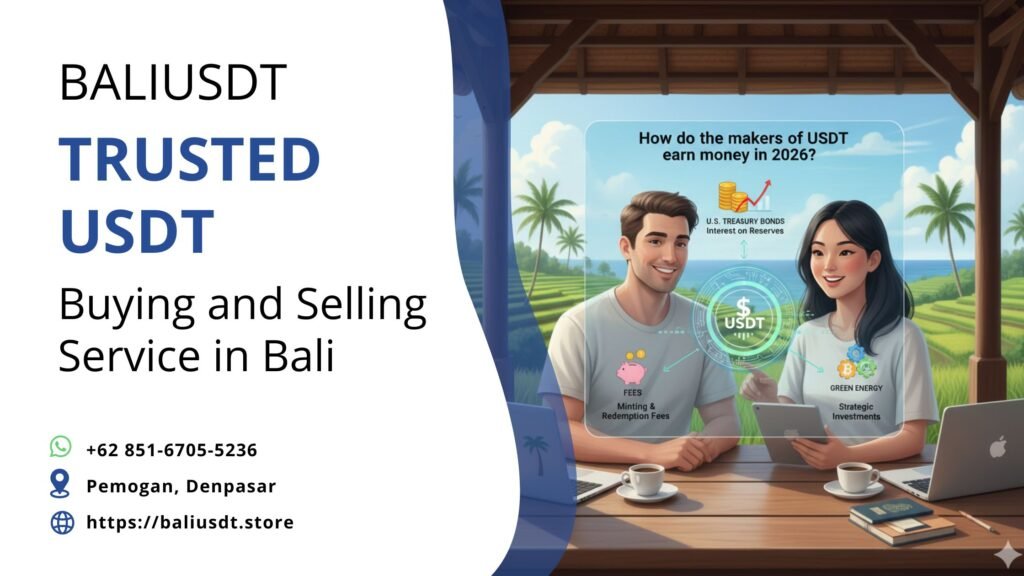
The primary answer to how do the makers of usdt earn money lies in their massive reserve holdings. When you or a large institution “mints” USDT, you deposit physical U.S. Dollars with Tether. They don’t just let these billions of dollars sit in a vault. Instead, Tether invests a significant portion of these reserves into safe, interest-bearing assets. In early 2026, their portfolio is heavily weighted toward U.S. Treasury bills, which currently offer attractive yields.
With a circulating supply surpassing $180 billion, even a small interest rate generates billions in profit. For a traveler in Bali, this is comparable to how a bank uses your savings to issue loans, except Tether keeps the interest to fund its operations and insurance buffers. This model has made Tether one of the most profitable companies globally on a per-employee basis. By maintaining this robust income stream, they ensure the USDT you use to fund your Bali trip remains liquid and ready for exchange at a moment’s notice.
Fees: How Do the Makers of USDT Earn Money from Users?
Beyond the billions earned from interest, Tether also generates revenue through direct service fees. While the average tourist buying USDT on an exchange like Binance doesn’t pay Tether directly, institutional clients do. If a large trading desk in Jakarta or Singapore wants to create or redeem more than $100,000 worth of USDT, they must pay a verification fee and a 0.1% transaction fee.
Specifically, when asking how do the makers of usdt earn money, we must look at their minting and redemption process. Tether charges a non-refundable $150 fee just to verify a new account. These fees add up significantly across their global user base. For the expat community in Bali, these institutional fees are what keep the “pipes” of the ecosystem running smoothly, ensuring that when you want to cash out your digital assets for Indonesian Rupiah, there is plenty of liquidity in the market.
Strategic Investments and Asset Diversification
In recent years, the revenue model has evolved. To further answer how do the makers of usdt earn money, we have to look at their “Excess Reserves.” Tether uses its profits to invest in emerging industries. By 2026, Tether has significantly expanded its portfolio into Bitcoin mining, artificial intelligence (AI), and green energy projects. These investments are kept separate from the reserves that back your USDT 1:1, but they provide additional profit layers for the company.
For digital nomads in Bali who are often involved in tech and startups, Tether’s pivot into AI and infrastructure is a fascinating development. It shows that the “makers” are not just passive bookkeepers but active participants in the future of technology. This diversification helps the company stay profitable even if interest rates on government bonds were to drop, providing a long-term safety net for the stablecoin that many expats rely on for their daily living expenses.
Why This Matters for Your Bali Travel Budget
You might wonder why a tourist needs to know how do the makers of usdt earn money. The answer is simple: stability and trust. When you arrive at Ngurah Rai International Airport and head to your guest house in Denpasar, you want to know that your digital funds are backed by a profitable, solvent company. Knowing that Tether earns billions in profit means they have a massive “cushion” to protect the $1.00 peg, even during market volatility.
Using USDT in Bali is a strategic move for the savvy traveler. Instead of carrying stacks of millions of Rupiah (IDR) or paying 3%–5% in ATM conversion fees, you can hold your funds in USDT. When you need local cash for a scooter rental or a seafood dinner in Jimbaran, you can sell your USDT through a reliable local partner. Since the makers of USDT are highly profitable, you can rest easy knowing your “digital dollars” are among the safest assets in the crypto world.
Selling Your USDT Safely in Bali
Once you understand how do the makers of usdt earn money, you can see why USDT is treated as a highly liquid commodity in Indonesia. However, you cannot pay for a Balinese massage or a temple tour directly with digital tokens. You must convert them into Indonesian Rupiah through a professional service. For a seamless and secure experience, many travelers visit BaliUSDT.store.
Using a specialized service is often much safer than trying to find a random person on a P2P app. In Bali, security is paramount, and local exchange offices provide a regulated environment where you can sell your USDT and receive IDR directly to your local bank account or in cash. This allows you to benefit from the stability of the USDT business model while having the local currency needed to enjoy Bali’s vibrant culture and breathtaking landscapes.
Navigating Bali: Local Tips and Cultural Notes
While your digital finances are sorted, don’t forget the cultural side of your trip. Bali is a deeply spiritual island. When you visit a local exchange office in areas like Pemogan or Denpasar, always remember to use your right hand when giving or receiving money, as the left hand is traditionally considered impolite.
- Transportation: Use apps like Gojek or Grab for the best rates, and link them to a local bank account funded by your USDT sales.
- Safety: Never share your wallet’s seed phrase or private keys with anyone.
- Ethics: Treat your digital assets as a commodity. In Indonesia, it is illegal for shops to accept anything other than Rupiah for direct payments.
By following these tips and masterfully managing your assets, you can enjoy a frictionless stay. The question of how do the makers of usdt earn money serves as a reminder that behind every digital token is a complex, profit-driven machine designed to keep your funds accessible whenever you’re ready to explore the hidden waterfalls of Munduk or the nightlife of Canggu.
Conclusion
Understanding how do the makers of usdt earn money provides a clear picture of why this stablecoin remains a top choice for international travelers. Through a combination of interest on U.S. Treasuries, institutional fees, and strategic tech investments, Tether has built a financial fortress. This profitability translates into stability for you, the user.
As you navigate your Bali journey, remember to stay informed, keep your digital hygiene high, and use trusted local services for your currency needs. Master your finances, and the Island of the Gods will be yours to explore with total confidence and ease.
Ready to Sell Your USDT Safely in Bali?
If you have your digital assets ready and need local Rupiah for your villa, transport, or adventures, our professional team is here to help you with a secure and fast process.
Visit our office in Bali for secure USDT selling
Office Location:
Pemogan, Denpasar
📲 WhatsApp us to sell your USDT safely: +62 851-6705-5236
USDT is processed as a commodity sale in Indonesia, not as a direct payment method.
read also : How do I get a USDT TRC20 wallet address for Bali?