If you have ever used a stablecoin to fund your travels, you might have wondered how does usdt make money while maintaining a perfectly stable value of one dollar. For the thousands of digital nomads, expats, and tourists who flock to Bali every year, Tether (USDT) is more than just a digital asset; it is a financial lifeline. While the “Island of the Gods” offers breathtaking sunsets and world-class surfing, its local economy still relies heavily on the Indonesian Rupiah (IDR). By holding USDT, travelers can escape the high fees of international bank transfers and the volatility of other cryptocurrencies. Understanding the business model behind this digital commodity reveals why it has become the most trusted “digital dollar” for the global nomad community.
The Revenue Model: How Tether Generates Billions
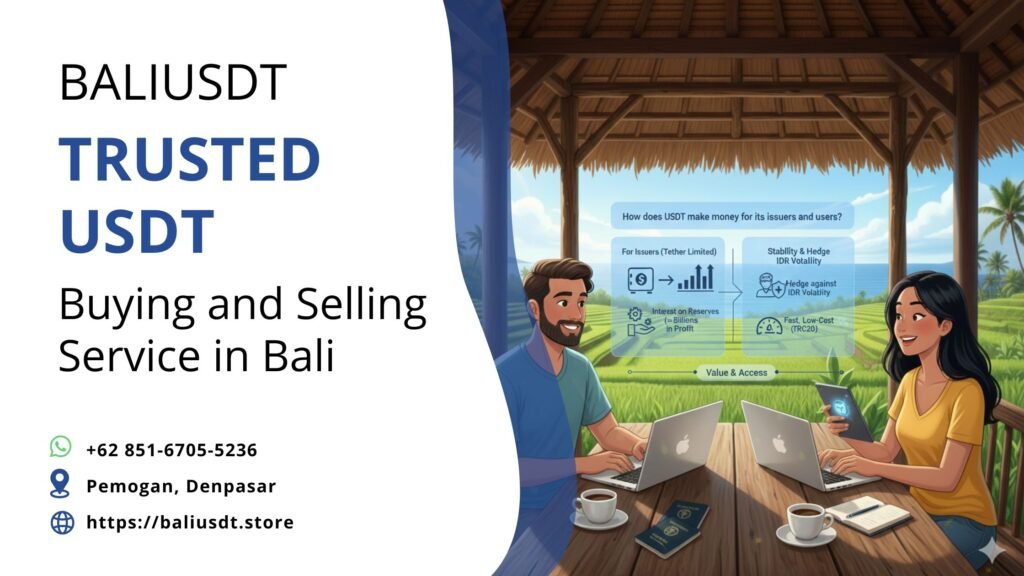
To answer the question of how does usdt make money, we must look at what happens behind the scenes at Tether Limited. When an institutional investor or a large exchange wants to “mint” new USDT, they deposit physical U.S. Dollars into Tether’s reserves. Tether then takes these billions of dollars and invests them into safe, yield-bearing assets. In 2026, the primary driver of Tether’s profit is the interest earned on U.S. Treasury bills. Since Tether holds over $130 billion in government debt, even a small interest rate generates massive quarterly profits.
Beyond government bonds, how does usdt make money through other investments? The company also diversifies its excess reserves into gold, Bitcoin, and secured loans to third parties. These investments allow the company to stay highly profitable while ensuring that every USDT in circulation remains 100% backed. For a traveler in Bali, this means the platform is financially robust, providing the confidence needed to store travel budgets in a digital format before converting them to local Rupiah.
Transaction Fees and Service Costs
While most retail users experience USDT as a low-cost tool, the company also generates revenue through service fees. If you were an institutional client minting or redeeming large amounts of Tether directly from the source, you would encounter a verification and withdrawal fee. These small percentages, applied to billions of dollars in volume, represent a significant secondary answer to how does usdt make money.
Additionally, Tether often partners with various blockchain networks and exchanges. In Bali, the most popular way to move funds is via the Tron (TRC20) network because it is fast and affordable. While the network fees go to the blockchain miners, the widespread adoption of USDT across these rails creates a massive ecosystem that strengthens Tether’s market dominance. This dominance, in turn, allows them to negotiate better terms with banking partners and custodians, further optimizing their profit margins.
Why USDT Stability is Essential for Bali Life
Now that you know how does usdt make money, you can see why it is such a reliable tool for your Bali adventure. Bali is a place where you want to focus on the culture and the waves, not on whether your bank card will work at a local cafe. Digital nomads use USDT as a “storage of value” to hedge against the fluctuations of the Indonesian Rupiah. By keeping your primary savings in a stable asset, you can decide exactly when to convert your funds based on the current exchange rate.
- Fixed Budgeting: You know that 1,000 USDT will always be roughly $1,000, making it easy to plan for long-term villa rentals in Canggu or Ubud.
- Safety: Carrying a digital wallet is often safer than carrying millions of physical Rupiah in your backpack.
- Speed: You can move funds from a global exchange to a local service in minutes, bypassing the 3-to-5-day wait of traditional SWIFT transfers.
Converting Your Assets Safely in Indonesia
In Indonesia, digital assets are classified as commodities, which means you cannot use them as a direct payment method in a grocery store or a beach club. To pay for your Bintang or your motorbike rental, you must convert your USDT into cash or a local bank transfer. Because you understand how does usdt make money, you know that the asset is backed by real value, which makes it easy to find liquidity providers on the island.
For the most secure experience, travelers often visit professional exchange offices in areas like Pemogan or Denpasar. Using a service like BaliUSDT.store ensures that you are dealing with a reputable partner who follows local regulations. This is much safer than using unregulated peer-to-peer (P2P) platforms, where you might risk bank account freezes or fraudulent transfers. A professional “Over-the-Counter” (OTC) desk provides a safe environment and a transparent rate for your conversion.
Cultural and Practical Tips for New Arrivals
Bali is a unique blend of ancient tradition and modern convenience. While you are managing your digital wealth and considering how does usdt make money, don’t forget the local customs. Always use your right hand when handing over cash or your ID. Dress modestly when visiting sacred temples like Besakih or Tanah Lot.
From a practical standpoint, always have a small amount of physical Rupiah for parking fees (usually 2,000–5,000 IDR) and traditional markets. For everything else, from luxury dining to high-end coworking, a local bank transfer or an e-wallet top-up from your USDT conversion will serve you perfectly. This “hybrid” approach—holding digital stability while spending local currency—is the secret to a high-quality nomad life in Indonesia.
Managing Your Digital Wallet Security
The final piece of the puzzle in understanding how does usdt make money and how to use it is security. Since USDT is a digital asset, you are your own bank. Always use two-factor authentication (2FA) and never share your seed phrase. When you are ready to sell your USDT for Rupiah, ensure you are using a secure connection. Avoid public Wi-Fi in busy cafes in Seminyak when performing high-value transactions; instead, use a trusted local SIM card with a reliable data plan.
By taking these precautions, you ensure that the wealth you have stored in Tether remains yours. Whether you are staying for a week or a year, the combination of Tether’s institutional stability and your own digital hygiene will make your Bali journey a financial success.
Conclusion
Understanding how does usdt make money provides the clarity needed to trust the system that powers the modern traveler’s budget. By investing its reserves into safe assets and charging service fees, Tether Limited has built a “profit machine” that ensures the stability of the digital dollar. This stability is the foundation of the digital nomad lifestyle in Bali, allowing visitors to enjoy the island’s magic without the headaches of traditional finance.
With your funds safely stored in a 1:1 backed asset, you are free to explore every corner of the Island of the Gods. From the sunrise over Mt. Batur to the nightlife of Kuta, your financial freedom is just a few clicks away.
Ready to Sell Your USDT Safely in Bali?
If you have your travel funds ready in USDT and need to convert them into Indonesian Rupiah for your villa, transportation, or adventures, our team is here to provide a secure and professional experience.
Visit our office in Bali for secure USDT selling
Office Location:
Pemogan, Denpasar
📲 WhatsApp us to sell your USDT safely: +62 851-6705-5236
USDT is processed as a commodity sale in Indonesia, not as a direct payment method.
Read also : How does USDT maintain price stability for travelers?