How is usdt created is a fundamental question for many digital nomads and international travelers who rely on stablecoins to manage their finances while exploring Bali. Whether you are working from a beachfront coworking space in Canggu or enjoying a quiet retreat in the highlands of Ubud, understanding the mechanics behind your digital assets is crucial for financial security. Unlike traditional currencies printed by central banks, Tether (USDT) follows a specific blockchain-based issuance process. This guide will walk you through the technical steps of creation, the role of reserves, and how you can safely navigate the local financial landscape in Indonesia.
The Minting Process: How Is USDT Created?
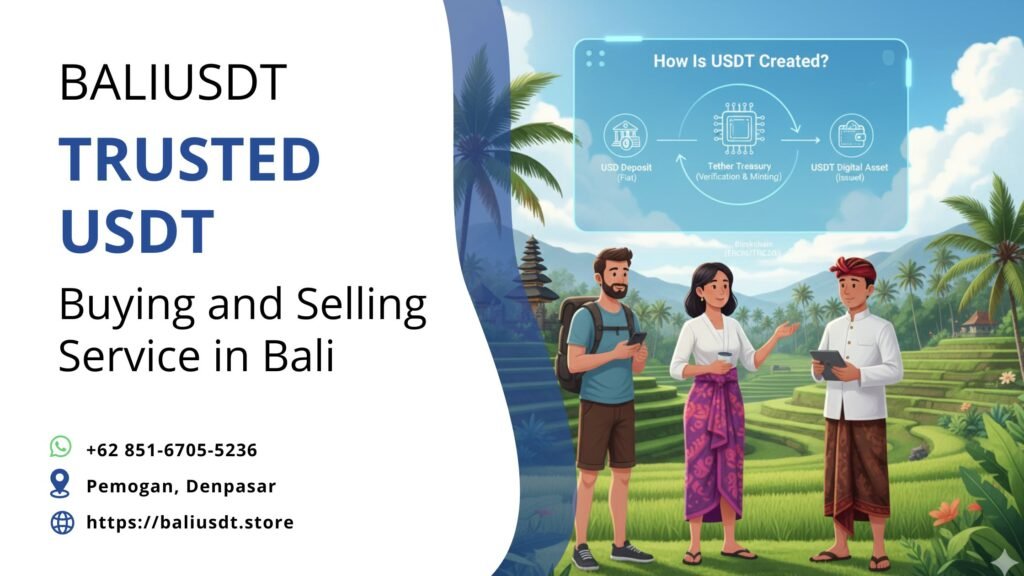
To understand the core of the matter, we must look at the “minting” process. So, how is usdt created exactly? The journey begins with Tether Limited, the centralized entity responsible for the issuance and management of the token. When a verified institutional customer or a high-net-worth individual wishes to acquire new USDT, they must first deposit a corresponding amount of traditional fiat currency (usually US Dollars) into Tether’s bank accounts. This deposit acts as the collateral that gives the digital token its value.
Once the fiat funds are received and verified through a strict Know Your Customer (KYC) process, Tether’s treasury initiates a smart contract transaction on a specific blockchain, such as Ethereum (ERC20), Tron (TRC20), or Binance Smart Chain (BEP20). This transaction “mints” new tokens into existence. These tokens are initially held in an “authorized but not issued” state in Tether’s treasury. They only enter the circulating supply—and thus the global market—when they are transferred to the customer’s wallet. This multi-step process ensures that the answer to how is usdt created always involves a 1:1 backing by real-world assets.
Why Travelers in Bali Prefer Using USDT
Bali has become a global hub for the “crypto-nomad” lifestyle. Foreigners often find that traditional international wire transfers to Indonesian banks are slow, expensive, and buried in paperwork. By understanding how is usdt created, travelers gain confidence in using a digital asset that moves at the speed of the internet. Because USDT is minted on multiple blockchains, it provides the flexibility to choose networks with the lowest fees and fastest confirmation times, which is essential when you need to top up your local Indonesian Rupiah (IDR) balance for daily expenses.
Moreover, the transparency of how is usdt created through public blockchain ledgers allows users to verify the total supply in real-time. For an expat living in a villa in Seminyak, this transparency offers a layer of trust that traditional offshore banking often lacks. You can track the movement of your assets on explorers like Etherscan or Tronscan, ensuring that your travel budget is always where it should be. This digital-first approach to money aligns perfectly with the modern, nomadic lifestyle prevalent on the island.
Security and Reserves: Backing Every Token
A critical part of the conversation around how is usdt created involves what happens after the minting. For every USDT in circulation, Tether maintains reserves that include cash, cash equivalents, and other high-grade assets like US Treasury bills. As of early 2026, these reserves are frequently audited and reported to the public. This backing is what maintains the stable 1:1 peg to the US Dollar, preventing the wild volatility seen in other cryptocurrencies like Bitcoin.
When you are deep in the Balinese jungle or surfing the breaks at Uluwatu, you don’t want to worry about your digital wallet losing half its value overnight. Knowing how is usdt created and backed by a diversified reserve of liquid assets provides peace of mind. It allows you to use USDT as a reliable “digital safe” while you navigate the local economy. However, always remember that while the asset itself is stable, the security of your individual wallet is your responsibility. Always use hardware wallets and two-factor authentication (2FA) to protect your funds from digital threats.
Converting Your Assets: From Minting to Local Cash
Since USDT is a digital asset and not a direct payment method in Indonesia, you will eventually need to convert it into Indonesian Rupiah. Now that you know how is usdt created, you can better appreciate the value of professional exchange services. In Bali, you cannot simply walk into a local “warung” and pay with Tether. You must sell your USDT to a provider that can offer you IDR, which is the only legal tender for transactions in the country.
For digital nomads, finding a trustworthy partner for this conversion is vital. You should look for services that operate within the legal framework of Indonesia, where crypto is treated as a commodity. To ensure a smooth transition from digital assets to physical cash or local bank transfers, you can visit BaliUSDT.store for expert guidance. Their team understands the technical nuances of how is usdt created and transferred, ensuring that your transaction is handled with the highest level of professionalism and safety.
Managing Financial Logistics as a Foreigner in Indonesia
Navigating the financial landscape in a foreign country can be daunting, but the crypto-friendly environment in Bali makes it significantly easier. Understanding how is usdt created helps you explain your financial setup to local authorities or banks if ever required. Indonesia has specific regulations regarding the sale of crypto-assets, and staying informed is the best way to ensure your stay remains trouble-free.
Always keep in mind that while the blockchain operates 24/7, local banking hours and holidays in Bali (such as Nyepi or Galungan) may affect the speed of local bank transfers. Therefore, it is wise to plan your USDT sales a day or two in advance. Because you understand how is usdt created and how it functions as a liquid commodity, you can time your sales to match your spending needs for things like scooter rentals, villa leases, or luxury spa days.
Conclusion: Empowering Your Bali Experience
In summary, the question of how is usdt created reveals a sophisticated system of digital minting backed by traditional financial reserves. This bridge between the old and new worlds of finance is what makes Tether such a powerful tool for the international community in Bali. By leveraging the speed and stability of USDT, you can bypass the hurdles of traditional banking and focus on the incredible cultural and natural experiences the island has to offer.
From the first deposit of fiat to the final minting on the blockchain, the process is designed to provide stability and utility. As you continue your journey through the “Island of the Gods,” keep this knowledge close. It will help you manage your wealth effectively and ensure that your Bali adventure is as seamless and secure as possible.
Ready to Exchange Your USDT for Rupiah?
If you have USDT and need local currency for your Bali stay, our team provides a safe, professional, and transparent service for expats and travelers. We help you navigate the local regulations so you can focus on enjoying your trip.
Visit our office in Bali for secure USDT selling:
Pemogan, Denpasar
📲 WhatsApp us to sell your USDT safely: +62 851-6705-5236
- Get guidance for selling USDT legally in Indonesia
- Check today’s USDT selling rate via WhatsApp
USDT is processed as a commodity sale in Indonesia, not as a direct payment method.
Read also : Does Solana Support USDT? A Complete 2026 Bali Guide