The stability of your digital funds is paramount when traveling or living abroad. Therefore, the question, how is USDT pegged to USD, is fundamental to understanding the security of the world’s largest stablecoin. Tether (USDT) aims to maintain a strict 1:1 value ratio with the US Dollar, providing a stable, liquid, and borderless digital currency. Unlike volatile cryptocurrencies, USDT strives for consistency. This stability relies on a multi-faceted approach involving substantial financial reserves and powerful, automatic market forces. For expats and digital nomads who rely on USDT for efficient cross-border transactions, recognizing these stability mechanisms gives them financial peace of mind.
The Reserve Backing: The Foundation of the Peg
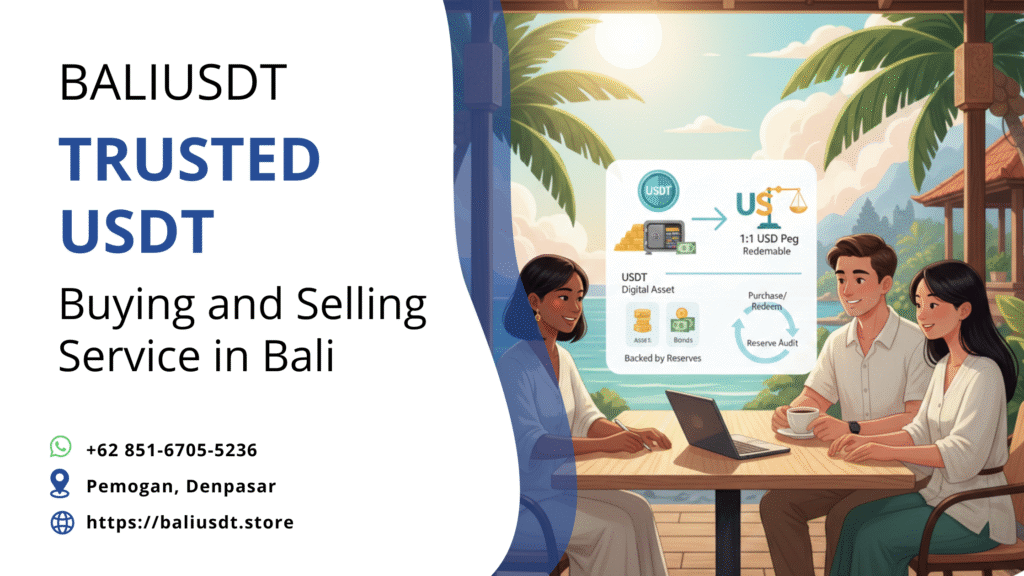
The primary mechanism that answers how is USDT pegged to USD is the commitment from its issuer, Tether Limited, to back every token with equivalent reserve assets. This reserve acts as the crucial collateral that gives USDT its perceived value.
Fiat-Collateralized Mechanism
USDT fits the category of a fiat-collateralized stablecoin. This means traditional assets held by the issuer secure its value.
- 1:1 Claim: The core promise is simple: for every 1 USDT token in circulation, Tether Limited holds at least $1 USD worth of reserves. In theory, this commitment allows users to redeem 1 USDT for 1 actual US Dollar.
- Asset Composition: Tether’s reserves are a diversified portfolio. This portfolio primarily includes highly liquid, low-risk assets, most notably U.S. Treasury Bills. It also holds cash equivalents, precious metals (like gold), and a smaller allocation to other investments.
- Issuance and Redemption: When large institutional clients deposit fiat currency with Tether, the company mints an equal number of new USDT tokens. Conversely, when users redeem USDT for dollars, the company burns the corresponding tokens and releases the fiat currency from its reserves. This controlled supply mechanism directly links the total USDT supply to the reserve backing.
Ultimately, the stability of USDT is tethered to the quality and sufficiency of these reserve assets.
Market Forces: Arbitrage and Liquidity
While reserve backing forms the technical backbone, market forces—specifically arbitrage—are the primary tool that actively maintains the precise 1:1 price in real-time across the global exchange landscape. This real-time control is vital for day-to-day usability.
The Role of Arbitrage
Arbitrage describes the act of simultaneously buying and selling an asset to profit from tiny price discrepancies between markets. This powerful, continuous mechanism constantly pushes the USDT price back toward $1.00 USD.
- When USDT Dips Below $1.00 (The Discount): If USDT trades at, say, $0.99 USD on a major exchange, arbitrageurs instantly buy large amounts of the cheaper USDT. They do this with the intent of redeeming it with Tether Limited for $1.00 USD, thereby pocketing the $0.01 difference per token. This massive buying pressure quickly drives the market price back up to $1.00 USD.
- When USDT Rises Above $1.00 (The Premium): Conversely, if USDT trades at $1.01 USD, institutions can deposit $1.00 USD with Tether Limited to mint 1 new USDT. They then immediately sell that new token on the open market for $1.01 USD, profiting from the premium. This selling pressure quickly brings the market price back down to the $1.00 USD peg.
Therefore, the perpetual, automated pursuit of profit by traders ensures the answer to how is USDT pegged to USD remains a consistent $1.00 USD on major centralized exchanges.
Transparency and Trust: Factors for International Users
For an international audience, particularly those using USDT for financial operations abroad, the transparency and regulatory status of the issuer matter just as much as the mechanics of the peg itself.
Attestations and Compliance
Tether Limited has historically faced scrutiny regarding the transparency of its reserve holdings.
- Quarterly Attestations: In response to market demand for transparency, Tether regularly publishes reports, called attestations, signed off by an independent accounting firm. These reports provide a snapshot of the reserve composition and confirm that the value of the assets exceeds the total liabilities (circulating USDT).
- The Trust Factor: While these are not considered full, independent audits, the public availability of the reserve data is critical for maintaining market confidence. When travelers rely on USDT for funds, trust in the system’s stability prevents bank runs and de-pegging events.
Consequently, the stability demonstrated through these regular reports reinforces the practical answer to how is USDT pegged to USD—it is backed by the issuer’s assets and market confidence.
Practical Implications for Travelers in Bali
Understanding the mechanics of the peg translates directly into practical benefits and safety guidelines for a foreign tourist or digital nomad in Indonesia.
Stability for Cross-Border Finance
The successful maintenance of the 1:1 peg provides the reliability needed for international finance.
- Currency Conversion Clarity: The stable value ensures that when you send 1,000 USDT to a service provider to convert to Indonesian Rupiah (IDR), you know the transaction is worth exactly $1,000 USD (minus fees). This allows for precise budgeting and payment calculation.
- Low-Cost Transactions: By utilizing the TRC-20 network, which carries negligible fees, you can transfer the stable value of USDT rapidly and cheaply across borders. This makes it a superior financial tool compared to volatile cryptocurrencies or slow, expensive bank wires.
Secure Off-Ramping
Once you confirm the mechanism of how is USDT pegged to USD ensures its stable value, the final step is safe conversion to local currency.
- Safety First: When it is time to convert your USDT to IDR for local use (e.g., paying for rent or transportation), you must rely on secure, compliant channels. You should avoid high-risk, informal P2P transactions.
- Use Professional Services: Seek out professional Over-The-Counter (OTC) services with physical offices in secure locations like Pemogan, Denpasar. Reputable services not only guarantee competitive rates but also ensure your transaction is handled compliantly. You can find secure selling assistance and check rates easily through trusted local providers, such as those featured at BaliUSDT.store.
Conclusion
The stability of the dominant stablecoin, and consequently, the answer to how is USDT pegged to USD, relies on a strong two-pillar mechanism: the Reserve Backing and Market Arbitrage. Tether Limited guarantees that equivalent assets, primarily highly liquid US Treasury Bills, back all USDT. Simultaneously, global arbitrageurs actively ensure the market price never drifts significantly from $1.00 USD by instantly capitalizing on any tiny price deviations. For travelers and expats, this engineered stability is the key feature. It makes USDT a reliable, efficient, and borderless medium of exchange, essential for secure financial management while navigating new territories.
Check today’s USDT selling rate via Whatsapp
📲 WhatsApp us to sell your USDT safely: +62 851-6705-5236
Visit our office in Bali for secure USDT selling: Pemogan, Denpasar
USDT is processed as a commodity sale in Indonesia, not as a direct payment method.
Read also: Who Owns Tether USDT? Understanding the Corporate Structure