For digital nomads, remote workers, and savvy travelers arriving in Bali, using stablecoins like Tether (USDT) for transactions and local currency exchange is becoming incredibly common. However, a question we frequently receive is: how long does it take to send USDT? The simple answer is: it depends entirely on the blockchain network you choose. Unlike a traditional bank wire that takes days, a USDT transfer can take anywhere from a few seconds to over an hour. Understanding these differences is crucial for smooth and efficient financial management while enjoying your time on the Island of the Gods.
The Core Factor: Your Chosen Blockchain Network
The speed of your USDT transaction is fundamentally determined by the blockchain network it operates on. USDT is not confined to a single chain; it can be issued and transferred across multiple platforms, each with its own consensus mechanism, speed, and fee structure. Consequently, the transaction time can vary dramatically based on your selection.
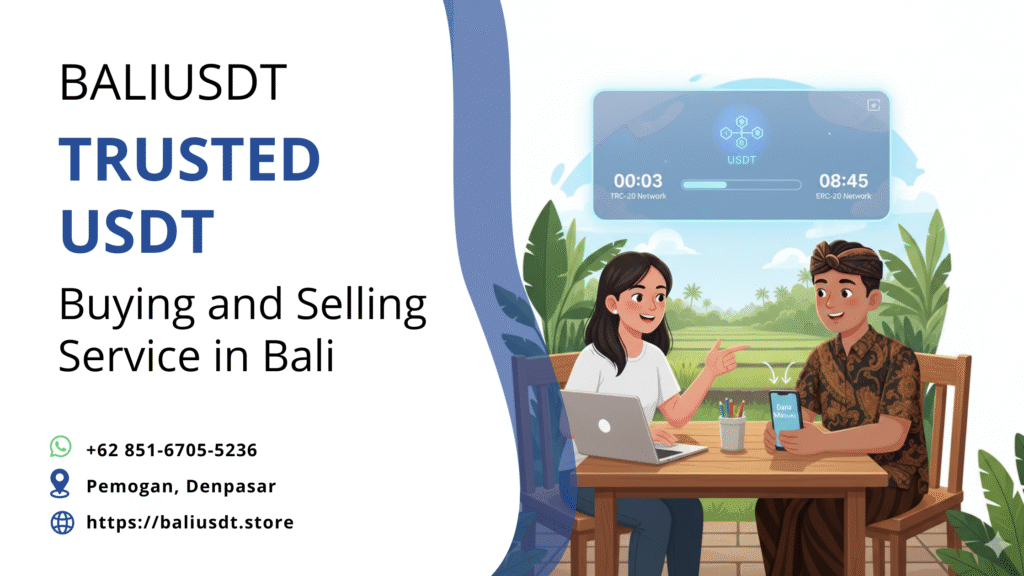
Tron (TRC-20): The Speed Champion
For many users, especially those prioritizing low cost and high speed, Tron (TRX) is the go-to network. USDT issued on the Tron blockchain follows the TRC-20 token standard.
- Average Confirmation Time: Transfers on the Tron network are incredibly fast, often completing and receiving their initial confirmation in less than one minute. Many transactions settle in a matter of seconds.
- Why It’s Fast: Tron uses a Delegated Proof of Stake (DPoS) mechanism, which allows for a much higher transaction throughput (Transactions Per Second, or TPS) than older networks.
- Cost: Transaction fees are typically negligible, making it the most economical choice for frequent transfers.
When you need a swift transaction, perhaps to top up your local Indonesian Rupiah (IDR) for an urgent scooter rental or a last-minute diving trip, TRC-20 is highly recommended. It’s arguably the most efficient answer to the question, “how long does it take to send USDT?”
Ethereum (ERC-20): The Original Network
USDT was originally launched on the Ethereum network, where it utilizes the ERC-20 token standard. While historically the most popular, Ethereum’s architecture means it is generally the slowest and most expensive option for simple transfers.
- Average Confirmation Time: Expect ERC-20 transfers to take between 5 to 20 minutes under normal network conditions.
- Why It Can Be Slow: Ethereum’s block processing time is slower than newer chains, and it often experiences high network congestion, which creates a backlog.
- Cost: Gas fees for ERC-20 transactions are significantly higher and can spike dramatically during periods of high congestion.
If you are a newcomer asking how long does it take to send USDT, using Ethereum without realizing the associated gas cost and time delay can be an expensive mistake. Use ERC-20 only if the receiving platform strictly requires it or if the transaction is integrated with a specific Ethereum-based DeFi application.
Binance Smart Chain (BEP-20) and Solana (SPL)
Other popular networks also host USDT, providing excellent alternatives for travelers.
- Binance Smart Chain (BEP-20): This network offers speeds similar to Tron, with transaction confirmation typically taking 1 to 2 minutes. Fees are low, offering a great balance between cost and speed.
- Solana (SPL): Solana boasts some of the fastest speeds in the crypto world, with transactions often confirming in just a few seconds (3 to 5 seconds). The transaction fees are minimal, making it exceptionally efficient.
Savvy digital nomads often choose Solana or Tron because their low fees and near-instant speed perfectly align with the need for quick, on-the-go currency conversion in bustling locations like Canggu or Ubud.
Factors That Can Affect USDT Transaction Time
While the blockchain network dictates the baseline speed, several other real-world factors can influence how long does it take to send USDT in practice. Being aware of these can help you avoid unnecessary delays, especially when dealing with time-sensitive payments.
Network Congestion and Traffic Volume
The blockchain is a public ledger, and like a highway, it can get jammed. During peak times of market activity (e.g., periods of high crypto price volatility), the sheer volume of transactions being processed can create significant backlog.
- The Impact: If the network is congested, your transaction will have to wait longer in the ‘mempool’ (a waiting area for unconfirmed transactions) before a validator includes it in a new block. This delay can add minutes, or even hours in extreme cases, to the usual processing time for networks like Ethereum.
- Pro Tip: If you notice market excitement, try to hold off on non-urgent transfers, or opt for a much faster, less congested network like Tron or Solana to get your transaction confirmed rapidly.
The Transaction Fee (Gas) You Pay
On Proof-of-Work (PoW) or similar networks like Ethereum, the fee you attach to your transaction, known as the ‘gas’ fee, acts as an incentive for validators.
- Priority: A higher fee effectively allows you to “bribe” the validators to prioritize your transaction, pushing it to the front of the queue.
- The Effect: If you set a fee too low during a busy period, your transaction may be left waiting indefinitely, sometimes leading to a dreaded ‘stuck’ transaction. This directly impacts how long does it take to send USDT.
Exchange or Wallet Processing Times
It is important to remember that not all delays are purely due to the blockchain itself. If you are sending USDT from a centralized crypto exchange or a specific wallet service, they may have their own internal processing protocols and security checks.
- Internal Delay: Many exchanges require a fixed number of network confirmations before they officially credit or release funds. This might be a higher number than the network’s minimum, adding extra minutes to the end-to-end time.
- Verification: For security, large withdrawals may trigger manual reviews, especially if you are conducting an Over-The-Counter (OTC) transaction for substantial amounts of local IDR.
Navigating Crypto as a Foreigner in Bali: Safety and Convenience
As a traveler or expat, using USDT in Bali offers tremendous advantages—fast transfers, bypassing bank holidays, and better exchange rates than many airport kiosks. However, security and local knowledge are paramount.
Verifying the Correct Network Address
The number one mistake that can turn a near-instant transaction into a lost fund is sending USDT to the wrong network.
- The Mismatch Trap: For instance, sending USDT on the TRC-20 network to an ERC-20 address will result in the permanent loss of your funds. Always double-check that the receiving network (e.g., TRC-20) matches the token standard (e.g., TRC-20) of the address.
- Small Test: If you are conducting a large transfer, a valuable safety tip is to send a very small test amount first (e.g., 1 USDT). Once that confirms successfully, you can proceed with the main amount. Knowing precisely how long does it take to send USDT via that small test transfer gives you confidence for the main amount.
The Local Context: Exchanging USDT for IDR
When you need Indonesian Rupiah (IDR) to pay for your villa, motorbike rental, or local expenses, you will need a reliable local partner to exchange your USDT. This is where speed and trust are most critical.
A trusted local service should be able to process your USDT (ideally on the fastest networks like TRC-20) and send the IDR to your local Indonesian bank account instantly. This final step, the transfer of IDR, is usually very fast via Indonesia’s interbank transfer systems once the USDT is confirmed.
To ensure your exchange process is as fast and secure as possible, always use a reputable service with a verifiable local presence. You can find out more about local exchange services here: BaliUSDT.store.
Legal and Cultural Notes for Crypto Users in Indonesia
While using USDT for international transfers is convenient, you must be aware of the local regulations in Indonesia. Digital nomads and travelers should note that cryptocurrency is generally not recognized as legal tender for direct payments.
- Bypassing Direct Payment: Consequently, if a vendor in Bali (like a hotel or cafe) accepts USDT, they are usually partnering with an intermediary to process it as a commodity sale or converting it to IDR immediately. This is not a technical crypto delay but a regulatory step to maintain compliance.
- Local Tip: When you exchange USDT for IDR locally, the transaction is essentially a sale of a digital commodity. Use a transparent provider who handles the process legally, ensuring a safe and hassle-free experience. The overall process, even with the required KYC/AML compliance, can be far quicker than a traditional international bank transfer.
How to Achieve Maximum Speed and Security
For the Bali-based traveler focused on minimizing wait times and ensuring security, here are the key takeaways for managing your USDT transactions.
- Prioritize TRC-20 and Solana: If the receiving platform supports it, these networks offer the quickest and cheapest way to send your funds. They will give you the fastest answer to how long does it take to send USDT.
- Monitor Network Load: Use a blockchain explorer (or simply wait for off-peak hours) if you must use a congested network like ERC-20 to avoid excessive delays and high fees.
- Confirm the Address: Triple-check the wallet address and network selection before initiating the transfer. This step takes only a few seconds but can save you from an unrecoverable loss.
- Use a Secure Local Partner: For exchanging your USDT for cash in Indonesia, always use a reliable, legally compliant service in a secure location like our office in Pemogan, Denpasar. The reliability of your local partner is the final, critical step in the speed of getting IDR in your hand.
Conclusion: Plan Your Transaction Wisely
Understanding how long does it take to send USDT is paramount for managing your finances effectively while enjoying the vibrant life in Bali. Whether you are settling down as an expat or simply passing through, Tether provides a flexible, fast, and stable solution compared to traditional international banking. By consistently choosing high-speed, low-fee networks like TRC-20 and partnering with a trustworthy local exchange service, you can ensure your funds are always ready when you need them, allowing you to focus on surfing the waves, exploring the rice paddies, or enjoying the island’s unique culture.
Contact our team for USDT selling assistance
📲 WhatsApp us to sell your USDT safely: +62 851-6705-5236
USDT is processed as a commodity sale in Indonesia, not as a direct payment method.
Read also : How Long Does It Take for USDT Transfer? A Bali Traveler’s Guide