The question, how much is 10 USDT, has a simple, direct answer for international travelers, yet the practical conversion of that value into local currency involves crucial variables. Fundamentally, USDT (Tether) is a stablecoin pegged to the US Dollar, meaning 1 USDT is intended to be equal to $1.00 USD. Therefore, 10 USDT is equal to $10.00 USD. However, for a digital nomad or expat in Bali, the real value is determined by the Indonesian Rupiah (IDR) you receive after accounting for the exchange rate, transaction fees, and the conversion method. Understanding these layers is key to effective financial management while abroad.
The Foundation: USDT’s Dollar Peg
The inherent stability of Tether provides the starting point for answering how much is 10 USDT anywhere in the world.
The 1:1 Value Commitment
USDT’s issuer, Tether Limited, maintains that the token is backed by reserves equal to the amount of USDT in circulation.
- Price Stability: This reserve backing ensures that USDT maintains its 1:1 ratio with the USD. This stability makes USDT the preferred asset for travelers needing reliable budgeting.
- Global Benchmark: Consequently, in the world of cryptocurrency, USDT acts as the stable currency. The value of other tokens is constantly measured against it. For instance, whether you are in Europe or Southeast Asia, 10 USDT holds a consistent digital value equivalent to ten US Dollars.
This stable value protects travelers from the sudden, sharp volatility seen in non-pegged cryptocurrencies like Bitcoin.
Variable 1: Conversion to Local Currency (IDR)
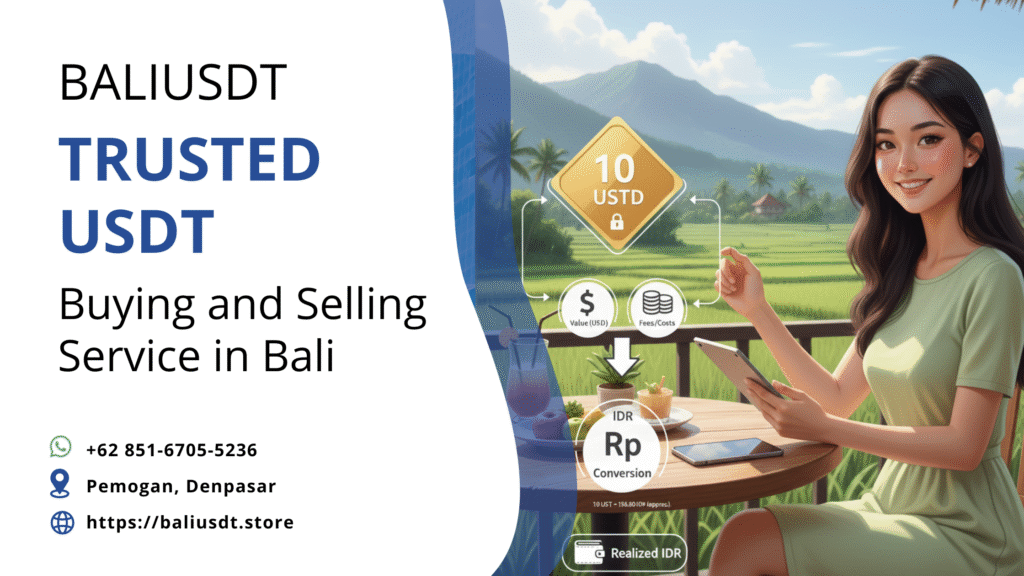
For a traveler in Indonesia, the more important question than how much is 10 USDT in US Dollars is how much that equates to in Indonesian Rupiah (IDR). This introduces the exchange rate.
Calculating the Rupiah Value
To find the IDR value, you multiply the stablecoin amount by the current USD/IDR exchange rate.
- Formula: $\text{IDR Value} = \text{USDT Amount} \times \text{USD/IDR Exchange Rate}$
- Example: Using today’s approximate interbank rate of $\text{1 USD} = \text{16,634 IDR}$, then $\text{10 USDT}$ has a raw value of $\text{10} \times \text{16,634 IDR} = \text{166,340 IDR}$.
However, this raw calculation is based on the mid-market rate, which is not what you will receive in a transaction. Therefore, the actual amount of Rupiah you receive will always be slightly lower due to operational costs and fees.
Variable 2: Transaction Fees and Network Choice
The most critical factor that reduces the Rupiah you ultimately receive from your 10 USDT is the transaction fee. This is entirely dependent on the blockchain network you use.
The Cost-Saving TRC-20 Advantage
For travelers, choosing the right blockchain network is key to maximizing their Rupiah conversion.
- ERC-20 (Ethereum): This network charges high, volatile “Gas Fees” in ETH. Even for a small transfer like 10 USDT, the fee might be $5 or more. This means you could lose half your value in fees, drastically reducing the effective Rupiah you receive.
- TRC-20 (Tron): This is the superior choice for low-value, frequent transfers. The fees are minimal—often less than $1—paid in TRX. This ensures that nearly all of your 10 USDT reaches the conversion service, preserving your capital.
By prioritizing the TRC-20 network, you ensure that operational costs do not eat into your travel budget.
Variable 3: The Conversion Service Fee
The final variable affecting how much is 10 USDT in your hand is the fee charged by the conversion service itself. This includes professional Over-The-Counter (OTC) providers.
Maximizing the Off-Ramp Rate
Reputable conversion services provide security and compliance, but they operate with a slight spread (difference between the buy and sell price) to cover their operational costs.
- Service Spread: The professional OTC service will offer you a “sell rate” that is slightly less favorable than the interbank rate. This difference is their fee for the service and security provided.
- Security vs. Cost: For a tourist, using a verified, secure service is always preferable to high-risk, unverified P2P (Peer-to-Peer) deals. The minimal fee paid to a professional ensures your safety and compliance with Indonesian law.
Therefore, for your 10 USDT, you receive a predictable amount of Rupiah, calculated at the service’s posted rate after any minimal TRC-20 network fees. You can check today’s USDT selling rate via WhatsApp for transparency.
Local Compliance: USDT is a Commodity in Indonesia
An important local tip for all travelers in Bali is understanding the legal classification of USDT. This directly influences the method you must use to access your funds.
The Legal Requirement for Conversion
Indonesian law, overseen by Bank Indonesia, strictly treats USDT as a tradable commodity, not as legal currency for payment.
- Sale, Not Spending: You cannot legally use your 10 USDT to directly purchase a meal or pay for transportation. You must sell the commodity for the legal tender, the Indonesian Rupiah (IDR).
- Secure Off-Ramping: This mandate is fulfilled by using a professional conversion service. Our office, located in Pemogan, Denpasar, provides a secure and compliant venue for selling your USDT commodity for Rupiah.
This legal framework is crucial for all foreigners managing their finances in the country.
Conclusion
The simple answer to how much is 10 USDT is $10.00 USD. However, for a traveler in Bali, the final Rupiah value depends on three factors: the USD/IDR exchange rate, the cost of the blockchain network (minimize this by using TRC-20), and the service fee charged by the conversion provider. By consistently using the low-fee TRC-20 network and engaging a secure, compliant local service to sell your USDT commodity, you ensure that almost all of your 10 USDT is preserved and converted into legally usable Indonesian Rupiah.
Check today’s USDT selling rate via Whatsapp
📲 WhatsApp us to sell your USDT safely: +62 851-6705-5236
Visit our office in Bali for secure USDT selling: Pemogan, Denpasar
USDT is processed as a commodity sale in Indonesia, not as a direct payment method.
Read also: Why Do I Need ETH to Send USDT? Understanding Gas Fees