For any digital nomad or traveler managing their finances on the go in Bali, knowing how to check USDT transaction in Bali is a fundamental skill that ensures the security and successful completion of any crypto-related exchange. Unlike bank transfers where you might wait for an email confirmation, verifying a USDT transfer relies on the transparent, decentralized ledger of the blockchain. Since USDT operates on several different chains—most commonly Ethereum (ERC-20), Tron (TRC-20), and sometimes Solana—the verification process depends entirely on the specific network used. Therefore, understanding this verification process not only provides peace of mind but also confirms that your funds are successfully en route or have arrived in your wallet, which is especially important during crucial liquidation processes on the island.
Understanding the Core: The Role of Block Explorers
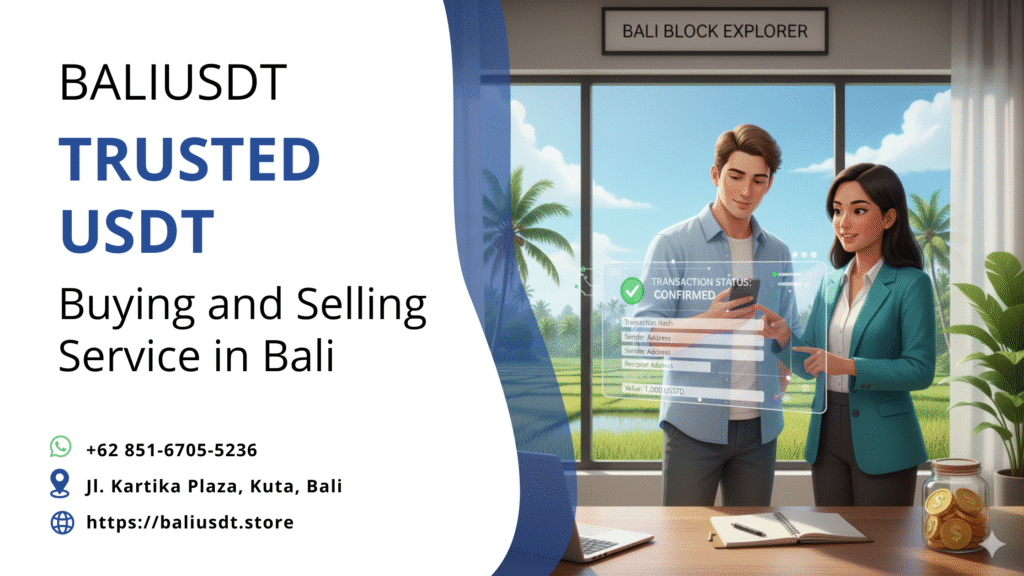
The key to learning how to check USDT transaction in Bali, or anywhere else in the world, lies in the use of a Block Explorer. A Block Explorer is essentially a search engine for a specific blockchain. It allows anyone to view the details of every transaction that has ever occurred on that network. This transparency is the core feature of blockchain technology.
Identifying Your Blockchain Network
Before you can check anything, you must know which network your USDT was sent on. This is the most crucial step.
- Tron Network (TRC-20): Often used due to its very low transaction fees and fast speeds. The primary explorer is Tronscan.
- Ethereum Network (ERC-20): A highly common, but often more expensive network to use. The primary explorer is Etherscan.
- Other Networks: If you use alternative chains like Solana or BNB Chain, you would use their respective explorers (Solana Explorer or BSCScan).
When conducting a transaction with a local OTC provider in Bali, always clarify and confirm the network being used before initiating the transfer. This simple verification prevents funds from being lost due to cross-chain incompatibility, a common mistake for newcomers.
Step-by-Step Guide: How to Check USDT Transaction in Bali
Once you have initiated a transaction—for instance, selling USDT to a local service for IDR cash—you will need to confirm the funds have left your wallet or arrived at the recipient’s address. Here is the streamlined process on how to check USDT transaction in Bali using a block explorer:
- Obtain the Transaction ID (Hash): The moment you send USDT, your wallet or the exchange will generate a unique string of characters called the Transaction ID (TxID) or Transaction Hash. This is the digital receipt. Ensure you copy this hash accurately.
- Select the Correct Explorer: Based on the network used (e.g., Tron or Ethereum), navigate to the corresponding Block Explorer website (e.g., Tronscan or Etherscan).
- Input the TxID: Paste the copied Transaction ID into the search bar of the Block Explorer.
- Analyze the Results: The search result will display the full details of your transfer, including the sending address, receiving address, the amount of USDT transferred, and most importantly, the Confirmation Status.
Understanding Transaction Statuses for Peace of Mind
When checking your transfer, you will see key status indicators:
- Pending/Unconfirmed: The transaction has been broadcast to the network but has not yet been included in a block by a miner/validator. You must wait.
- Confirmed (with a number): The transaction has been successfully included in a block. The higher the number of confirmations, the more irreversible and secure the transaction is considered. For large sums, you might wait for 6 or more confirmations.
- Failed: The transaction did not go through, usually due to insufficient gas fees or other blockchain issues.
Learning how to check USDT transaction in Bali empowers you by giving you real-time visibility and independence from needing constant assurance from the service provider.
Best Practices for Security and Speed in Bali’s Digital Environment
While traveling and dealing with digital assets on the Island of the Gods, maintaining security and efficiency is paramount. These practices ensure a smooth experience when you need to confirm your transfers.
- Secure Internet Connection is Mandatory: Never check or initiate crypto transactions on open, public Wi-Fi networks in cafes or parks. Use a secure VPN or your own mobile data hotspot to check your USDT transaction status. The digital safety of your assets depends heavily on your network security.
- Bookmark Official Explorer Websites: To avoid phishing scams—where fake explorer sites steal your information—always bookmark the official URL of the block explorer you use most frequently.
- Communicate the Network Clearly: When dealing with local OTC providers for buying or selling, such as when using the reliable services offered at our Kuta office located at JL. KARTIKA PLAZA, KUTA, KEC. KUTA, KAB. BADUNG, BALI 80361, always explicitly state the blockchain network. This ensures both parties are tracking the same transaction flow and prevents delays. For example, explicitly say, “I am sending 500 USDT via TRC-20.”
When Transfers Seem Slow: Troubleshooting Common Issues
Sometimes, even after learning how to check USDT transaction in Bali, a transfer might appear stuck. This is usually due to network congestion or incorrect fees, not a security issue with the service provider.
- Low Gas Fees (ERC-20): On the Ethereum network, if the gas fee attached to the transaction was too low, the transaction may remain pending for a long time until miners prioritize it.
- Network Congestion: During peak usage times, any blockchain network can become temporarily slow. Patience is key. If you see the transaction on the explorer as ‘Pending,’ it is already in the queue.
- Wallet Synchronization: Occasionally, your wallet app may take a moment to synchronize with the latest block data. If the explorer shows the transaction is confirmed, but your wallet doesn’t reflect the balance yet, a simple refresh or re-opening of the application usually resolves the issue.
We strongly encourage travelers who are dealing with exchanges to link up with verified local services, like those found via BaliUSDT.store, where assistance can be provided if transactions seem unexpectedly delayed.
The Importance of Immediate Verification for Financial Clarity
The immediate ability to verify your transfer is crucial for the efficient movement of funds, particularly when selling USDT for Indonesian Rupiah. For digital nomads who need to pay rent or cover immediate travel expenses, time is money. By mastering how to check USDT transaction in Bali instantly, you avoid unnecessary back-and-forth communication. Furthermore, for anti-money laundering (AML) compliance and proper accounting, having the TxID and confirmation status readily available provides essential documentation for high-value transactions, aligning with the formal requirements of legitimate OTC operations. This proactive approach ensures a transparent and hassle-free financial experience throughout your stay.
Conclusion
Mastering how to check USDT transaction in Bali is an essential step toward financial independence and security for any international visitor utilizing cryptocurrency. By leveraging the appropriate Block Explorer for the correct blockchain network, you gain complete, real-time control over your asset transfers. This ability to instantly verify the status of your USDT movements, whether you are buying or selling, reduces uncertainty and ensures that your transactions are fast, transparent, and confirmed—allowing you to focus more on the vibrant culture and beautiful surroundings of Bali.
Need to liquidate your verified USDT into Rupiah securely while on the island?
📲 WhatsApp us to sell your USDT safely: +62 851-6705-5236
Check today’s USDT selling rate via WhatsApp
USDT is processed as a commodity sale in Indonesia, not as a direct payment method.
Read More: What is USDT? Your Essential Crypto Guide for Bali Travel