Introduction
For digital nomads, remote workers, and expats establishing a base in the Island of the Gods, a clear understanding of how to USDT register Indonesia is essential for financial compliance. Contrary to what some might assume, the process does not involve registering USDT as a currency—since the Indonesian Rupiah (IDR) is the only legal tender—but rather registering and verifying your identity with licensed local platforms to trade USDT as a commodity asset. This framework ensures you can legally and safely convert your stablecoin into the local currency required for accommodation, visas, and daily life in Bali, maintaining a seamless financial experience throughout your stay.
1. The Legal Status of USDT in Indonesia
Before delving into the registration process, it is paramount to understand Indonesia’s legal stance on cryptocurrency. This clarity protects travelers from unintentional breaches of local law, a key concern for any foreign visitor.
USDT is a Commodity, Not a Currency
The core of Indonesian cryptocurrency regulation, overseen by the Commodity Futures Trading Supervisory Agency (Bappebti) and recently shifting to the Financial Services Authority (OJK), is that cryptocurrency, including USDT, is recognized only as a digital commodity asset for trading or investment purposes.
- Currency Law: Indonesian Law No. 7 of 2011 strictly mandates the use of the Rupiah (IDR) for all transactions within the country. Using any other currency, including stablecoins like USDT, for purchasing goods and services is strictly prohibited and can lead to severe penalties, including fines and imprisonment.
- The Trading Gateway: Consequently, the only legitimate way for you to utilize your USDT funds in Bali is by selling or converting them into IDR through officially registered channels. This distinction is critical for anyone searching how to USDT register Indonesia—you are registering to trade a commodity, not to spend a currency.
Therefore, the first step is to accept that you must convert your digital assets into local fiat money before spending. This is where the registration with a local platform, or a trusted local vendor, comes into play.
2. Options for Crypto Registration and Conversion
When looking into how to USDT register Indonesia, foreigners primarily have two avenues for managing their stablecoin assets: using Bappebti-licensed local exchanges or utilizing reputable over-the-counter (OTC) services.
Option A: Using Bappebti-Licensed Indonesian Exchanges
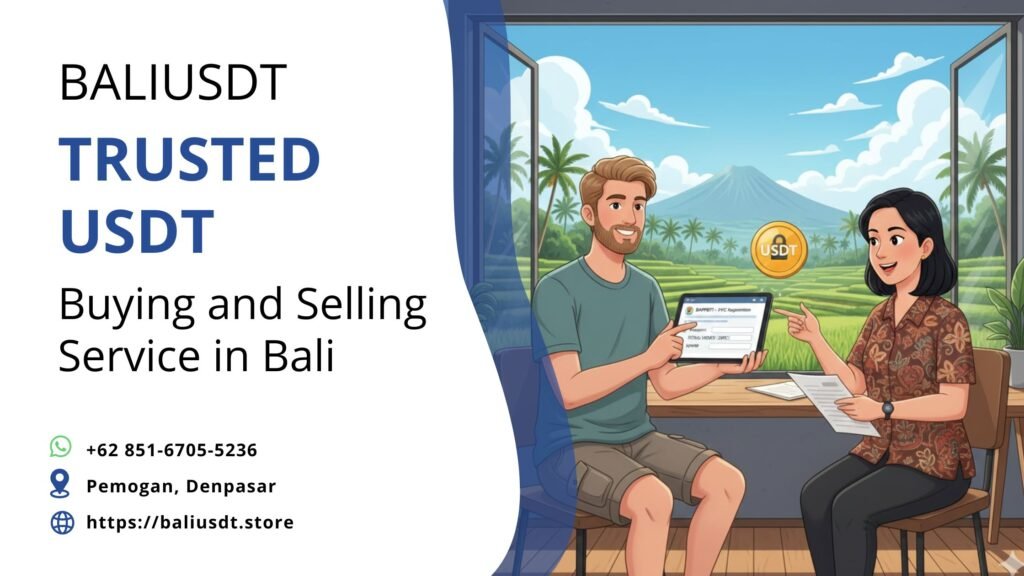
Indonesia has a list of officially licensed Crypto Asset Physical Traders (Pedagang Fisik Aset Kripto), such as Indodax, Tokocrypto, or Pintu. To use these platforms, you must complete a rigorous Know-Your-Customer (KYC) process.
The KYC Challenge for Travelers and Expats
Foreigners often face documentation hurdles when trying to meet the KYC requirements of local exchanges:
- Residency Documents: Local platforms typically require an Indonesian Tax ID (NPWP) and sometimes a Limited Stay Permit (KITAS) or other long-term residency documents like the SKTT (Certificate of Residential Address). Tourists on a Visa On Arrival (VOA) or B211a visa may find it exceptionally difficult, if not impossible, to complete this registration step legitimately.
- Local Bank Account: Furthermore, withdrawals and deposits are almost always linked exclusively to an Indonesian bank account held under the same name as the verified trading account, which also requires residency status to open.
Consequently, while this is the official path, it is often impractical for short-term visitors or those without formal residency.
Option B: Utilizing Trusted Local OTC Services
Given the complexities of formal exchange KYC for foreigners, many digital nomads and expats opt for private, secure, and fully compliant local Over-The-Counter (OTC) services. These services handle the technical conversion and regulatory steps for you.
- Simplified Process: You simply send your USDT from your personal wallet to the vendor’s verified corporate wallet. The vendor, who operates legally as a commodity trader, processes the sale and transfers the equivalent IDR amount directly to your international or local bank account.
- Compliance Bridge: Reputable OTC services act as a bridge, allowing foreigners to legally liquidate their assets without needing to complete the stringent Bappebti-level KYC required of an Indonesian resident trader. This method is often the safest and most convenient answer to how to USDT register Indonesia for a foreign national simply seeking to convert their assets into IDR. For secure and clear stablecoin transactions in Bali, you can find a reliable service at BaliUSDT.store.
3. Mandatory KYC and AML Requirements for Foreigners
Even when using a trusted OTC service, a critical part of the process is complying with Indonesia’s Anti-Money Laundering (AML) and Counter-Terrorism Financing (CTF) regulations, which adhere to international FATF Travel Rule standards.
The FATF Travel Rule in Practice
For cryptocurrency transactions exceeding a certain threshold (currently around $1,000 USD), both the sender and recipient must collect and verify specific identifying information. Therefore, as a foreign seller, you must be prepared to provide:
- A Valid Passport Copy: Your primary identification document as a traveler or expat.
- Proof of Residential Address (in your home country or Bali): This could be a bank statement or a recent utility bill.
- KYC Form: Completing a standard form that details the source of your funds and the purpose of the transaction.
It is important to emphasize that any service that allows you to sell large amounts of USDT without any form of identity verification is highly non-compliant and risky. A legal service must conduct this due diligence. This requirement is non-negotiable for anyone who needs to know how to USDT register Indonesia legally.
4. Security and Practical Tips for Travelers in Bali
Once you understand the regulatory landscape, you must focus on the practical security steps for conducting these transactions, especially while navigating the unique environment of Bali.
Digital Security While Traveling
- Avoid Public Wi-Fi: Never initiate large financial transfers, especially when selling digital assets, over free public Wi-Fi (e.g., at coffee shops or airports). Use a secure VPN or your own 4G/5G mobile hotspot for maximum security.
- Verify the Recipient Address: When sending USDT to a vendor, meticulously double-check the wallet address. A single error means your funds are instantly and irrevocably lost. This is particularly vital after determining how to USDT register Indonesia and beginning the actual sale process.
- Rupiah Confirmation: Only complete your side of the transaction (sending the USDT) once the conversion rate and the final IDR amount are agreed upon, and you have confirmation that the Rupiah transfer to your bank account is pending or complete.
Currency and Local Banking Notes
- Local Bank Accounts: If you plan on a long-term stay (KITAS/KITAP holder), opening a local bank account (like BCA or Mandiri) makes receiving IDR funds from a USDT sale much faster and cheaper.
- Taxes: Be aware that trading crypto assets in Indonesia is subject to taxes. While short-term travelers may operate under different tax rules, long-term expats should consult a local tax advisor to ensure full compliance regarding their digital commodity trading income.
Understanding these security and logistical nuances turns the complex process of how to USDT register Indonesia into a manageable financial strategy for your time on the island.
5. Converting USDT: Ensuring Safety and Convenience
The goal of figuring out how to USDT register Indonesia is ultimately to gain access to the local currency safely and conveniently. Choosing the right partner for this conversion makes all the difference for a traveler’s peace of mind.
The Convenience of High-Service Providers
For foreigners, the risk of dealing with unlicensed money changers or non-compliant peer-to-peer (P2P) transfers is too high. A professional OTC service provides:
- Guaranteed Exchange Rate: Transparency on the current conversion rate before the transaction begins.
- Swift IDR Transfer: Fast transfer of the IDR directly into your verified bank account (local or international).
- Local Knowledge: Guidance on local regulations, ensuring your transaction adheres to Indonesian law.
Choosing a reputable, established service is not just about convenience; it is a critical measure of safety, preventing any financial or legal complications during your time in Bali.
Conclusion
Understanding how to USDT register Indonesia is fundamental for any expat or digital nomad looking to manage their digital assets responsibly in Bali. Since the law strictly classifies USDT as a tradable commodity and prohibits its use as currency, the safe pathway involves conversion into Indonesian Rupiah through licensed entities. For travelers without full residency documentation, utilizing a verified, compliant local OTC service offers the most practical, secure, and efficient way to sell your USDT assets, adhere to Indonesian KYC/AML requirements, and ensure you have the necessary local currency for your life on the Island of the Gods.
Check today’s USDT selling rate via WhatsApp
Pemogan, Denpasar
📲 WhatsApp us to sell your USDT safely: +62 851-6705-5236
USDT is processed as a commodity sale in Indonesia, not as a direct payment method.
Read also : How to Send from USDT Paper Wallet: A Traveler’s Guide