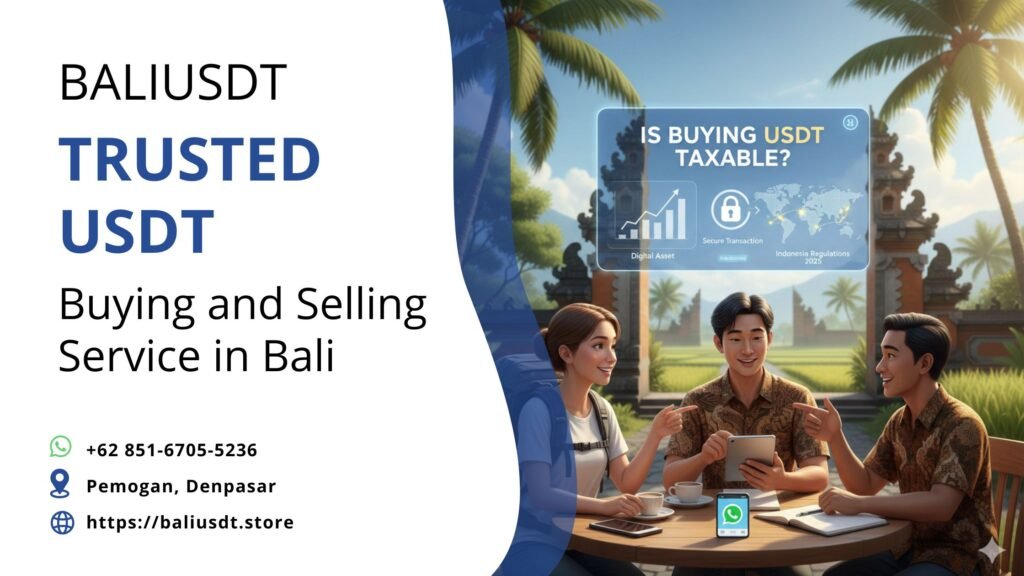
If you are a traveler, expat, or digital nomad visiting the Island of the Gods, you might be wondering: is buying usdt taxable for someone just passing through? Navigating the intersection of local Indonesian law and international tax obligations can feel like trying to find a hidden waterfall in Ubud without a map. As digital currencies become the go-to for many travelers seeking to avoid high bank fees and local currency volatility, understanding your financial responsibilities is essential for a stress-free stay.
While Bali offers a laid-back lifestyle, its financial regulations are modern and evolving. In 2025, Indonesia clarified many of its positions regarding digital assets. This article will break down the tax implications of acquiring Tether (USDT) while you are in Indonesia, how the local government views these transactions, and what you need to know to stay compliant.
Understanding Indonesian Crypto Regulations in 2025
For many visitors, the question of whether is buying usdt taxable depends largely on how Indonesia classifies digital assets. In the eyes of Indonesian law, USDT and other cryptocurrencies are not “currencies” or legal tender. Instead, they are classified as commodities or “digital financial assets.” Because they are treated as commodities, they fall under a specific tax framework managed by the Indonesian Ministry of Finance.
Starting in late 2025, the government updated its regulations (specifically PMK 50/2025). One of the biggest shifts for travelers to understand is that the transfer of crypto assets is now generally exempt from Value Added Tax (VAT), as they are treated similarly to securities. However, while the asset itself might be exempt from VAT upon purchase, the services provided by exchanges or traders are still subject to taxation. This distinction is vital when assessing if is buying usdt taxable at the point of sale.
Is Buying USDT Taxable for Foreigners and Tourists?
When you are a tourist in Bali, your tax liability is usually focused on “consumption” taxes rather than income taxes. If you are asking is buying usdt taxable during your vacation, the answer is mostly found in the transaction fees. When you buy USDT through a registered local exchange (PPMSE), the tax is typically “final” and withheld by the platform.
For most travelers, the tax looks like this:
- Income Tax (PPh): There is a final income tax of approximately 0.21% applied to the transaction value if you use a local, regulated platform.
- Service VAT: While the USDT itself isn’t taxed under VAT anymore, the service fee charged by the exchange is subject to an effective VAT rate of roughly 1.1% to 1.2%.
If you are simply buying USDT to hold or to pay for services later, these small amounts are usually baked into the price or the fee structure of the exchange you use. Therefore, while the answer to “is buying usdt taxable” is technically “yes,” for a short-term visitor, it is often a seamless process where the tax is collected automatically at the source.
Tax Residency: When the Rules Change for Expats
The situation becomes more complex for digital nomads or expats staying in Bali for an extended period. If you reside in Indonesia for more than 183 days in a 12-month period, you are generally considered a tax resident. In this case, the question of whether is buying usdt taxable expands to include your global income reporting.
As a tax resident, you are required to have a Tax Identification Number (NPWP). While the tax on the actual purchase of USDT remains the same (withheld at the source), you may need to report your crypto holdings in your annual tax filing. If you later sell that USDT for a profit, that gain might be subject to different reporting requirements compared to a tourist who is just using USDT for travel convenience. To ensure you are following the latest rules, you can get guidance for selling USDT legally in Indonesia to see how your residency status affects your specific situation.
Practical Tips for Managing USDT in Bali
Bali is a hub for the “crypto-nomad” lifestyle, but convenience should never override safety. If you have decided that is buying usdt taxable in a way that is acceptable for your budget, your next step is ensuring the transaction is secure.
- Use Registered Platforms: Always look for traders or platforms that comply with BAPPEBTI (the Indonesian commodity regulator) or OJK. This ensures your tax is handled correctly and your funds are protected.
- Keep Records: Even as a tourist, keep digital receipts of your transactions. If your home country asks about your crypto activity later, you will have proof that you paid the local Indonesian taxes.
- Local Cash Needs: Remember that while you can buy and hold USDT, you still need Indonesian Rupiah (IDR) for local warungs, transport, and cultural sites. Many travelers choose to sell their USDT for local currency as they go.
If you are currently in Pemogan, Denpasar, or staying in the Canggu/Seminyak area, finding a reliable partner to help you navigate these transactions is key. Whether the question is is buying usdt taxable or simply how to get the best rate, local expertise is invaluable.
Global Tax Implications: Don’t Forget Your Home Country
Even if you have settled the local Indonesian taxes, you must remember that your home country (be it the US, UK, Australia, or elsewhere) has its own rules. For many, the answer to is buying usdt taxable depends on the “cost basis.” In many Western jurisdictions, simply buying crypto with fiat currency is not a taxable event. However, exchanging one crypto for another (like swapping Bitcoin for USDT) is often taxable.
Always consult with a tax professional in your home country. Most international tax authorities now use the Crypto-Asset Reporting Framework (CARF), which means they may eventually receive data about transactions made abroad. Staying transparent about whether is buying usdt taxable in your specific context will save you from “tax headaches” down the road.
Conclusion
Navigating the financial landscape of Bali is part of the adventure. To summarize, is buying usdt taxable in Indonesia? Yes, but for the average traveler, it is a small, final tax usually handled by the exchange at the time of purchase. For those staying longer than six months, the reporting requirements become more detailed, involving residency status and annual filings. By staying informed and using reputable local services, you can enjoy everything Bali has to offer while keeping your financial house in order.
Ready to Handle Your USDT Safely?
Managing your digital assets in a foreign country requires a partner you can trust. If you need to convert your USDT into cash for your Bali adventures or simply want to ensure your transactions are handled securely and legally within the Indonesian framework, our team is here to help.
Contact our team for USDT selling assistance or use the details below to get started.
📲 WhatsApp us to sell your USDT safely: +62 851-6705-5236
USDT is processed as a commodity sale in Indonesia, not as a direct payment method.
Read also : Is Buying USDT Safe? A Complete Guide for Bali Travelers