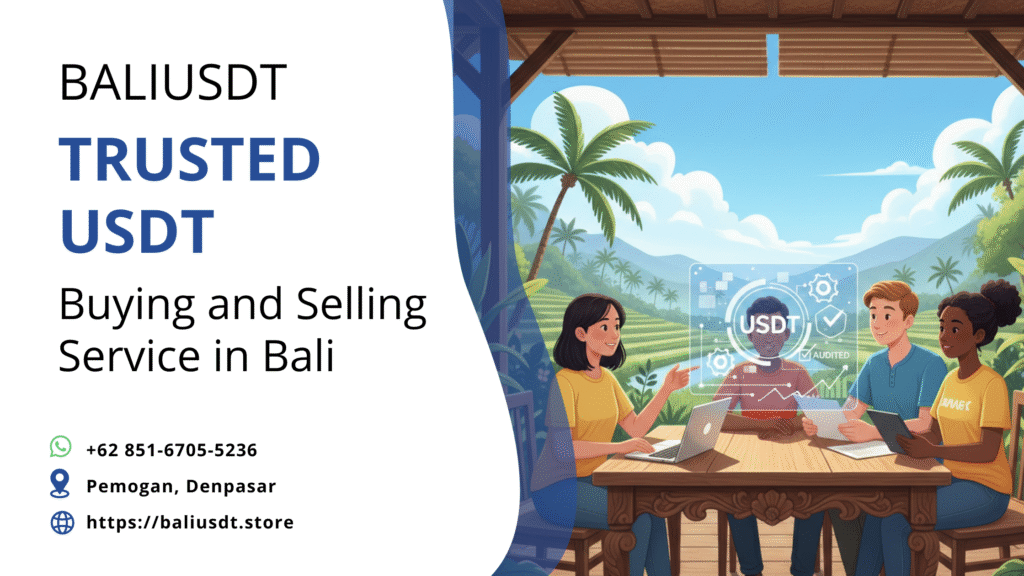
The stability of Tether (USDT), the world’s largest stablecoin, concerns international travelers, expats, and digital nomads who use it to store value and transfer funds across borders. A fundamental question regarding its trustworthiness is: is USDT audited? The simplest answer is complex: Tether publishes regular, independent reports called attestations, prepared by the accounting firm BDO. However, these attestations differ fundamentally from a full financial audit. Attestations confirm the composition and value of reserves at a specific point in time. Conversely, a full audit provides a far more comprehensive, continuous assessment of the entire corporate structure, management practices, and underlying accounting principles. Understanding this crucial distinction helps you accurately assess the risk profile of relying on USDT for your financial life in places like Bali.
The Core Difference: Audit vs. Attestation
To properly evaluate the stability of the stablecoin, we must clarify why the question, is USDT audited, cannot receive a simple “yes” or “no” answer.
What is an Attestation?
Tether currently relies on quarterly attestations prepared by the global accounting firm BDO. This is what the report confirms:
- Snapshot in Time: An attestation provides a “snapshot” of the company’s assets and liabilities only on a specific date (e.g., September 30, 2025). It does not assure you about activities that occurred before or after that specific date.
- Management’s Representation: The attestation validates that the financial figures and reserves report prepared by Tether’s management are fairly presented based on management’s stated accounting policies. The accounting firm checks the data management provides.
- Limited Scope: Furthermore, the procedures performed are less rigorous than a full audit. The report verifies the existence of assets but generally does not investigate the source or credit risk of all counterparties holding the reserves.
Therefore, the attestation provides a level of verification, but it does not offer the holistic scrutiny required for maximum financial assurance.
What is a Full Audit?
A full audit, which critics and regulators continue to demand, involves a much deeper and continuous investigation.
- Continuous Review: An audit examines the company’s financial health over an entire period (e.g., one fiscal year). It looks for consistency and integrity throughout the operation.
- Independent Scrutiny: Moreover, it involves looking for unreported liabilities. It also verifies that the company’s accounting practices comply with global standards (like GAAP or IFRS), not just management’s self-defined policies.
- Risk Assessment: The audit methodology includes reviewing internal controls, assessing risk exposure across all assets, and looking for potential fraud or mismanagement. An attestation often misses these elements.
Consequently, when digital nomads ask, is USDT audited, they seek the gold standard of financial transparency, which Tether has yet to provide.
How Attestations Impact Traveler Confidence
Although not a full audit, the quarterly attestations by BDO offer valuable information. They significantly bolster the confidence of the international user base.
Confirming Reserve Stability
The primary utility of the attestation confirms the 1:1 backing of the stablecoin.
- Over-Collateralization: The reports consistently show that Tether’s total consolidated assets exceed its consolidated liabilities (the value of all outstanding USDT tokens). As of late 2025, Tether has reported several billion dollars in excess reserves, providing a crucial buffer against market volatility.
- Asset Composition Disclosure: Specifically, the attestations detail the composition of the reserves. The majority of assets concentrate in highly liquid instruments, primarily U.S. Treasury Bills. In fact, Tether ranks as one of the world’s largest holders of U.S. debt, a factor that reassures many users about its solvency.
- Market Resilience: Therefore, this level of reported backing helps explain why USDT has maintained its dollar peg so successfully. This holds true even during major crypto market crashes or banking crises. For the traveler needing stability in their digital finances, this practical resilience is a strong indicator of safety, regardless of the audit status.
We see that the attestations serve as a strong, practical substitute for an audit, especially without a universally accepted, regulated framework for stablecoins.
Regulatory Drivers for Future Audits
Global economic hubs drive regulatory pressure on stablecoin issuers to provide full transparency. This directly influences the long-term answer to is USDT audited.
Global Regulatory Push
Recent legislation in the U.S. and E.U. sets the stage for mandatory, comprehensive audits for all major stablecoin issuers.
- The GENIUS Act (U.S.): Regulations recently introduced in the U.S. push for much stricter reporting requirements. They demand more frequent public disclosures and, for issuers above a certain threshold, full financial audits.
- MiCA (E.U.): The Markets in Crypto-Assets regulation in Europe mandates strict reserve backing and reporting for stablecoins operating in the region. Thus, a competitive landscape has emerged where stablecoins that do comply with full audit standards (like rival stablecoins) gain ground with institutional investors.
- The Path Forward: Tether has publicly stated that it engages in talks with a “Big Four” accounting firm to complete a full audit. This indicates that competitive and regulatory pressure pushes the company toward the gold standard of financial reporting. This will conclusively answer the question, is USDT audited, with a definitive yes.
Consequently, future regulatory shifts will likely force the necessary comprehensive transparency, further stabilizing USDT.
Managing USDT Risk as a Bali Traveler
For expats and digital nomads, the reserve transparency issue is secondary to ensuring personal security and legal compliance in Indonesia.
Best Practices for USDT Safety in a Foreign Context
While Tether works toward a full audit, you must prioritize self-custody and compliant off-ramping to protect your funds.
- Security of the Wallet: Never store large sums of USDT on centralized exchanges. Use a reputable hardware wallet or non-custodial software wallet. Your control over the private keys is the most immediate security measure against platform risk, which is far greater than the reserve risk for the average traveler.
- The Compliant Sale: Remember that Indonesian law classifies USDT as a commodity, not currency. You cannot use it for direct payments. To access Rupiah (IDR) legally, you must sell your USDT to an authorized service. This process ensures compliance with local laws and the correct withholding of the Final Income Tax.
- Trusted Conversion Services: Avoid informal, high-risk P2P cash exchanges. Using a verified, local provider gives you the safest way to convert your USDT. We offer secure, compliant sales and can provide guidance for selling USDT legally in Indonesia.
For secure transactions in Bali, you can rely on trusted services like BaliUSDT.store.
Conclusion
The question, is USDT audited, is central to stablecoin confidence. Currently, Tether provides regular, detailed attestations by the reputable firm BDO. These reports confirm that its total assets exceed its liabilities. They also detail the composition of its highly liquid reserves. While these attestations demonstrate practical stability and market resilience, they do not equal a full financial audit. However, increasing global regulatory pressure and competition push Tether toward achieving a full audit, which will ultimately provide the highest level of transparency. For the traveler in Bali, the priority remains: protect your funds through secure self-custody and ensure compliant conversion of your USDT commodity into Indonesian Rupiah via a legal, trusted local service.
Get guidance for selling USDT legally in Indonesia
📲 Whatsapp us to sell your USDT safely: +62 851-6705-5236
Visit our office in Bali for secure USDT selling: Pemogan, Denpasar
USDT is processed as a commodity sale in Indonesia, not as a direct payment method.
Read also: How Long Arbitrage USDT Takes: Speed, Risk, and Traveler Safety