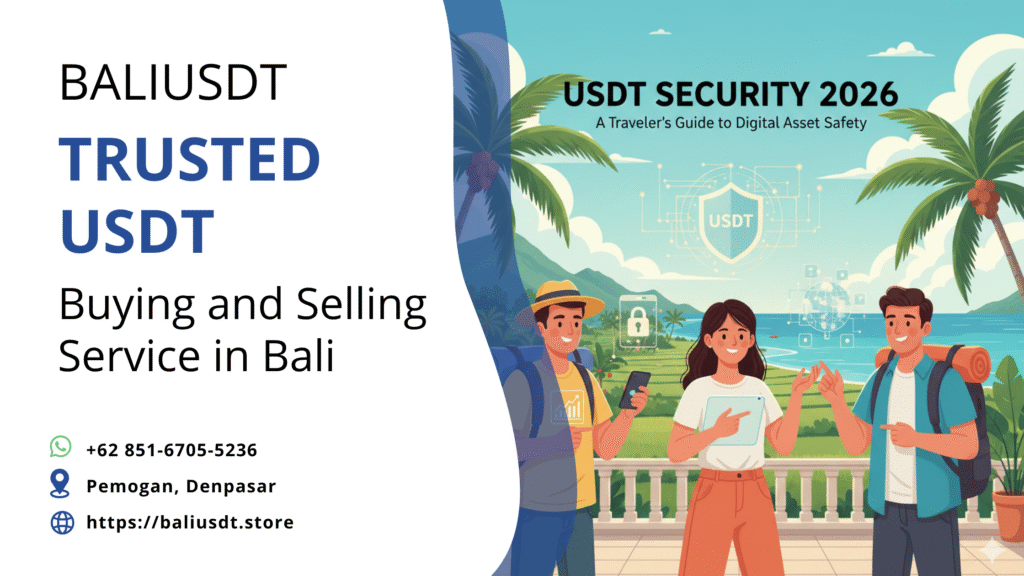
The question, is USDT safe 2026, is critical for any international traveler, expat, or digital nomad relying on stablecoins for efficient cross-border finance. Tether (USDT) remains the stablecoin giant, boasting unmatched liquidity and widespread acceptance across global exchanges. However, its safety is not static; it is constantly influenced by ongoing regulatory developments, particularly in major jurisdictions like the U.S. and E.U., and by the transparency of its backing reserves. As we move into 2026, the overall safety assessment of USDT for the everyday user depends heavily on the security practices they employ and, crucially, its continued utility as the most liquid off-ramp in regions like Southeast Asia.
Evaluating USDT’s Core Safety Pillars for 2026
To determine is USDT safe 2026, we must assess the two primary safety concerns that have historically surrounded the token: regulatory compliance and reserve stability.
Pillar 1: Regulatory Clarity and Global Fragmentation
The safety of USDT in 2026 is largely defined by the new global regulatory landscape.
- The Regulatory Divergence: 2025 saw the full implementation of key legislation, such as the U.S. GENIUS Act and the E.U.’s MiCA (Markets in Crypto-Assets) framework. These regulations impose strict requirements for stablecoin issuers, especially concerning transparency, reserve backing, and independent audits.
- The MiCA Effect: Significantly, the MiCA framework in the E.U. created a clear divergence. Compliant stablecoins like USDC are gaining official regulatory status, while USDT’s structure has, for many, kept it on the sidelines of the regulated European market.
- USDT’s Global Role: Despite this regulatory fragmentation, USDT remains the dominant stablecoin on offshore exchanges and in emerging markets, where fiat banking access is limited. This means that while its regulated safety may be questioned in the West, its operational safety and liquidity remain essential for global commerce, especially for a traveler in Bali.
In short, while Western markets push regulated alternatives, USDT maintains its safety through deep market integration and network effect globally.
Pillar 2: Reserve Transparency and Liquidity Resilience
The most enduring question regarding USDT’s safety revolves around whether every circulating token is truly backed 1:1 by liquid assets.
Tether’s Commitment to Assurance
Over recent years, Tether has significantly improved its disclosures, though critics still demand a full financial audit.
- Increased Attestations: Tether continues to publish regular assurance reports from independent accounting firms, such as BDO. These reports confirm that Tether’s assets generally exceed its liabilities. They detail that the reserves are primarily composed of highly liquid, short-dated instruments, with U.S. Treasury Bills forming the backbone of the backing.
- Battle-Tested Resilience: Furthermore, USDT has proven its ability to maintain its dollar peg through multiple major market stress tests—including the Terra Luna collapse and significant banking crises. This demonstrated resilience against large, rapid redemptions offers practical evidence that is USDT safe 2026 against liquidity runs.
- Dominant Market Liquidity: For the traveler, USDT’s sheer size means it offers unparalleled liquidity. This ensures you can convert large amounts quickly with minimal slippage. Liquidity is a fundamental layer of safety for anyone needing fast access to their funds while abroad.
Therefore, for the practical traveler prioritizing immediate access and stability, USDT’s proven resilience makes it a reliable asset.
The Traveler’s Security Imperatives in Bali
The greatest threat to a traveler’s USDT assets in 2026 is almost always poor personal security practices, not the stablecoin itself.
Essential Self-Custody and Transaction Practices
The responsibility for safety ultimately rests with the user. You must follow crucial protocols to ensure your USDT is secure.
- Wallet Security: Never leave significant USDT holdings on a centralized exchange, which exposes you to platform failure or hacking. Instead, use self-custody wallets (like hardware or secure software wallets). You retain complete control of your private keys.
- The TRC-20 Advantage: When transferring funds to your Bali off-ramp, always utilize the low-fee, high-speed TRC-20 (Tron) network for USDT. It is the cheapest and most popular network in Southeast Asia. Sending funds on the wrong network is a common, avoidable mistake that results in loss.
- Cybersecurity in Public: Digital nomads often use public Wi-Fi in cafes and co-working spaces. Always use a Virtual Private Network (VPN) and enable two-factor authentication (2FA) on all financial accounts to protect your trade keys and balances from being compromised.
Asking is USDT safe 2026 must be paired with the self-assessment: Am I using USDT safely?
Legal Compliance: The Off-Ramp to Indonesian Rupiah (IDR)
For the traveler, the final safety check concerns legal compliance in Indonesia. The process of converting USDT to IDR is a critical step that requires adherence to local laws.
Secure and Compliant Commodity Sales
Indonesia classifies USDT as a commodity, not as a legal payment currency. This fact dictates how you must handle your funds locally.
- Avoid Direct Payment: You must not use USDT for direct payments for services, goods, or rent in Bali. This is illegal and could lead to fines or confiscation.
- The Commodity Sale Requirement: The only legal and secure way to utilize your USDT is to sell it as a commodity to obtain Indonesian Rupiah (IDR) through a verified service. This process also ensures the required Final Income Tax is correctly withheld.
- Trusted Local Service: Avoid informal P2P swaps that lack security and legal standing. Instead, use a professional, local service like ours. This guarantees a safe transaction environment and compliance with Indonesian financial law.
You can find more information about compliant sales at BaliUSDT.store. This step is a non-negotiable part of financial safety in Indonesia.
Conclusion
Is USDT safe 2026? For the traveler and digital nomad, the answer remains a qualified yes. USDT is safe because of its unmatched liquidity, its proven ability to maintain its peg through market turbulence, and its dominant position on the efficient TRC-20 network. While regulatory scrutiny continues, particularly from Western regulators favoring highly compliant stablecoins, Tether has consistently increased its reserve transparency and demonstrated resilience. For users in Bali, the practical safety of USDT rests on two key factors: rigorous personal cybersecurity practices and the commitment to using legal, verified local services for the compliant commodity sale to Indonesian Rupiah.
Check today’s USDT selling rate via Whatsapp
📲 WhatsApp us to sell your USDT safely: +62 851-6705-5236
Visit our office in Bali for secure USDT selling: Pemogan, Denpasar
USDT is processed as a commodity sale in Indonesia, not as a direct payment method.
Read also: USDT Taking Too Long? Here’s Why and How to Fix It Fast