A Foreigner’s Essential Guide to USDT Security and Regulations
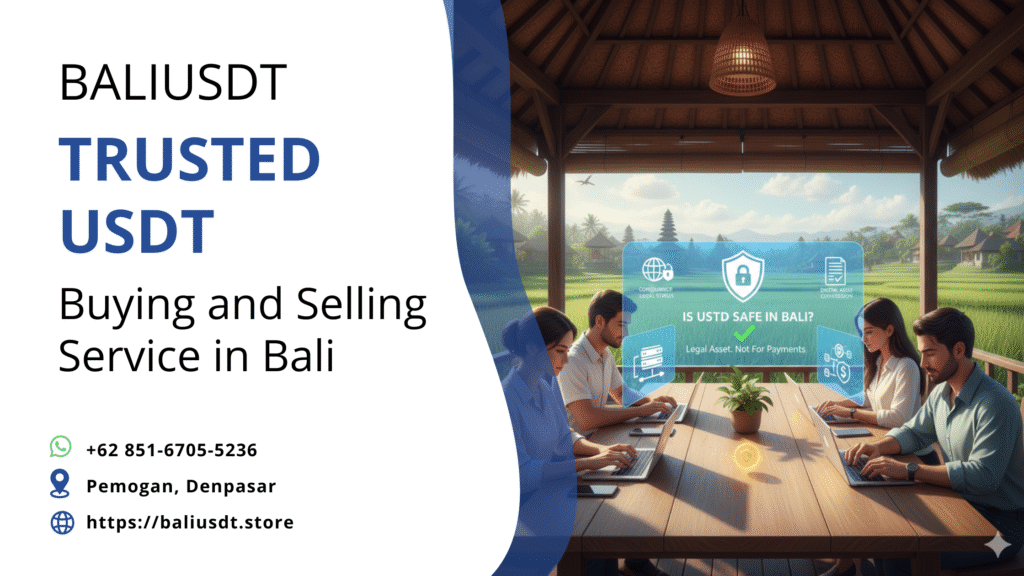
For digital nomads and international visitors settling into the vibrant life of Bali, a critical financial consideration quickly arises: is USDT safe in Bali? The short answer is yes, but only when you adhere strictly to Indonesia’s regulatory framework and adopt advanced digital security practices. Indonesia views stablecoins like Tether (USDT) as legal digital financial assets for trading and storage, but it firmly prohibits their use as a form of payment for goods or services. Understanding this distinction is paramount for travelers who want to use their crypto holdings securely and legally while avoiding penalties, which can include deportation. Consequently, awareness of local law combined with strong security protocols forms the foundation of safe USDT usage on the island.
The Legal Status of USDT: Asset vs. Currency
The primary source of confusion for foreigners regarding is USDT safe in Bali stems from the dual nature of cryptocurrency globally. Indonesia’s government, through the Financial Services Authority (OJK)—which assumed regulatory oversight of digital assets in January 2025—has clarified the legal status of USDT. This governmental oversight means that the asset itself is recognized within the financial system, unlike in countries where crypto may be entirely banned. Therefore, the concern shifts from the legality of the asset to the compliance of its use.
The IDR-Only Payment Rule
Indonesia’s Law No. 7 of 2011 on Currency strictly mandates that the Indonesian Rupiah (IDR) is the only legal tender for transactions within the country. This rule is absolute, regardless of your personal financial preferences or the acceptance practices you may encounter in certain establishments.
Here is a breakdown of what is permissible and what is not:
- Legal Activities:
- You can legally hold, buy, sell, and trade USDT as a digital asset or commodity on licensed exchanges.
- Your USDT is safe from a regulatory perspective, provided you manage it through compliant means (e.g., proper KYC).
- You can use USDT for international transfers and remittance, converting it to IDR only through legal channels.
- Illegal Activities (Strictly Prohibited):
- You absolutely cannot use USDT to pay for anything in Bali—not your villa, not your coffee, and not your scooter rental.
- Doing so violates Indonesian currency law and carries severe penalties, including potential fines and deportation.
Therefore, when discussing is USDT safe in Bali, the stability of the asset itself is less of a concern than the compliance of the user’s actions. A tourist must view USDT solely as a portable digital store of value and transfer mechanism, not as pocket money. Furthermore, tourists should resist any pressure or encouragement from local vendors to use crypto as a direct form of payment, as the legal liability will ultimately fall upon the user.
Digital Safety: Protecting Your USDT from Cyber Threats
While the legal environment provides clarity on usage, the biggest day-to-day threat to your USDT safety in Bali is digital insecurity. The island is highly connected, but public Wi-Fi networks in cafes and co-working spaces often pose significant risks. Accordingly, every transaction you conduct must be wrapped in a layer of digital armor.
The Imperative of a Secure Connection
- Use a VPN Constantly: You must assume that any public Wi-Fi is compromised. Always connect to your crypto wallets and exchanges via a Virtual Private Network (VPN). A VPN encrypts your traffic, making it impossible for local hackers or opportunistic users to intercept your login details or transaction data. This is arguably the most crucial step for maintaining digital safety abroad.
- Check URLs and Phishing: Phishing attacks are common globally, and Bali is no exception. Before logging into any exchange or wallet, carefully verify the website’s URL in your browser bar. Never click on links in unsolicited emails or social media messages regarding your crypto accounts, regardless of how legitimate they appear.
Furthermore, securing your devices is key. Always use strong, unique passwords and enable fingerprint or facial recognition access on your devices, especially your phone, which likely holds your critical authentication apps. This simple step protects your entire digital life, ensuring is USDT safe in Bali from unauthorized access.
Wallet Security Best Practices
To definitively ensure is USDT safe in Bali, you should minimize the time your funds spend on an exchange. Exchange platforms are targets for hackers; therefore, moving your assets to self-custody is critical.
- Self-Custody: Immediately transfer large amounts of USDT from the exchange to a personal, non-custodial wallet (a hardware wallet or a trusted mobile wallet like Trust Wallet or MetaMask). This removes exchange risk, meaning your funds are safe even if the exchange is hacked or frozen, as you alone control the private keys.
- Two-Factor Authentication (2FA): Always activate 2FA using an app like Google Authenticator for every crypto account. SMS-based 2FA is less secure and should be avoided, especially when traveling with a foreign or newly acquired local SIM card, which can be vulnerable to SIM swap attacks.
Consequently, personal security measures often outweigh external risks when assessing the safety of your crypto assets while abroad. By taking custody of your private keys and securing your connection, you mitigate almost all digital threats.
Physical and Financial Safety: Converting USDT to IDR
Since you cannot use USDT for payment, the true utility of the stablecoin for a traveler is its easy conversion into local IDR cash. This process introduces a different set of safety concerns—physical security and transaction integrity. The successful conversion of your asset into usable currency must be executed with caution.
Safe Conversion Methods
When you need to exchange USDT for Indonesian Rupiah, your primary goal is to ensure a secure and transparent transaction.
- Regulated OTC Services: The safest way to convert large amounts of USDT into IDR cash is by using a licensed Over-The-Counter (OTC) service. These services operate out of secure, professional offices, providing a documented and compliant exchange. They handle the compliance hurdles, ensuring the transaction adheres to local laws and offering a controlled, safe environment for both the digital transfer and the physical cash exchange.
- P2P Exchanges (High Caution): While the P2P market on exchanges like Binance allows conversion to IDR via local bank transfers, it requires a local Indonesian bank account, which most tourists lack. Even if you use P2P for large amounts, you must be extremely selective about your counterparty to avoid scams. Never agree to meet strangers for cash exchanges originating from P2P platforms.
Local Solution: For travelers or expats who need secure, reliable, and compliant exchange services for converting USDT into IDR cash, our recommended resource is a specialized local provider. For secure exchange services, you can find expert assistance by checking BaliUSDT.store. They provide a professional environment and ensure that the process of turning your digital asset into legal tender is transparent and secure, directly addressing the physical and financial aspects of whether is USDT safe in Bali.
Local Awareness: Transportation and Cultural Notes
Your personal safety when moving funds is just as important as your digital safety. A successful and safe experience in Bali requires blending financial prudence with cultural awareness.
Public Safety and Discretion
- Avoid Public Displays: When you complete any large cash withdrawal after selling USDT, be discreet. Avoid counting large stacks of Rupiah publicly. Indonesia is generally safe, but theft of opportunity exists, particularly in crowded tourist areas like Kuta and Canggu. Keep your cash secured in a front pocket or a zippered bag.
- Secure Transport: Always use reputable ride-hailing apps like Grab or Gojek for transportation, especially after visiting a bank or an OTC office. Avoid using unmetered taxis or sharing sensitive location information with casual drivers. This minimizes the risk of being followed after a major financial transaction.
Furthermore, a polite and respectful demeanor goes a long way. The Balinese embrace the philosophy of Tri Hita Karana (harmony), and showing respect for local laws and customs—including the IDR-only payment rule—contributes to a positive experience. This cultural compliance is another facet of ensuring is USDT safe in Bali for you personally, as avoiding illegal activity keeps you on the right side of local authorities. The combination of secure digital and physical practices guarantees peace of mind.
Conclusion
Ultimately, the answer to is USDT safe in Bali is a resounding yes, provided safety is viewed through two lenses: regulatory compliance and rigorous digital security. Indonesia provides a clear framework where USDT is recognized and traded legally as an asset under OJK oversight. For the traveler, the greatest risks are not regulatory instability, but rather personal vulnerability—whether from unsecured Wi-Fi or opportunistic crime following a large cash transaction. By always using a VPN, practicing self-custody, and utilizing compliant local services for conversion to Rupiah, you can securely manage your USDT and enjoy your time in Bali with complete peace of mind. This diligent approach is the key to a stress-free experience as a crypto-savvy traveler.
📲 WhatsApp us to sell your USDT safely: +62 851-6705-5236
Visit our office in Bali for secure USDT selling
Our office location for secure over-the-counter transactions: JL. KARTIKA PLAZA, KUTA, KEC. KUTA, KAB. BADUNG, BALI 80361
Read also : How to Get USDT in Bali: A Foreigner’s Guide to Secure & Compliant Stablecoin Acquisition