If you are a digital nomad, expatriate, or long-term traveler considering managing a significant portion of your assets digitally while residing on the Island of the Gods, a natural and essential question arises: is USDT safe in Bali? The safety of holding and transacting with the stablecoin USDT (Tether) in Indonesia is multi-layered. It involves not only the digital security of the blockchain itself but also physical security, local legal compliance, and the safety protocols of the services you use. The short answer is that, yes, USDT is safe when handled correctly, but its safety profile is uniquely influenced by Indonesia’s regulatory environment, which recognizes crypto as a traded commodity rather than a currency. Therefore, understanding the distinction between holding and using the asset is the first step toward ensuring your financial well-being throughout your Bali stay.
The Digital Security of USDT Holdings
When addressing is USDT safe in Bali, the first consideration must be the inherent security of the asset itself, which is largely independent of location. Since USDT is a token built on decentralized blockchains (like Tron and Ethereum), the risk primarily relates to how you manage the private keys to your wallet, not the physical location of Bali.
The Importance of Non-Custodial Wallets
To maximize digital security, utilize a non-custodial wallet (where only you control the private keys or seed phrase). If you hold your USDT on a centralized exchange, you are entrusting your security to that third party. Conversely, if you use a hardware wallet or a reputable software wallet, your funds remain secure as long as your recovery phrase is backed up offline and kept secret. Losing your phone in a busy area like Kuta or Seminyak is a possibility, but if your wallet is secured by a strong password and 2FA, the assets remain safe from physical theft.
Secure Network Connectivity on the Island
Bali has excellent connectivity, but public Wi-Fi in cafes or airport lounges poses a threat. Therefore, never conduct high-value USDT transactions—such as sending large amounts to an OTC desk or accessing your centralized exchange—while connected to an unsecured public network. Utilizing a reputable Virtual Private Network (VPN) or relying on a secured mobile data hotspot is a non-negotiable step to protect your digital assets against potential man-in-the-middle attacks, which is crucial for answering the question is USDT safe in Bali affirmatively.
Navigating the Legal Landscape: USDT as a Commodity
The safety of USDT in Bali is heavily tied to its legal classification in Indonesia. For foreigners, this distinction is absolutely crucial.
The Ban on Crypto as a Payment Method
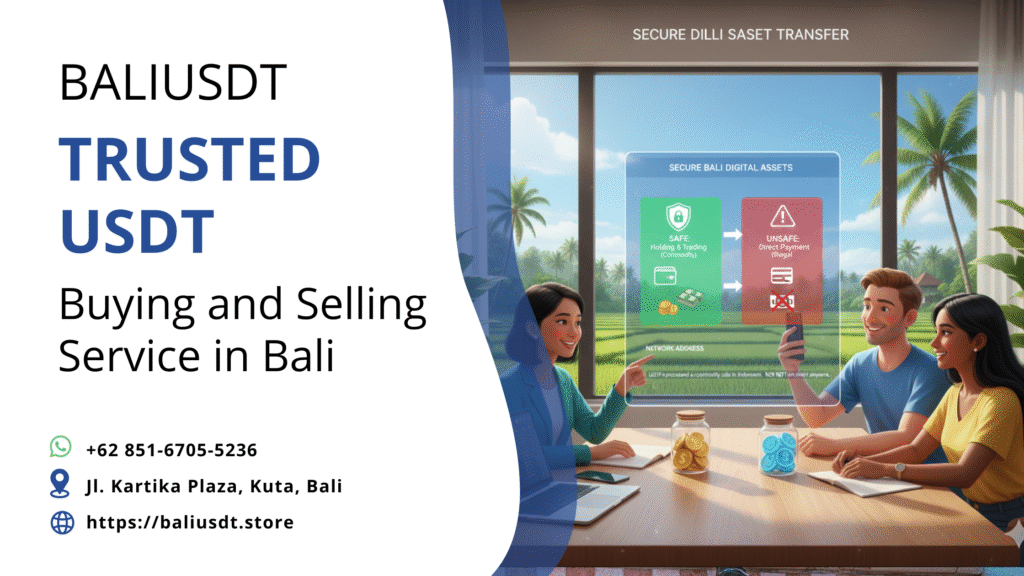
Indonesia’s monetary laws strictly mandate that all transactions for goods and services must be conducted using the Indonesian Rupiah (IDR). Official warnings from the Bali Provincial Government stress that tourists caught using any foreign currency or cryptocurrency (including USDT) for payments face serious consequences, including deportation and potential criminal penalties. Consequently, the moment you attempt to pay a warung or a tour operator directly with USDT, you expose yourself to legal risk, making that particular action unsafe regardless of the digital security.
The Legal Framework for Holding and Trading
On the other hand, holding USDT and trading it is fully legal. Indonesia treats crypto assets as commodities, regulated by Bappebti (or soon, OJK, the Financial Services Authority). This means you can legally buy and sell USDT for IDR through authorized local exchanges or reputable over-the-counter (OTC) services. Therefore, the safest way to utilize your USDT is to convert it to IDR using a trusted intermediary, and then use the local currency for all daily expenses.
Physical Safety: Converting USDT to Rupiah
The highest risk point for many digital nomads in Bali is the moment of conversion—the transition from digital asset to physical IDR.
The Risks of Unregulated Peer-to-Peer (P2P) Deals
While you might find people willing to engage in P2P transactions via online groups, these carry significant physical and financial risks, especially in a foreign country. You risk being targeted by scammers or, worse, being involved in theft or confrontation when meeting strangers to exchange large amounts of cash. Since the risk of physical security is paramount for anyone asking is USDT safe in Bali, we strongly advise against public P2P transactions.
Using Professional, Secure OTC Services
The safest route is utilizing professional Over-The-Counter (OTC) services. These services operate from secure, monitored physical offices, providing a safe environment for high-value cash transactions. They also adhere to necessary Know Your Customer (KYC) and Anti-Money Laundering (AML) checks, which further ensures the transaction is compliant and transparent. For example, our verified office location in a well-trafficked tourist area is JL. KARTIKA PLAZA, KUTA, KEC. KUTA, KAB. BADUNG, BALI 80361, ensuring maximum client safety during the exchange process. This dedicated approach significantly elevates the answer to is USDT safe in Bali from a personal risk assessment to a professional one.
Financial and Transactional Security Measures
Ensuring that your funds are successfully converted at a fair rate and without transactional errors is another layer of safety. This requires vigilance from the user.
- Always Verify Addresses: Before sending USDT to any exchange or OTC counter, triple-check the recipient wallet address and ensure the correct blockchain network (e.g., TRC-20 vs. ERC-20) is selected. Blockchain transfers are irreversible, meaning one error can result in permanent loss of funds.
- Utilize Reputable Sources: Always cross-reference the exchange rates and services you use. Look for transparent pricing with no hidden fees. Resources like our service at BaliUSDT.store offer clear, competitive rates and professional service, which provides essential financial security and peace of mind.
- Keep Transaction Records: For accountability and potential tax requirements in your home country, keep meticulous records of every USDT conversion, including the Transaction ID (TxID), the amount, and the corresponding IDR received. This diligence keeps your digital finances clean and organized.
Cultural Notes and Local Vigilance
Traveling in Bali requires cultural sensitivity and practical vigilance. This applies equally to your financial practices. Avoid overtly discussing or displaying wealth, including boasting about crypto holdings, in public spaces. Maintain a low profile regarding your digital assets to prevent becoming a target for opportunists. By blending in and using discretion, you maximize both your physical and financial safety while enjoying the unique Balinese environment.
Conclusion
In conclusion, the question of is USDT safe in Bali receives a qualified “Yes”—it is safe when treated as a digital commodity for investment and value transfer, and when you utilize secure, compliant conversion methods. However, it is fundamentally unsafe to use it as a direct payment method for goods and services due to strict Indonesian currency laws. By prioritizing digital security (using non-custodial wallets and VPNs), choosing professional OTC services for conversion, and respecting local regulations, you can effectively and safely leverage USDT to manage your finances as an international resident in Bali.
Ready to convert your digital assets into local spending power safely and compliantly?
📲 WhatsApp us to sell your USDT safely: +62 851-6705-5236
Visit our office in Bali for secure USDT selling
USDT is processed as a commodity sale in Indonesia, not as a direct payment method.
Read More: How to Check USDT Transaction in Bali: A Traveler’s Guide