For the modern traveler, digital nomad, or long-term expatriate based in a global hub like Bali, stablecoins are indispensable tools for managing cross-border finances. As you delve into the crypto ecosystem, a fundamental question often arises: What is the difference between USDT and USDC? Both assets are stablecoins pegged to the US Dollar (1:1), aiming to offer stability in the volatile crypto world. However, they possess crucial distinctions concerning regulatory compliance, reserve composition, and market adoption that significantly impact your choice, especially when utilizing local services for conversion or remittance while in Indonesia. Understanding these nuances is critical for financial security and convenience as you navigate life and business on the Island of the Gods.
Foundation and Regulation: Understanding the Issuers
To truly grasp What is the difference between USDT and USDC?, one must first examine the entities behind their creation and the regulatory frameworks they adhere to. This is where the most significant contrast lies.
Tether (USDT): The First Mover and Controversy
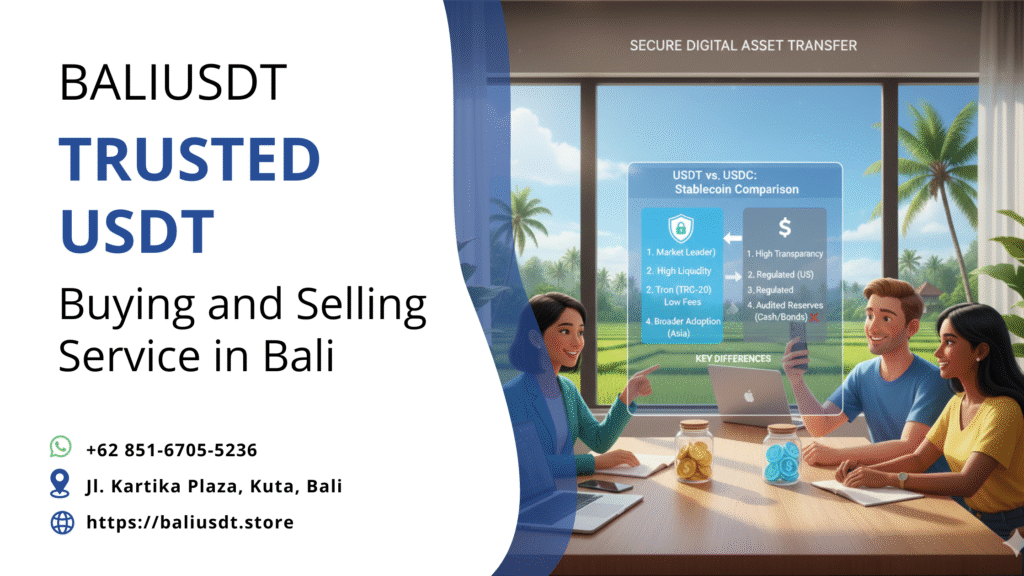
USDT is issued by Tether Limited and remains the largest stablecoin by market capitalization. As the first major stablecoin, it pioneered the concept of digital value pegged to fiat currency. However, Tether has historically faced skepticism regarding the full transparency and composition of its reserves. While they have provided regular attestations, their reserve breakdown often includes commercial paper and other less liquid assets, which has led some investors to perceive a higher, albeit minimal, risk compared to their competitor. For travelers, USDT’s advantage lies mainly in its liquidity—it is traded on virtually every exchange globally and is highly popular in OTC (Over-The-Counter) markets, including those in Bali.
USD Coin (USDC): Transparency and Regulatory Compliance
USDC is governed by the Centre Consortium, a collaboration between Circle and Coinbase. Its primary selling point is its commitment to transparency and regulatory compliance. The company asserts that USDC is backed entirely by cash and short-duration U.S. government bonds, held in regulated U.S. financial institutions. Furthermore, Circle provides monthly audited reports by a major accounting firm. Consequently, USDC is often viewed as the more “compliant” and transparent stablecoin, favored by institutions and individuals prioritizing regulatory clarity. When contemplating What is the difference between USDT and USDC?, the transparency of reserves is often the defining factor for institutional preference.
Operational and Technical Differences Relevant to Bali Users
Beyond the issuers and reserve models, there are practical differences in how these two assets function within the crypto infrastructure, which directly impacts the daily financial lives of expats in Bali.
Market Adoption and Liquidity for Local Conversion
For digital nomads needing to convert stablecoins into Indonesian Rupiah (IDR) quickly and reliably, liquidity is king. USDT is undeniably the more widely adopted stablecoin globally and within Southeast Asia’s crypto ecosystem. Most local OTC services and regional exchanges in the region, including Bali, handle USDT transactions frequently and efficiently. While USDC is rapidly gaining ground, particularly among institutions, USDT still often offers slightly better liquidity and market reach when seeking cash-out options locally. However, this gap is narrowing.
Blockchain Compatibility and Transaction Fees
Both assets are multi-chain, meaning they exist on many different blockchain networks (Ethereum, Solana, Polygon, etc.). However, transaction behavior can differ:
- USDT (Tether): Highly prevalent on the Tron network (TRC-20), which is renowned for its extremely low fees and rapid confirmation times. This is often the preferred method for the international community in Bali to move funds cheaply.
- USDC (USD Coin): While compatible with Tron, it is traditionally more dominant on the Ethereum network (ERC-20), where fees (gas) can be higher and confirmation times sometimes slower during peak congestion.
Therefore, when evaluating What is the difference between USDT and USDC? from a cost perspective, the network dominance often gives USDT a slight edge in cheaper, faster transfers relevant to daily use by travelers.
Security and Risk Profile for Cross-Border Finance
A key consideration for anyone managing global funds is security. Both stablecoins offer digital security inherent to blockchain, but their specific risks vary slightly.
Reserve Risk and De-Pegging
The primary risk associated with any stablecoin is the risk of “de-pegging,” where the value drops below $1.00. While both USDT and USDC have experienced brief, minor de-pegging events, the continuous public audits and reliance on more traditional, liquid assets for USDC reserves often lead financial experts to assign it a slightly lower reserve risk. Conversely, the slightly less clear reserve status of USDT contributes to a perception of higher risk, although its market dominance often provides resilience. Consequently, conservative investors often prefer USDC.
Regulatory Risk and Account Freezing
USDC, due to its regulatory compliance, has a mechanism that allows the issuer, Circle, to potentially freeze accounts under specific legal circumstances (e.g., following a court order). While this feature is designed to aid law enforcement, it introduces a custodial risk that some in the decentralized finance (DeFi) community view negatively. USDT has historically operated with a more hands-off approach to freezing. When assessing What is the difference between USDT and USDC? for privacy and censorship resistance, USDT is sometimes favored by those prioritizing complete digital freedom.
Practical Advice for Expats: Which Stablecoin to Use in Bali?
For the digital nomad focused on convenience and cost while operating in Indonesia, the choice often comes down to personal preference and the specific use case.
- For High Liquidity and Low Fees: USDT is often the go-to. Its extensive presence in local OTC markets means you can typically find better rates and faster conversion to IDR. This convenience is crucial when you need to sell your digital assets for local cash quickly and safely. You can always check our current USDT selling rate via WhatsApp with our local team.
- For Institutional Use and Regulatory Confidence: USDC might be preferred if you are dealing with large financial institutions or platforms that explicitly require or favor the more transparent stablecoin.
Ultimately, both are perfectly viable options for holding stable value and using local services to convert into IDR. Just remember to always use professional, verified conversion points, such as our facility located at JL. KARTIKA PLAZA, KUTA, KEC. KUTA, KAB. BADUNG, BALI 80361, regardless of which stablecoin you choose. Utilizing transparent services, like those found via BaliUSDT.store, ensures both security and fair exchange.
Concluding the Comparison for the International Traveler
Understanding What is the difference between USDT and USDC? enables smart financial decisions in a dynamic global environment. While USDC is the institutional favorite due to its stringent auditing and high-quality reserves, USDT retains its status as the market leader thanks to its unmatched liquidity, widespread adoption, and generally lower transaction costs on preferred networks like Tron. Both assets serve the fundamental purpose of shielding value from currency volatility, a major benefit for those earning and spending across different borders. Your choice should reflect your personal tolerance for reserve risk versus your priority for maximum liquidity and minimal transaction cost.
Conclusion
In conclusion, the core distinction when asking What is the difference between USDT and USDC? revolves around reserve transparency and regulatory posture. USDC offers greater verifiable assurance of cash-backed reserves, appealing to more conservative users and institutions. Conversely, USDT offers superior market liquidity and often cheaper transaction fees, making it exceptionally convenient for the everyday digital nomad or traveler in Bali needing fast conversion. Regardless of your choice, the secure and compliant utilization of either stablecoin in Indonesia requires converting it to IDR using reputable local services, thereby respecting the country’s mandate against using any digital asset as a direct payment method.
Need to liquidate your USDT or USDC into Rupiah safely while on the island?
📲 WhatsApp us to sell your USDT safely: +62 851-6705-5236
Contact our team for USDT selling assistance
USDT is processed as a commodity sale in Indonesia, not as a direct payment method.
Read More: How to Check USDT Transaction in Bali: A Traveler’s Guide