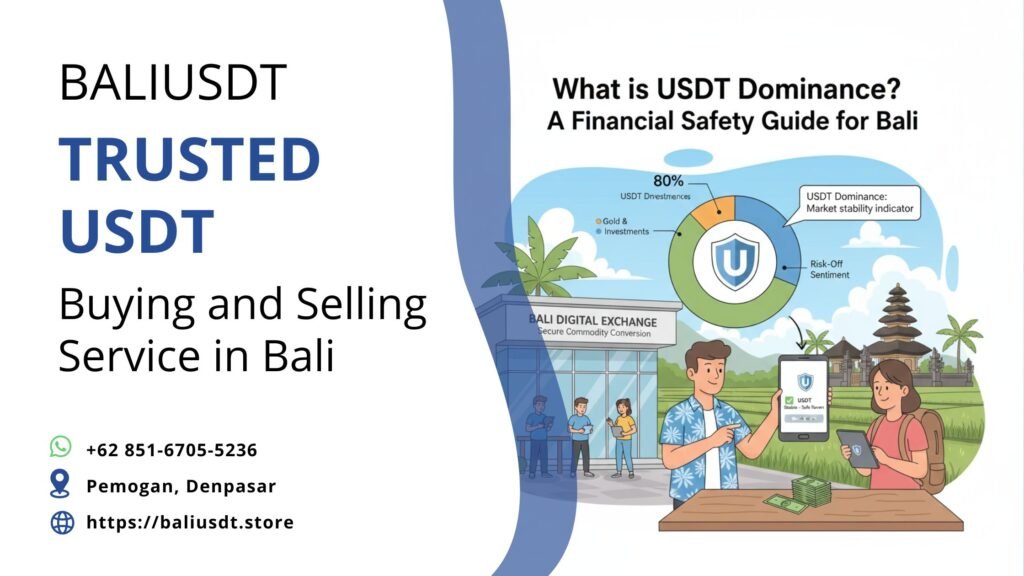
Understanding what is USDT dominance is a crucial skill for any traveler or digital nomad navigating the unique economic landscape of Bali. As you move between the lush rice terraces of Ubud and the bustling beach clubs of Canggu, you quickly realize that managing your finances is about more than just finding an ATM. USDT, or Tether, is the world’s leading stablecoin, pegged 1:1 to the U.S. Dollar. The term “dominance” refers to the percentage of the total cryptocurrency market cap that is held in USDT. For visitors in Indonesia, this metric acts as a vital “fear and greed” index, signaling whether the digital market is stable or entering a period of high volatility. In a region where currency exchange rates can fluctuate, knowing how to read these signs ensures your travel budget remains protected and accessible.
The Essentials: What is USDT Dominance and Why it Matters
To grasp the full scope of what is USDT dominance, one must look at it as a temperature gauge for the global crypto economy. When the dominance percentage rises, it generally means investors are moving their money out of volatile assets like Bitcoin and into the “safe haven” of Tether. Conversely, when it drops, capital is flowing back into the market, suggesting a “risk-on” sentiment. For a digital nomad living in Bali, a rising dominance can be a signal to stay cautious with your local conversions, as it often precedes a broader market dip.
In 2026, the crypto market has matured significantly, yet USDT remains the primary liquidity provider for most traders. Because Bali has become a global hub for tech-savvy travelers, many expats use USDT as their primary “reserve” while abroad. By monitoring what is USDT dominance, you gain a macro-perspective on when to hold your funds in stablecoins and when it might be a strategic time to diversify. This knowledge allows you to bypass the traditional banking stress of international wire fees and long waiting periods.
Moreover, the dominance of USDT reflects its deep integration into the Indonesian digital ecosystem. Unlike some obscure tokens, USDT is widely recognized by local OTC (Over-the-Counter) desks and exchange services. This widespread acceptance is a direct result of its market dominance, ensuring that no matter where you are—from the Gili Islands to the northern shores of Lovina—you have a digital asset that can be easily understood and processed as a commodity.
Why Bali Travelers Use USDT as a Financial Safe Haven
Bali attracts a diverse range of visitors, from short-term tourists to long-term “slow-mads.” One common challenge all of them face is the high cost of traditional financial services. Credit card foreign transaction fees and predatory exchange rates at airport booths can quickly eat into your budget. This is why many have turned to the stability of Tether. Once you understand what is USDT dominance, you see that it represents a collective trust in the asset’s ability to maintain its peg, even during market turbulence.
Using USDT provides several practical advantages for the international traveler:
- Cost Efficiency: Moving USDT across blockchains like TRC-20 often costs less than a single dollar, compared to the $30–$50 fees common for SWIFT transfers.
- Instant Liquidity: You don’t have to wait for “bank hours” to manage your funds.
- Currency Control: You are not at the mercy of the daily fluctuations between your home currency and the Indonesian Rupiah (IDR).
However, being your own bank requires a high degree of responsibility. Digital nomads in Bali often frequent co-working spaces like Outpost or BWork, where they can network with others who use the same financial strategies. Sharing knowledge about what is USDT dominance and current market trends is a common pastime over a morning latte. This community support helps new arrivals avoid common pitfalls, such as using unverified P2P platforms or failing to secure their private keys.
Safety and Security Protocols for Expats in Indonesia
While the digital economy offers freedom, it also demands vigilance. As a traveler, your digital assets are your lifeline. After learning what is USDT dominance, the next priority is safeguarding your wallet. Bali is generally safe, but “digital skimming” and phishing are global threats. Always use a reputable hardware wallet for your main savings and keep only a small “spending” amount in your mobile wallet. When performing any transaction, ensure you are on a secure, private connection—never use the public Wi-Fi at a beach club for financial moves.
Another layer of safety involves choosing the right partners for your financial needs. Indonesia has strict regulations regarding how digital assets are processed. While you cannot pay for a scooter rental or a nasi campur directly with crypto, you can legally sell your USDT as a commodity for Rupiah. This is where services like BaliUSDT.store come into play. By using a professional service with a physical presence, such as in Pemogan, Denpasar, you ensure that your transactions are compliant with local laws and that your funds are handled securely.
Understanding what is USDT dominance also helps you time your conversions. If dominance is spiking, it might indicate that the market is stressed, and liquidity might be tighter on some platforms. By watching the trends, you can choose to convert your USDT into IDR during “calm” market windows, ensuring you get the most favorable rates and the fastest service. This proactive approach is what distinguishes a professional nomad from a casual tourist.
Navigating the Legal Landscape of Crypto in Bali
Indonesia is one of the most forward-thinking countries in Southeast Asia regarding blockchain technology, but it maintains very clear boundaries. The most important rule to remember is that the Indonesian Rupiah is the only legal tender for payments. If a villa owner asks for direct payment in USDT, they are technically asking you to bypass the law. To stay safe and keep your visa status secure, always convert your digital assets into Rupiah first.
The role of what is USDT dominance in this context is purely as an analytical tool for your own wealth management. It helps you decide when to keep your wealth in a “stable” digital form versus when to hold more local cash. In 2026, the Indonesian government has made it easier than ever to use licensed exchanges. These platforms often require a local bank account or a verified digital wallet like GoPay or OVO.
For travelers who find the local banking system too complex to navigate on a short-term visa, OTC (Over-the-Counter) services are a popular alternative. These services allow you to sell your USDT—which you know is a reliable asset due to what is USDT dominance—and receive cash or a bank transfer to a friend’s local account. Always ask for a receipt and ensure the transaction is documented properly. This keeps you in the “green zone” of Indonesian law while still benefiting from the speed of the blockchain.
Local Tips: Spending Your Rupiah in the “Island of the Gods”
Once you have successfully converted your USDT into Indonesian Rupiah, it’s time to enjoy the island. Bali is a place where “cash is king” in the villages, but “digital is queen” in the cities. Having a mix of both is the best strategy. Use your OVO or GoPay for your Gojek rides and food deliveries, but always keep a stack of 50,000 and 100,000 IDR bills for local markets, temple entrance fees, and tips for your hardworking villa staff.
Knowing what is USDT dominance helps you plan these “cashing out” sessions. If the market is stable and USDT dominance is low, it’s a great time to convert enough funds to last you two weeks or a month. This reduces the number of trips you need to make to a physical office or exchange. It also gives you peace of mind, knowing that even if the internet goes down in a remote part of North Bali, you have enough physical cash to manage your stay.
Finally, remember to be a respectful traveler. When you pay for services in Rupiah, you are contributing directly to the local economy. While your digital assets are international, your impact in Bali is local. Understanding the balance between global finance—symbolized by what is USDT dominance—and local culture is the key to a successful and harmonious stay in Indonesia.
Conclusion
In summary, what is USDT dominance is more than just a number on a chart; it is a vital indicator for your financial survival as a digital nomad in Bali. By watching this metric, you can better understand market sentiment, protect your travel budget from volatility, and time your local currency conversions for maximum efficiency. Bali offers an incredible lifestyle, but it requires a modern approach to money management to truly thrive.
As you plan your next adventure across the island, keep your digital assets secure and your local knowledge sharp. Whether you are staying for a month or a year, the stability of USDT paired with the vibrant culture of Bali creates the perfect environment for a “future-proof” lifestyle.
Sell Your USDT Safely in Bali
If you are currently in Bali and need a professional, secure way to convert your digital commodities into Indonesian Rupiah, our team is here to assist you. We offer competitive rates and a safe physical environment for all your transactions.
📲 WhatsApp us to sell your USDT safely: +62 851-6705-5236
- Visit our office in Bali for secure USDT selling
- Get a fast quote for your USDT today
- Location: Pemogan, Denpasar
USDT is processed as a commodity sale in Indonesia, not as a direct payment method.
Read also : Why Can’t I Send USDT From MetaMask? A Guide for Bali Nomads