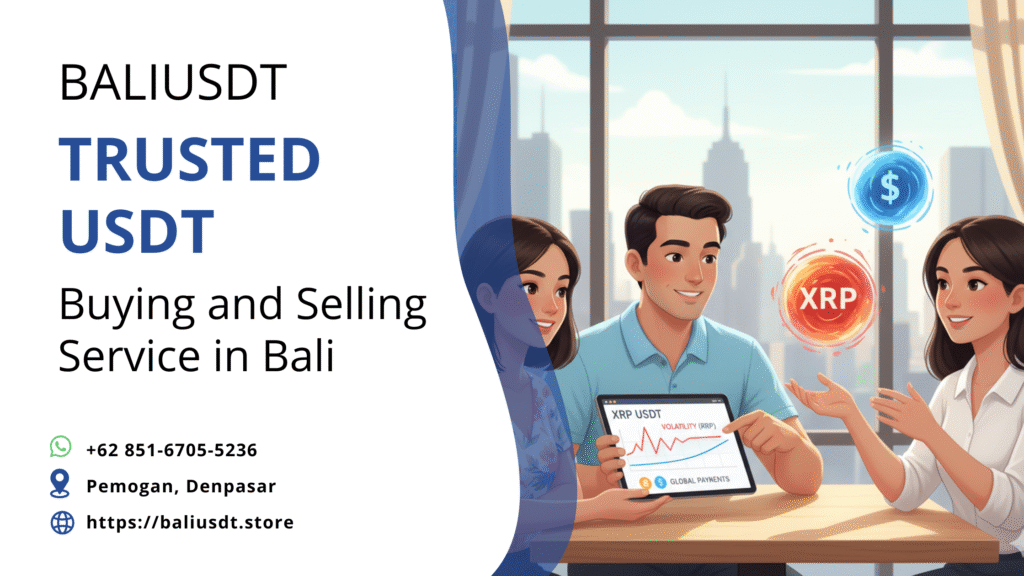
The question, what is XRP USDT, asks about two distinct types of digital assets: a volatile payment coin and a stablecoin. Specifically, it refers to the XRP/USDT trading pair. XRP is the native digital asset of the XRP Ledger (XRPL), which Ripple designed for ultra-fast, low-cost institutional cross-border payments. In contrast, USDT (Tether) is the world’s most-used stablecoin, pegged 1:1 to the US Dollar. For international travelers, digital nomads, and expats managing funds across borders, knowing the difference between the speculative nature of XRP and the stable utility of USDT is essential for financial safety, convenience, and budgeting.
The Trading Pair: XRP/USDT Explained
On any major cryptocurrency exchange, the term what is XRP USDT most often describes a trading pair. This pair represents the rate at which you can exchange XRP for USDT.
The Role of Stablecoins in Trading
Stablecoins like USDT serve as the primary quote currency in the crypto market.
- Value Benchmark: USDT maintains its $1.00 USD peg. This provides a stable benchmark against which the price of volatile assets like XRP can be measured. When you see the price of XRP, the exchange almost always displays it in terms of its USDT value.
- Liquidity: The XRP/USDT trading pair is one of the most liquid markets. It allows traders to quickly move their value between the volatile asset (XRP) and the stable asset (USDT) without leaving the crypto ecosystem. Therefore, this enables rapid profit-taking or risk mitigation during market swings.
The pairing itself highlights the two distinct roles: one acts as a volatile investment vehicle, and the other provides a stable medium of exchange.
Difference 1: Volatility and Purpose
The most critical distinction that truly defines what is XRP USDT lies in their price behavior and their intended function in the financial world.
XRP: The Bridge Currency for Speed
XRP is fundamentally designed to act as an extremely fast and inexpensive bridge currency for financial institutions.
- Ultra-Fast Settlement: The XRP Ledger is capable of settling thousands of transactions per second. Its transactions finalize in seconds and cost fractions of a penny. Traditional banking systems like SWIFT cannot match this speed.
- Price Volatility: However, like other major cryptocurrencies such as Bitcoin, XRP’s price is volatile. Market demand, regulatory news (particularly in the US), and general crypto market sentiment drive its fluctuation. This makes it a high-risk asset for holding large sums of money.
USDT: The Stable Digital Dollar
In contrast, USDT is built for stability, making it the perfect tool for travelers.
- 1:1 Peg: USDT is a stablecoin. Its issuer guarantees it will maintain a value of $1.00 USD. This predictability is vital for expats and digital nomads who need reliable budgeting.
- Medium of Exchange: Consequently, users primarily use USDT for everyday transfers, payments, and as a secure asset for temporarily holding value. They often do this when planning a conversion to local fiat currency, such as Indonesian Rupiah (IDR).
Ultimately, while XRP focuses on institutional speed, USDT focuses on user stability.
Difference 2: Underlying Technology and Transaction Costs
Both assets leverage blockchain technology. However, the specifics of their respective ledgers and fee structures significantly impact cost-efficiency.
XRP Ledger (XRPL) vs. Tron/Ethereum
The networks that support these two tokens vary dramatically in their cost models.
- XRP Fees: Transactions on the XRP Ledger are incredibly cheap. They typically cost fractions of a cent and users pay them in XRP itself. The XRPL’s low energy consumption and unique consensus mechanism contribute to this low cost. This makes it highly efficient for high-volume transfers.
- USDT Networks: We find USDT on various networks. In Southeast Asia, it often uses the Tron network (TRC-20) for its minimal fees. It also uses the Ethereum network (ERC-20), which can be prohibitively expensive.
Therefore, for simple cross-border value transfer, both XRP and TRC-20 USDT offer excellent speed and low cost. Only USDT provides the necessary price stability for daily financial planning. This is an important consideration when assessing what is XRP USDT in a practical context.
Practical Applications for Travelers and Nomads
Knowing what is XRP USDT means knowing when to use each asset in your travels, especially when managing funds in Southeast Asia.
The Right Asset for the Right Job
For travelers, the two assets serve distinct roles in their financial strategy:
- Investment/Arbitrage (XRP): If you are actively trading or seeking to leverage ultra-fast global transfer speeds between exchanges, XRP’s unique speed and low cost are advantageous. However, holding large amounts is risky due to volatility.
- Savings/Spending (USDT): Stablecoins like USDT are the clear winner for day-to-day living, converting funds into Indonesian Rupiah (IDR), or holding a cash reserve. The predictable $1.00 value allows for accurate budgeting of rental payments, transportation, and living expenses in Bali.
Since USDT is the standard for compliant conversion services in Indonesia, keeping your working capital in USDT, especially on the low-fee TRC-20 network, is the most practical choice. You can find secure conversion assistance here: BaliUSDT.store.
Safety and Compliant Conversion in Bali
A critical local tip for understanding what is XRP USDT is realizing that their legal status is identical in Indonesia. This impacts how you must access local funds.
The Commodity Rule
Indonesian financial regulations classify both XRP and USDT as commodities or tradable digital assets, not as legal tender.
- The Conversion Imperative: You cannot legally use either XRP or USDT for direct purchases. You must sell your digital asset commodity to a licensed or professional OTC service for the local currency, the Indonesian Rupiah (IDR).
- Security First: For travelers, the safest method to sell your USDT commodity is through a secure, verified location. Our office, located in Pemogan, Denpasar, provides a secure environment for compliant transactions.
By understanding the difference in volatility and the identical requirement for conversion, you can manage your digital wealth responsibly while abroad.
Conclusion
The distinction between what is XRP USDT is clear: XRP is a volatile, high-speed payment technology, mostly suited for institutional transfers and speculative trading. Conversely, USDT is a stablecoin pegged to the US Dollar, making it ideal for personal budgeting and stable cross-border fund movement. For digital nomads and expats in Bali, prioritizing USDT on the low-fee TRC-20 network provides the best combination of stability and efficiency. Remember, you must sell both assets as commodities for Indonesian Rupiah before using them locally. This ensures you remain compliant with local financial regulations.
Check today’s USDT selling rate via Whatsapp
📲 WhatsApp us to sell your USDT safely: +62 851-6705-5236
Visit our office in Bali for secure USDT selling: Pemogan, Denpasar
USDT is processed as a commodity sale in Indonesia, not as a direct payment method.
Read also: Does USDT Earn Interest? A Traveler’s Guide to Stablecoin Yield