Why is USDT banned in Europe is a question that has sparked significant concern among the international expat community in Bali throughout 2025 and into early 2026. If you are currently working remotely from a beach club in Uluwatu or managing a digital nomad lifestyle in Ubud, you likely rely on stablecoins for financial flexibility. However, news of major exchanges like Binance, OKX, and Kraken restricting Tether (USDT) for European users has created a wave of confusion. In this guide, we will explore the regulatory shifts in the European Union and explain why these changes make Bali an even more attractive hub for digital asset enthusiasts.
The Rise of MiCA and Stablecoin Restrictions
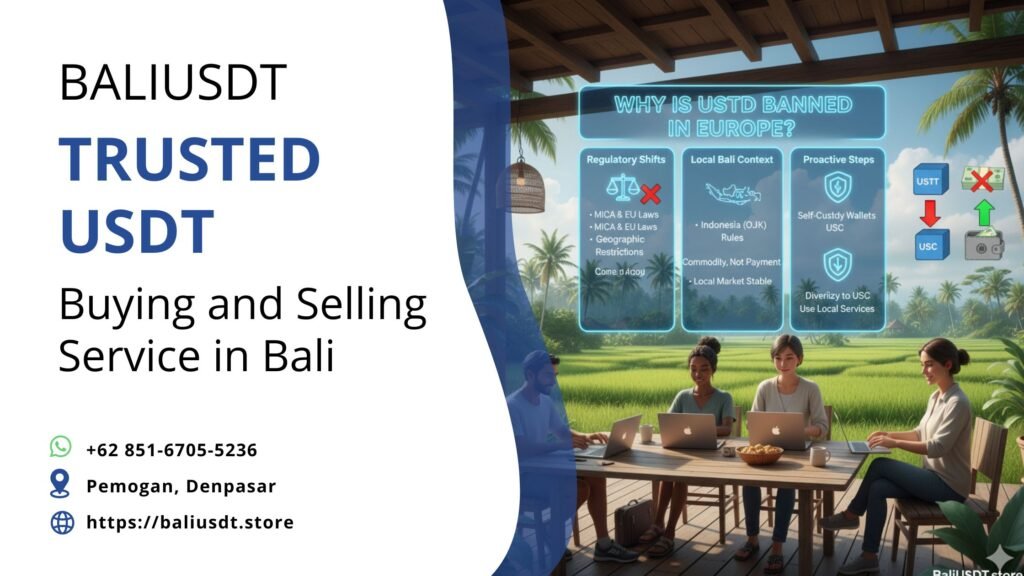
The primary reason why is USDT banned in Europe stems from the full implementation of the Markets in Crypto-Assets (MiCA) regulation. As of 2025, the European Union established a strict framework requiring stablecoin issuers to obtain specific e-money licenses and maintain highly transparent reserves. Tether, the company behind USDT, has historically faced challenges meeting the exact auditing standards demanded by European regulators. Consequently, many exchanges operating within the European Economic Area (EEA) were legally forced to delist non-compliant stablecoins.
This does not mean that USDT has lost its value or “collapsed.” Instead, it is a matter of regional compliance. While the EU pushes for a more “ring-fenced” financial system, the rest of the world—including Indonesia—continues to see USDT as the primary bridge for liquidity. For a traveler with a European bank account, this shift means you might find your favorite exchange app suddenly restricting your ability to buy or trade USDT while you are physically located in or registered within the EU.
How European Regulations Affect Bali Expats
You might wonder how a law in Brussels affects your life in Southeast Asia. If your exchange account is verified with a European passport or address, the platform may apply EEA restrictions to you regardless of where you are. This is one reason why is USDT banned in Europe users’ apps even when they are sitting in a café in Canggu. These “geofencing” rules can be incredibly frustrating when you need to liquidate assets to pay for a long-term scooter rental or a month-long villa lease.
Fortunately, Indonesia maintains a very different stance. In 2026, the Indonesian Financial Services Authority (OJK) and BAPPEBTI continue to recognize crypto assets as regulated commodities. Unlike the restrictive environment in the EU, the Indonesian market remains open and liquid for USDT transactions. For many nomads, Bali has become a “safe harbor” where they can manage their digital wealth without the heavy-handed oversight currently seen in the European market.
Liquidity and the Shift to Compliant Alternatives
Another factor in the conversation about why is USDT banned in Europe is the push toward “compliant” stablecoins like USDC or euro-pegged tokens. European regulators prefer assets that are issued by entities with a physical presence and a banking license within the Union. While this provides a layer of safety for residents, it often results in lower liquidity and higher transaction fees compared to the global standard that USDT provides.
For a traveler in Bali, USDT remains the “king of liquidity.” If you need to sell your digital assets for Indonesian Rupiah (IDR) to fund your daily expenses, you will find that local infrastructure is heavily optimized for Tether. While Europe moves toward a more isolated system, Bali continues to thrive on the global efficiency of the Tron (TRC-20) and Solana networks. Understanding why is USDT banned in Europe helps you realize that the “ban” is a local regulatory hurdle, not a global defect of the asset itself.
Navigating the Bali Crypto Landscape Safely
While the Indonesian regulatory environment is more flexible than the EU’s, you still need to follow local rules. In Indonesia, you cannot use USDT as a direct payment method for your Nasi Goreng or your hotel stay. It is legally classified as a commodity, meaning you must sell it for Rupiah through a licensed channel. This is where many expats get into trouble by using unverified “P2P” traders they meet on social media.
To stay safe while the world debates why is USDT banned in Europe, always prioritize professional services. Using an established office allows you to bypass the geofencing issues of global apps and ensures you are compliant with Indonesian tax laws. In 2026, the OJK has clarified that sellers are subject to a small final income tax (PPh), which is usually handled automatically by professional desks. You can always BaliUSDT.store to find the most secure and compliant ways to handle your transactions while on the island.
Practical Tips for Travelers in 2026
If you are coming from Europe and are worried about why is USDT banned in Europe, here are a few practical steps to take before landing at Ngurah Rai International Airport:
- Diversify Your Wallets: Don’t keep all your funds on a single exchange. Use self-custody wallets (like Ledger or Trust Wallet) to maintain control over your USDT regardless of exchange delistings.
- Understand Network Fees: While the EU might restrict the asset, the blockchain itself doesn’t. Using the Tron (TRC-20) network remains the most cost-effective way to move your wealth in Bali.
- Keep Local Cash: Always have enough IDR for transportation and small vendors. While the island is becoming more digital, the “blue bird” taxis and local markets still rely on the physical Rupiah.
- Visit a Professional Office: If you are planning a large transaction for a six-month villa payment, visit our office in Pemogan, Denpasar for a secure, face-to-face experience.
By staying informed about why is USDT banned in Europe, you can avoid the panic that often follows clickbait headlines. The global crypto market is fragmenting, but for those in Bali, the opportunities for financial freedom remain as bright as the tropical sun.
Conclusion
The question of why is USDT banned in Europe is essentially a story of two different regulatory philosophies. While Europe seeks to control and limit the stablecoin market through MiCA, Indonesia has embraced digital assets as a legitimate commodity class. For the Bali traveler, this means that your USDT is still a highly valuable and liquid asset, provided you use the right local channels to manage it.
As you enjoy the world-class surf breaks and vibrant culture of Bali, remember that your financial security is your own responsibility. Stay proactive, use reputable local services, and don’t let European red tape dampen your adventure in paradise.
Visit our office in Bali for secure USDT selling and get professional guidance for selling USDT legally in Indonesia. Our team in Pemogan, Denpasar is here to help you navigate the changing global landscape with ease and transparency.
📲 WhatsApp us to sell your USDT safely: +62 851-6705-5236
USDT is processed as a commodity sale in Indonesia, not as a direct payment method.
Read also : Will USDT Always Be Stable? A 2026 Bali Expat Financial Guide