Why is USDT fee so high is a common frustration for the growing community of digital nomads and expatriates who rely on stablecoins to manage their lives in Bali. You might be sitting in a beachside cafe in Berawa, trying to move some funds to cover your monthly villa rental, only to be shocked by a transaction fee that feels disproportionately large. Whether you are new to the island or a seasoned “crypto nomad,” understanding the mechanics of these costs is essential for protecting your travel budget. In this comprehensive guide, we will explore the technical and market-driven reasons for these high costs and provide local tips for minimizing them while you enjoy the Island of the Gods.
The Architecture of Blockchain Network Fees
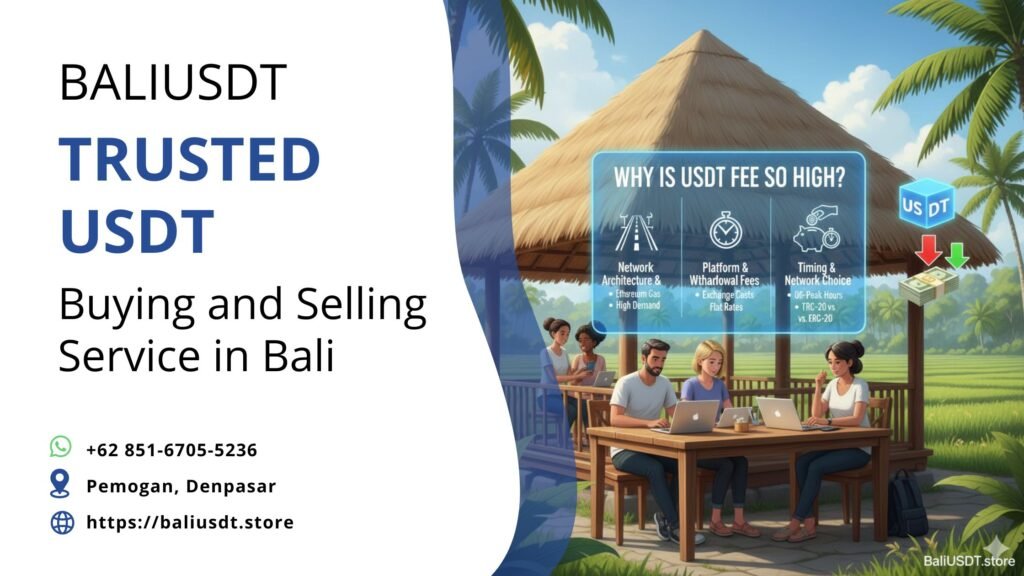
To understand why is USDT fee so high, we first need to look at the “rail” or blockchain network you are using. USDT is a multi-chain asset, meaning it exists on several different blockchains, including Ethereum (ERC-20), Tron (TRC-20), and Solana. Each of these networks has its own fee structure. If you are using the Ethereum network, you are paying for “Gas,” which is the computational power required to process your transaction. Because Ethereum is the most secure and widely used network, its block space is limited, leading to competitive pricing.
When the network is congested—perhaps due to a major NFT drop or a surge in decentralized finance (DeFi) activity—the price of gas skyrockets. This is often the primary reason why is USDT fee so high for those holding ERC-20 tokens. In early 2026, even with various upgrades, Ethereum fees can still spike significantly during peak hours. For a traveler in Bali, sending a small amount of USDT might sometimes cost more in fees than the value of the transfer itself if the network is busy.
The Shift in Tron Network Dynamics
For a long time, the Tron network was the go-to solution for travelers asking why is USDT fee so high on other chains. Tron offered nearly instant transfers for just a few cents. However, in recent years, the Tron network has adjusted its “Energy” and “Bandwidth” model. If your wallet does not have enough staked TRX (the native token of Tron) to cover the energy required for a smart contract execution, the network “burns” TRX from your balance to pay the fee.
As of 2025 and 2026, the cost of these resources has increased. If you are sending USDT to a “new” address that has never held the token before, the fee can double because the network has to create a new entry in its database. This is a subtle reason why is USDT fee so high on a network that used to be known for being practically free. For an expat paying a local landlord for the first time, this “new address fee” can be an unexpected and annoying expense.
Market Volatility and Exchange Withdrawal Fees
Beyond the technical on-chain fees, the platform you use to hold your USDT plays a major role. Many travelers keep their funds on centralized exchanges like Binance, Bybit, or Indodax. These platforms often charge a flat “withdrawal fee” that is higher than the actual network cost. They do this to cover their own operational expenses and to ensure the transaction is processed with high priority.
During periods of high market volatility, exchanges may also increase these fees to manage the load on their systems. This further contributes to the perception of why is USDT fee so high. For a digital nomad who frequently moves funds between an exchange and a personal wallet, these flat fees can eat into a significant portion of their monthly budget. It is always wise to check the withdrawal fee for each specific network (TRC-20 vs. ERC-20 vs. SOL) before initiating a transfer.
Local Bali Tips: Timing and Network Selection
Living in Bali gives you a unique perspective on the global crypto market. Because the island attracts an international crowd, you are often transacting across different time zones. One practical way to avoid asking why is USDT fee so high is to time your transactions strategically. On-chain fees are typically lower when the major financial hubs in the US and Europe are asleep. For those in Bali, this often means the early morning or late evening hours are the most “fee-friendly” times to move your assets.
Furthermore, always check if your recipient can accept USDT on a lower-fee network like Solana or Polygon. While Ethereum is the most “institutional,” it is often the most expensive for daily travel needs. If you are looking to liquidate your digital assets for Indonesian Rupiah (IDR) to pay for a scooter rental or a scuba diving trip, using a professional local service can help you navigate these costs. You can BaliUSDT.store to find out more about the most efficient ways to sell your USDT while staying on the island.
Cultural and Practical Notes for Expats
While navigating the technical side of why is USDT fee so high, don’t forget the practicalities of living in Indonesia. The country has strict regulations regarding payments; you cannot pay for your Nasi Campur or your villa directly with USDT. You must convert your digital assets into Rupiah through a legal commodity sale.
When you are ready to sell, consider these safety tips:
- Check the Network Twice: Sending USDT to the wrong network address (e.g., ERC-20 to a TRC-20 address) will result in a total loss of funds.
- Avoid Public Wi-Fi: When managing your wallets or checking fees, use a secure VPN or your own mobile data.
- Visit a Trusted Office: If you are dealing with a significant amount of money for a long-term stay, it is often safer to visit a physical office in areas like Pemogan or Denpasar rather than relying on unverified P2P traders.
- Factor in the “Gas”: Always keep a small amount of the native token (ETH, TRX, or SOL) in your wallet to pay for the transfer fees, or you’ll find your USDT “stuck.”
By understanding why is USDT fee so high and taking steps to mitigate those costs, you ensure that more of your money goes toward experiencing the culture and beauty of Bali, rather than being burned in blockchain gas fees.
Conclusion
In the modern landscape of digital finance, the question of why is USDT fee so high is usually answered by looking at network congestion, resource models, and exchange policies. While these fees can be a hurdle, they are manageable with the right knowledge and a bit of planning. By choosing the right network—like Tron or Solana—and timing your transactions during off-peak hours, you can significantly reduce your overhead.
As you continue your journey through the lush jungles of Ubud or the surf breaks of Uluwatu, stay smart about your digital assets. Secure, cost-effective management of your USDT is the key to a long and successful stay in Indonesia.
Visit our office in Bali for secure USDT selling and get a fast quote for your assets today. Our team is located in Pemogan, Denpasar, providing a professional and safe environment for the international traveler community.
📲 WhatsApp us to sell your USDT safely: +62 851-6705-5236
USDT is processed as a commodity sale in Indonesia, not as a direct payment method.
Read also : Will USDT Rise? A Complete Guide for Bali Travelers and Expats