Why is USDT more expensive than USD in the global crypto market is a question that often surprises travelers and digital nomads when they first land in Bali. You might expect a stablecoin pegged to the dollar to trade at exactly 1:1 at all times. However, if you check your exchange app while sipping a coffee in Canggu, you will often notice a slight premium. Understanding these price discrepancies is vital for managing your travel budget and ensuring you get the best value when converting your assets. In this guide, we will break down the market mechanics behind this phenomenon and provide practical tips for expats navigating the financial landscape of Indonesia.
Understanding the Concept of the USDT Premium
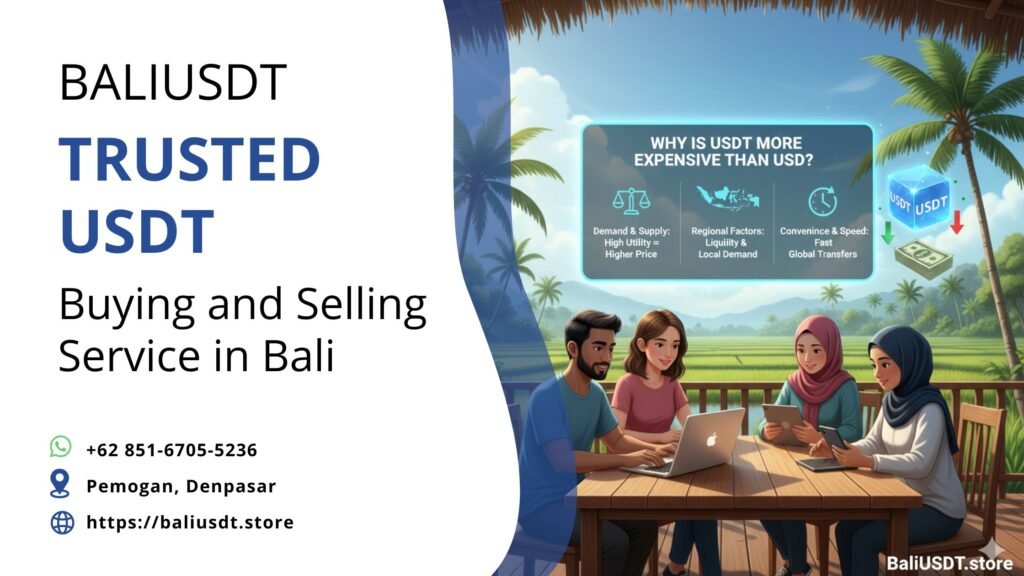
The primary reason why is USDT more expensive than USD relates to the fundamental laws of supply and demand on cryptocurrency exchanges. Unlike a physical dollar in your wallet, USDT is a digital commodity that provides high utility. It allows traders to move in and out of volatile positions quickly without exiting to a traditional bank account. When the crypto market is “bullish” and everyone wants to buy Bitcoin, the demand for USDT skyrockets as it is the primary trading pair.
When demand exceeds the immediate supply available on a specific exchange, the price of USDT pushes slightly above $1.00. This is known as a “positive premium.” For a digital nomad in Bali, this means your digital dollars might actually be worth a little more than a paper $100 bill in certain market conditions. While the peg is designed to stay at $1.00, these minor fluctuations are a normal part of a decentralized, 24/7 global market.
Liquidity Constraints and Regional Market Factors
Another factor explaining why is USDT more expensive than USD involves local liquidity and capital controls. In many parts of the world, including Indonesia, moving large amounts of fiat USD into the crypto ecosystem can be slow or restricted by banking regulations. Because it is harder to “create” new USDT instantly with cash, the existing circulating supply in the region often carries a higher price tag.
In Bali, the expat community is massive, and many remote workers receive their salaries in USDT. When there is a surge in people wanting to “on-ramp” (convert local currency to crypto), the price of USDT rises. Conversely, if everyone tries to sell at once, the price might dip. Understanding these local liquidity cycles helps you time your transactions better. If you notice a high premium, it might be a great time to sell your USDT for Rupiah to fund your villa lease or a month of scooter rentals.
The Cost of Convenience and Transfer Speed
If you have ever tried to send a traditional wire transfer to an Indonesian bank, you know it can take days and cost a fortune in intermediary fees. This convenience factor is a major reason why is USDT more expensive than USD. USDT operates on high-speed blockchains like Tron (TRC-20), allowing you to move wealth across the globe in seconds for a fraction of a dollar.
Investors and travelers are often willing to pay a few cents extra per token for this efficiency. In the fast-paced life of a nomad, being able to settle a bill or secure a flight to the Raja Ampat islands instantly is worth the slight premium. This “utility value” keeps USDT in high demand, often keeping its price slightly above the “dead” fiat dollar that sits trapped in a slow banking system.
Arbitrage and the Role of Professional Traders
You might wonder why the price doesn’t stay high forever. Professional traders use a strategy called arbitrage to keep the peg in check. When they see why is USDT more expensive than USD on one platform, they will buy USD, mint new USDT directly from Tether Limited, and sell it on the exchange where the price is high. This process increases the supply and eventually pushes the price back down toward $1.00.
However, arbitrage takes time and significant capital. During periods of extreme market volatility, these traders might not be able to move fast enough to close the gap. For expats in Bali, watching these trends can be beneficial. Using a trusted local resource like BaliUSDT.store can help you stay informed about the current local rates and how they compare to global averages.
Practical Tips for Expats Selling USDT in Bali
Knowing why is USDT more expensive than USD gives you an edge, but you still need to execute your trades safely. Bali is a wonderful place, but as a tourist, you must be cautious with your finances. Always prioritize security over a slightly better rate offered by an unverified source on social media.
- Use Reputable OTC Desks: Look for established over-the-counter offices in areas like Pemogan or Denpasar.
- Monitor the “Spread”: Always check the difference between the buying and selling price.
- Understand the Legal Status: Remember that in Indonesia, USDT is a commodity. It is legal to sell it for Rupiah, but it is not a legal payment method for your surf lessons or hotel stay.
- Check the Network: Ensure you are sending your USDT on the correct network (usually TRC-20 for lower fees) to avoid losing your funds.
By staying aware of why is USDT more expensive than USD, you can turn a simple market quirk into a financial advantage. Whether the market is up or down, having a solid grasp of these concepts ensures your nomadic lifestyle remains sustainable and stress-free.
Conclusion
In conclusion, the answer to why is USDT more expensive than USD is a mix of high demand, local liquidity hurdles, and the immense utility of blockchain technology. While the price rarely stays at exactly $1.00, these fluctuations provide opportunities for savvy travelers to maximize their funds. By understanding the underlying forces of the crypto market, you can navigate your time in Bali with the confidence of a seasoned financial pro.
Always ensure that you are dealing with professionals when cashing out your gains. This protects your capital and ensures that you remain compliant with local Indonesian regulations while enjoying the beauty of the island.
Visit our office in Bali for secure USDT selling and get a professional experience tailored for the expat community. Our team in Pemogan, Denpasar is ready to assist you with transparent rates and secure transactions.
📲 WhatsApp us to sell your USDT safely: +62 851-6705-5236
USDT is processed as a commodity sale in Indonesia, not as a direct payment method.
Read also : Will USDT Coin Go Up? A 2026 Guide for Bali Expats and Nomads