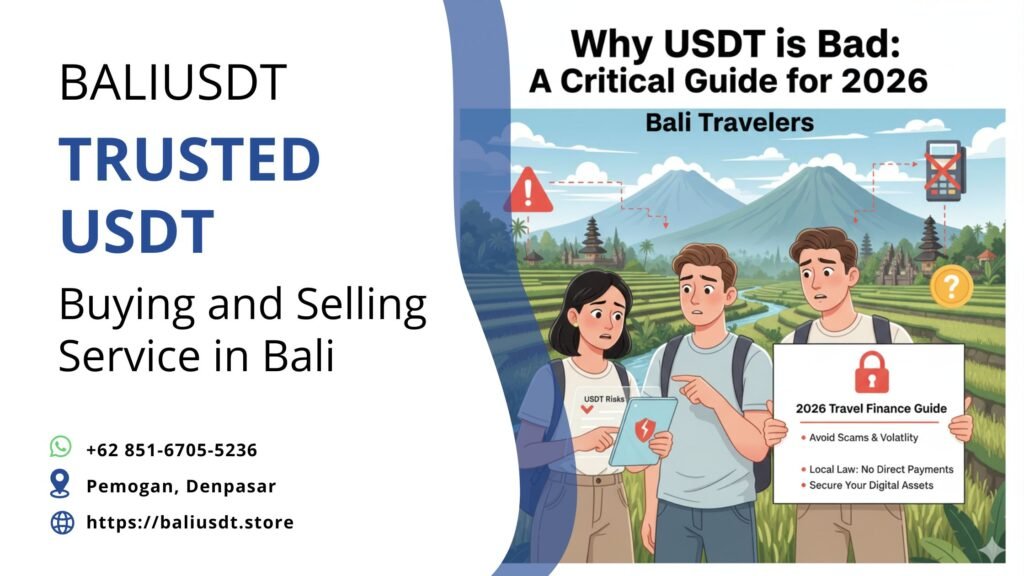
Understanding why usdt is bad in certain contexts is essential for travelers and digital nomads who rely on digital assets to fund their tropical lifestyle in Bali. While Tether (USDT) remains a dominant force in the global crypto market, it is not without its controversies and risks. As we navigate the financial landscape of 2026, international visitors are increasingly questioning the transparency and safety of their holdings. This guide explores the potential pitfalls of relying solely on USDT, the local legal environment in Indonesia, and how you can manage your travel funds securely.
The Transparency Trap: Understanding Tether’s Risks
Many financial analysts argue that the lack of clear, independent audits is the primary reason why usdt is bad for long-term storage. Unlike some of its competitors that provide monthly breakdowns of their cash reserves, Tether has historically operated in a more opaque manner. For a digital nomad in Bali, this means you are holding an asset whose “stable” peg relies entirely on trust in a private company.
In 2026, the global regulatory environment has tightened. If Tether faces sudden legal challenges or a liquidity crisis, the value of your USDT could “de-peg” from the US Dollar. Imagine being in the middle of a month-long villa stay in Canggu and finding that your primary source of funds has lost 10% of its value overnight. This systemic risk is a significant factor in why many consider USDT a “riskier” stablecoin compared to more transparent alternatives.
Why USDT is Bad for Local Payments in Indonesia
A common misconception among first-time visitors to Bali is that they can pay for their surf lessons or nasi campur directly with crypto. However, Indonesian law is very strict: the Indonesian Rupiah (IDR) is the only legal tender for payments. Attempting to use digital assets for direct transactions is illegal and can lead to serious consequences for both the traveler and the local business.
This legal restriction is another reason why usdt is bad as a direct spending tool. You cannot simply scan a QR code at a boutique in Seminyak and pay with Tether. Instead, you must treat USDT as a commodity that needs to be sold for Rupiah through a legitimate channel. Using unregulated peer-to-peer (P2P) transfers on the street is incredibly risky and often leads to scammed funds or frozen bank accounts.
Security Concerns: Scams and Counterparty Risk
The high popularity of Tether makes it a prime target for bad actors. When people ask why usdt is bad, they often refer to the “counterparty risk” involved in trading it. In Bali’s bustling digital nomad hubs, there are frequent reports of “wallet-draining” scams or fraudulent exchange services that promise high rates but never deliver the IDR.
Because USDT transactions are irreversible, if you send your assets to a fraudulent address, those funds are gone forever. There is no “chargeback” feature like you have with a credit card. For a traveler, this lack of consumer protection is a major downside. This is why it is vital to only deal with established, professional services when you need to convert your assets into local cash.
Market Volatility and the Strengthening Rupiah
Even though USDT is pegged to the dollar, its local value in Bali is heavily influenced by the IDR exchange rate. If the Indonesian economy is booming—which it often is during the 2026 tourism surge—the Rupiah strengthens. In this scenario, you might feel why usdt is bad for your budget because your “stable” dollars are buying fewer and fewer local goods and services.
Furthermore, high “gas fees” on certain blockchains like Ethereum can make moving small amounts of USDT very expensive. If you are trying to sell $100 for a dinner in Ubud but have to pay $15 in network fees, the utility of the asset drops significantly. Modern travelers often switch to lower-fee networks, but the underlying concern about Tether’s stability remains a constant topic of discussion in Bali’s coworking spaces.
How to Handle Your Digital Assets Safely in Bali
Knowing why usdt is bad for certain situations doesn’t mean you have to avoid it entirely; it just means you need to be smarter about how you use it. To maintain financial security while enjoying the island, follow these local tips:
- Diversify Your Holdings: Don’t keep all your travel funds in one asset. Consider splitting your digital wealth between USDT, USDC, and traditional fiat.
- Stay Informed: Keep an eye on global news regarding Tether’s reserves and regulatory status in Indonesia.
- Use Secure Off-Ramps: When you need Rupiah, use a trusted service like BaliUSDT.store to ensure you are following local laws and getting a fair market rate.
- Prioritize Safety: Never share your private keys or seed phrases with anyone, regardless of how helpful they seem at a local meetup.
By understanding the nuances of why usdt is bad for direct payments and long-term un-audited storage, you can protect your hard-earned money and focus on what really matters: exploring the waterfalls, temples, and beaches of Bali.
The Importance of Professional Exchange Services
If you find yourself questioning why usdt is bad because of the difficulty in finding a safe way to sell it, remember that professional help is available. Avoiding “black market” traders in back alleys is the best way to ensure your safety. A professional office provides a transparent environment where the exchange rate is clear, and the transaction is handled as a legal commodity sale.
Our office in Pemogan, Denpasar, specializes in assisting international visitors with secure transactions. We understand that as a foreigner, navigating the Indonesian financial landscape can be daunting. By providing a safe, physical location for your needs, we eliminate the anxiety associated with online-only P2P platforms where you never know who is on the other side of the screen.
Conclusion: Balancing Convenience and Risk
In conclusion, while Tether offers liquidity, the reasons why usdt is bad—ranging from transparency issues to local payment restrictions—cannot be ignored by the savvy traveler. Bali in 2026 is a paradise, but it requires a modern approach to finance. Treat your USDT as a commodity, stay within the legal framework of Indonesia, and always prioritize security over a slightly better “street” rate.
Ultimately, being aware of why usdt is bad in specific contexts allows you to mitigate risks before they become problems. Whether you are an expat living in the rice fields of Pererenan or a tourist on a two-week holiday, managing your digital assets with care is the key to a stress-free Indonesian adventure.
Ready to Sell Your USDT Safely?
Don’t risk your funds with unverified traders. Our team provides a secure, professional environment for selling your digital assets according to local regulations.
📲 WhatsApp us to sell your USDT safely: +62 851-6705-5236
- Visit our office in Bali for secure USDT selling
- Get a fast quote for your USDT today
Office Location: Pemogan, Denpasar
USDT is processed as a commodity sale in Indonesia, not as a direct payment method.
Read also : Will USDT Collapse? A 2026 Guide for Bali Expats and Nomads